Eat Beer is opening up a new perspective on future sources of raw materials for the meat and protein industry: the biotech sister company of Störtebeker Braumanufaktur is working on extracting functional proteins for food from brewers’ grains and thereby developing new by-product streams and value chains.
In Stralsund, the story does not begin in a laboratory, but in a brewery that has long since learned to be more than a producer of traditional beers. Störtebeker Braumanufaktur is an independent private brewery, founded in 1827, rooted in the region and yet well known far beyond northern Germany.
Within the industry, Störtebeker is regarded as a smart specialist: independent, with a broad range of varieties and a strong appetite for innovation. This also includes its success with alcohol-free beers, a segment that is growing significantly in the German beer market and has become one of the brewing industry’s most important sources of hope. And yet the brewery is not unaffected by the beer crisis. For medium-sized breweries, this raises a strategic question: will it be enough in future to keep developing new drink variants, or is there a need to create additional value from what is produced during the brewing process anyway?
A second product from malted grain
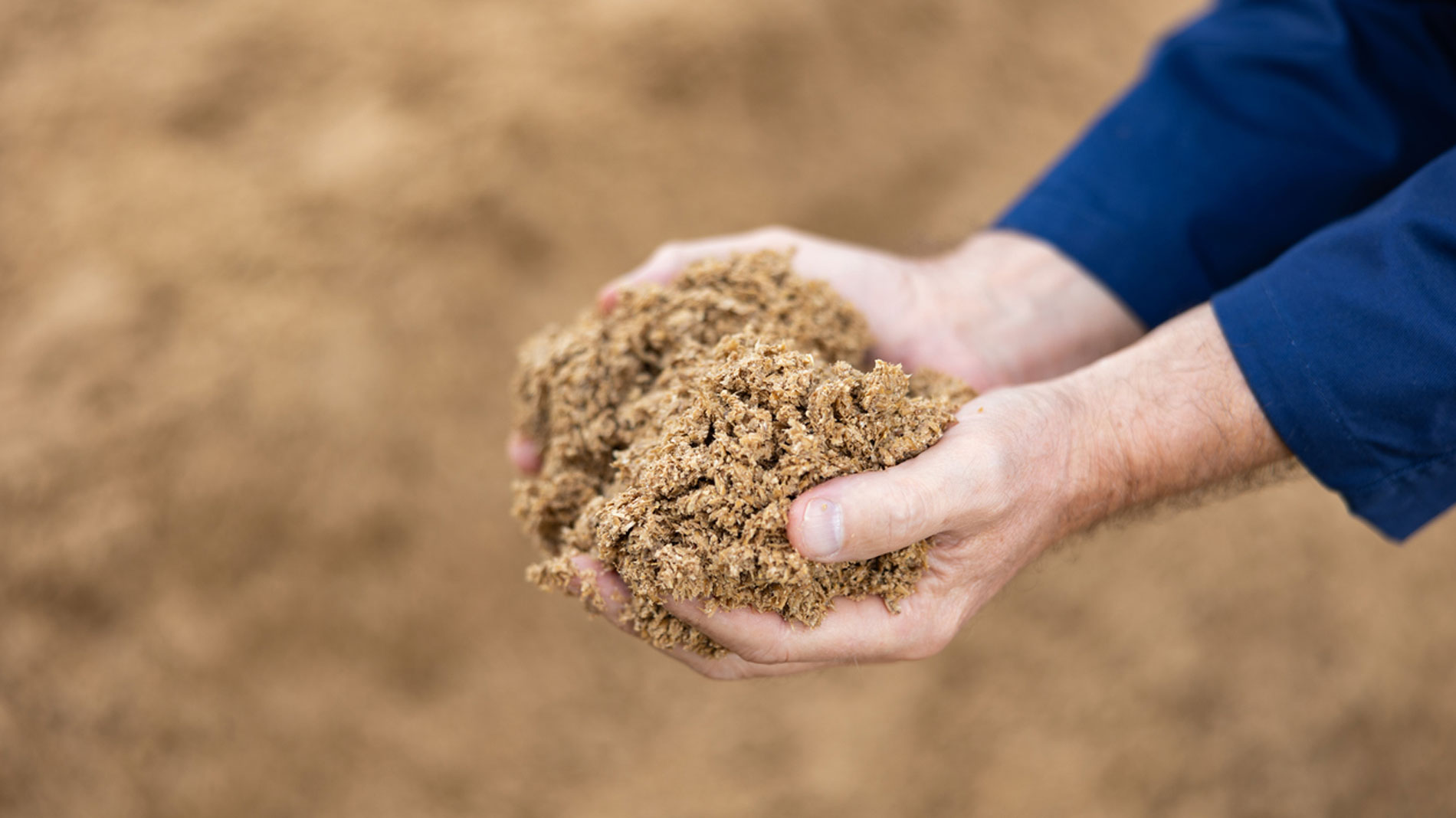
Brewers’ spent grain becomes protein: Eat Beer is developing new food ingredients from this by-product stream. Photo: JackF
The brewery’s biotech sister company is led by Jan Malte Nordmann, the 26-year-old son of the brewing family. He has reduced the idea to a simple formula: one malt grain can produce two products, beer and protein, for example for meat substitutes. More than 7,000 tonnes of brewer’s spent grain are produced at Störtebeker each year. The moist malt residue is rich in protein and fibre, but is traditionally used mainly as animal feed or in biogas production. Eat Beer develops food proteins from it: ingredients for meat alternatives, baked goods, snacks and, in future, other bio-based products.
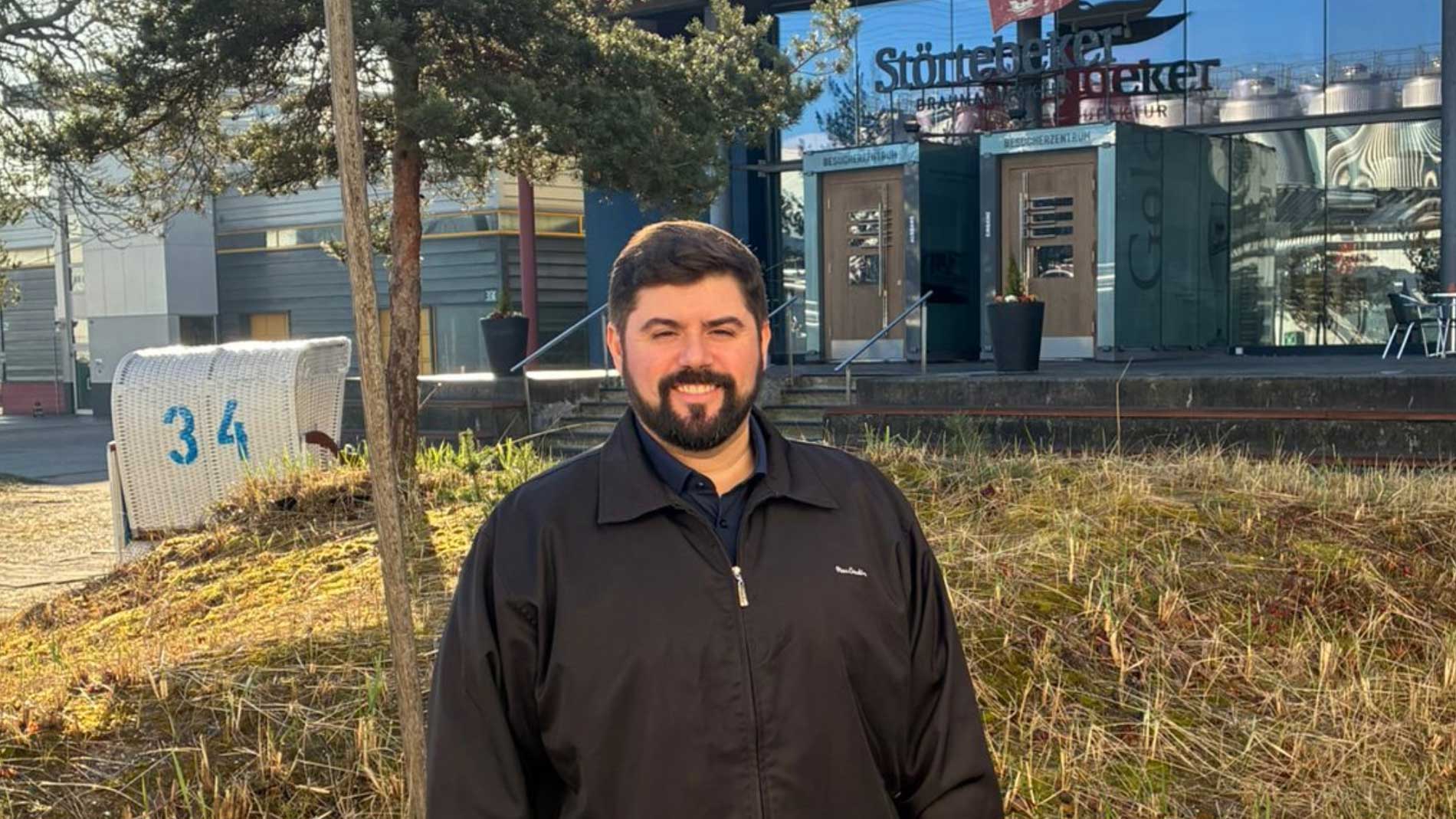
Lucas Camargo, Head of Strategic Business Development & Growth at Eat Beer. Photo: Eat Beer
Lucas Camargo, Head of Strategic Business Development & Growth at Eat Beer since April 2026, is tasked with scaling this idea strategically. Born in Brazil, he studied food technology, bioprocess engineering, engineering and business. Among other roles, he worked in operational management at GEA Food Solutions Germany and brings experience from food technology, Alfa Laval and Anheuser-Busch InBev. His role at Eat Beer involves identifying applications for brewery by-products, developing business models, building partnerships and further shaping the company’s platform strategy.
Camargo does not describe Eat Beer as a conventional ingredient start-up. “Our USP is the combination,” he says. Eat Beer sees itself as a platform that brings together biotechnology, integration with breweries and food manufacturers, decentralised modular production and product development. The company emerged from the Multifungi Protein project with Störtebeker and the University of Giessen. At its core, the process involves fungal fermentation: brewer’s spent grain serves as a nutrient substrate on which oyster mushroom mycelium grows under controlled conditions. This produces a protein-rich biomass.
Protein instead of residual material
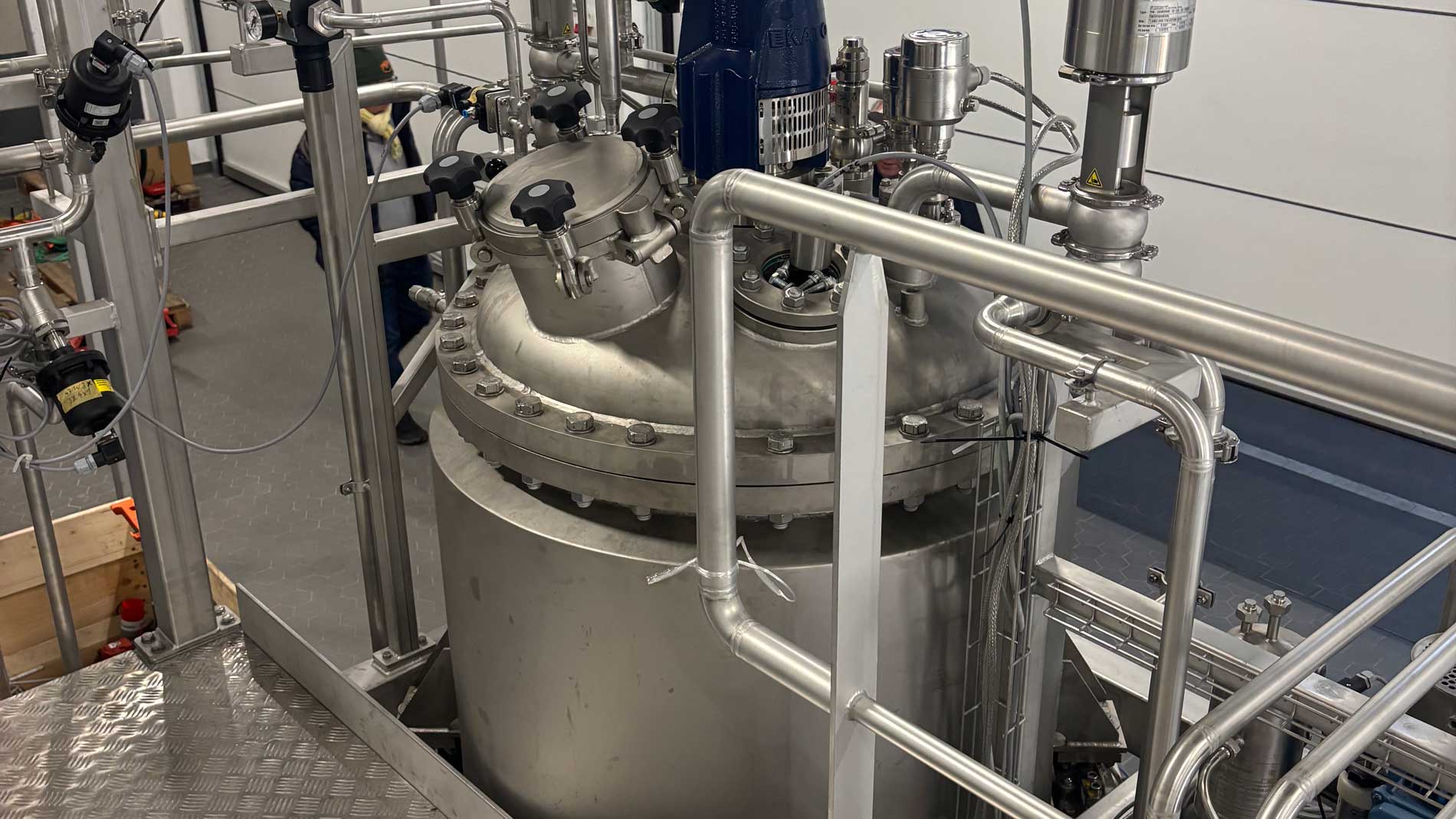
In the 500-litre fermenter, brewers’ spent grain is processed into a protein-rich biomass with the help of fungal mycelium. The process is currently still in the pilot and validation phase. Photo: Eat Beer
At first, the process sounds simple, but it is technologically demanding. “The brewer’s spent grain is prepared so that it can serve as a nutrient substrate for fungal fermentation,” explains Camargo. “In combination with the mycelium, a protein-rich biomass is produced. This is followed by a downstream process: cleaning, concentrating, drying.” The end product could be a powder or a concentrated liquid product. However, the decisive factor is not protein content alone. “We also examine fibre, texture, functionality, stability and sensory properties. The key questions are: in which application does this raw material really deliver value, and in which market is there demand?”
This brings Eat Beer to the heart of a problem that affects many alternative proteins: a protein is not yet a marketable food ingredient. It must work in formulations, taste good, be processable, have a comprehensible cost profile and be permitted under regulations. Camargo puts it plainly: “We do not want to produce just any protein powder and then hope that the market accepts it. The application has to fit – for different purposes.”
A first market test could take place in the meat alternatives segment, though not immediately as a B2C product in the supermarket. Eat Beer is thinking more in terms of foodservice, restaurants or company canteens, in other words controlled environments in which a new product can be explained and tested. This is also crucial from a communications perspective: terms such as side stream or waste can quickly be misunderstood. For Eat Beer, the aim is therefore to position brewer’s spent grain not as a residue, but as a valuable raw material.
The fungal fermentation process is still in the pilot phase. A 500-litre fermenter is publicly known; the company does not disclose specific process parameters or production volumes. “We are in the validation phase,” says Camargo. Of the more than 7,000 tonnes of brewer’s spent grain generated by Störtebeker every year, only a very small proportion is currently processed, “well below one per cent”. This illustrates the distance between pilot plant and industrial application: the raw material volumes are available, but the robust, safe and economically viable process still has to be scaled up.
One challenge is Novel Food regulation in the European Union. As long as new fermentation products have not been approved, they cannot be marketed freely and can only be tested to a limited extent. “The limiting factor is regulation,” says Camargo. “As long as a product is considered a Novel Food, we cannot simply conduct tastings on a large scale, carry out sensory tests and use it commercially.” Regulatory sandboxes are therefore an exciting platform for us to test new conditions under the supervision of the authorities.
Read more articles about protein innovations on Foodtech Now!:
For the brewing industry, the search for new value-creation paths comes at the right time. The beer market has been under pressure for years. Consumption habits are changing, alcohol-free products are growing, and volumes of traditional beer are declining. The German Brewers’ Association warns against making sweeping assessments of the situation. Press spokesperson Nina Göllinger points to the resilience of the industry and to more than 1,400 German breweries with very different profiles. At the same time, she sees many companies expanding their offerings. “Companies are broadening their product ranges and are increasingly developing from pure breweries into broadly positioned, innovative beverage producers,” says Göllinger.
“The companies are expanding their product ranges and are increasingly evolving from pure breweries into broadly positioned, innovative beverage manufacturers.”
“Brewer’s spent grain and yeast have long since ceased to be waste products; they are valuable side streams of the brewing process,” Göllinger emphasises. To date, brewer’s spent grain has mainly been marketed as high-quality animal feed, while yeast is also used as animal feed or as yeast extract in the food industry. What is new is not the utilisation itself, but the question of higher value creation: can brewery residues be turned into ingredients for baked goods, snacks or plant-based products? Are such approaches still experiments, or are they already business areas? Göllinger’s answer is cautious but clear: “Many of these projects have already moved beyond the experimental stage and are at least in the start-up phase.”
For Eat Beer, that is exactly the point. Lucas Camargo does not want to turn a residual material into a romantic sustainability narrative, but into a scalable model. Today, brewer’s spent grain is often sold for EUR 30 to 40 per tonne, sometimes slightly more. “Of course, one kilogram of wet brewer’s spent grain does not produce one kilogram of protein,” says Camargo. As a rough guide, he gives a protein fraction of around three to five per cent, depending on the raw material and process. Ultimately, what matters is what product is created from it and what price it can achieve on the market. “Economic viability depends on mass balance, energy, logistics, application and customers.”
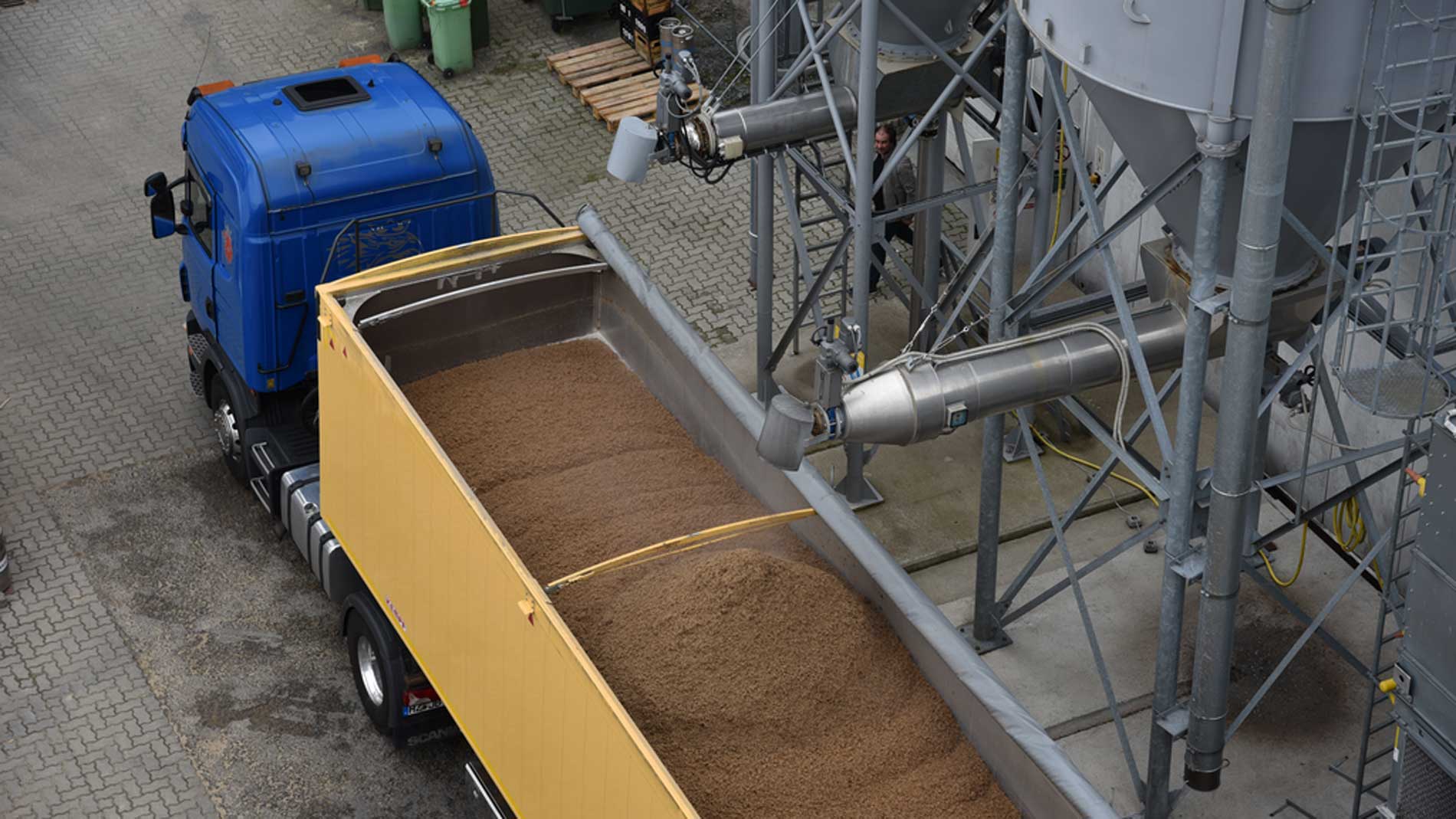
Collection of brewers’ spent grain: The moist raw material is perishable and difficult to transport. Photo: Eat Beer
The sustainability question is also more complicated than it first appears. Using brewer’s spent grain as animal feed is already a sensible use. Processing it into food is not automatically better from an ecological perspective. Energy, water, transport, cooling and process costs all have to be taken into account. Fresh brewer’s spent grain is wet, perishable and expensive to transport. The Brewers’ Association therefore sees pasteurisation and freezing as more realistic technical options; drying is generally too expensive.
Camargo makes a similar argument: if a wet, heavy side stream has to be transported over long distances, the ecological advantage diminishes. “If the side stream is processed locally where it is produced, this can be ecologically and economically interesting. But it has to be calculated on a case-by-case basis.”
This is where the actual platform concept begins. Eat Beer does not simply want to collect brewer’s spent grain, process it centrally and turn it into another protein powder. The vision is decentralised, modular production at or close to breweries. Camargo speaks of automated units, a kind of “dark factory” or container solution adapted to the respective brewery. “The brewery should not have to turn itself into a food or biotech company,” he says. “It should be able to carry on brewing beer. Eat Beer takes care of the technology, process, product development, quality and commercialisation logic.”
The business model is still open. “Production-as-a-Service”, licensing, leasing or other forms of cooperation are conceivable. It depends on the brewery, the side stream, the product and the regional market. What matters is that the brewery does not simply get rid of its brewer’s spent grain, but can participate in the new value creation. The Brewers’ Association considers various models possible. “However, the basic know-how often comes from external sources,” says Göllinger.
Side streams become raw materials
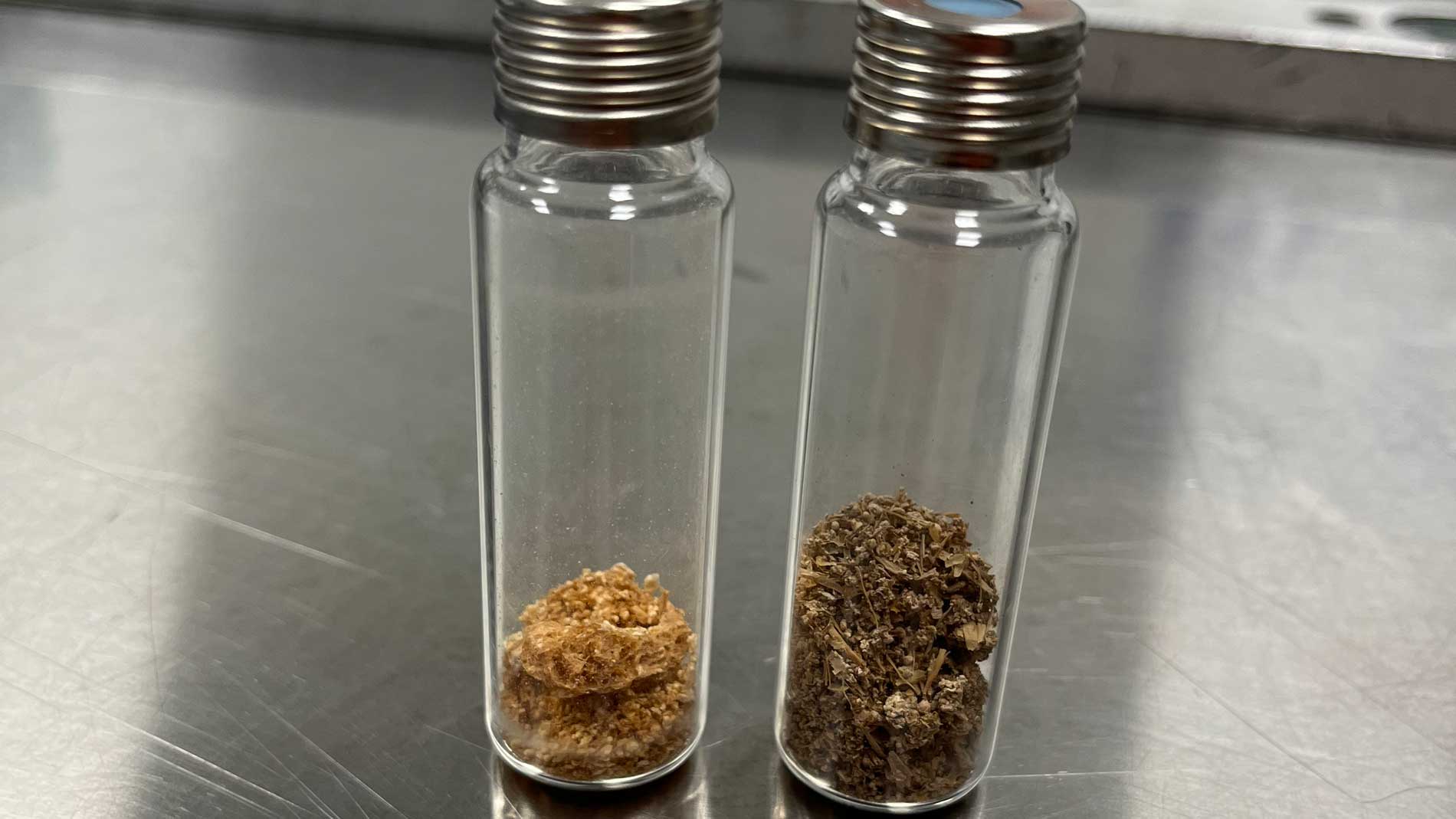
Dried mycelium: The by-product stream is transformed into a protein-rich raw material for new applications. Photo: Eat Beer
This is particularly interesting for small and medium-sized breweries. With an annual output of around 350,000 hectolitres, Störtebeker is a medium-sized brewery, significantly smaller than the major brewing groups, but large enough to generate relevant volumes of side streams. Camargo nevertheless does not see Eat Beer as a solution only for a brewery of this size. “Our model is intended to work in a modular way,” he says. “The platform brings know-how, process and product logic to where the raw material is generated.” Smaller breweries could also benefit if an upcycled product finds buyers in a niche market or if decentralised production structures connect several sites.
On a larger scale, Eat Beer touches on a question that extends far beyond the brewing industry: how will proteins and other biogenic raw materials be produced in future? The global protein economy is looking for alternatives to meat, milk, eggs and soya, but also for raw materials that do not compete with agricultural land, animal feed or global supply chains. Side streams from food and beverage production could take on a new role in this context. Brewer’s spent grain is just one example. Camargo also mentions yeast, coffee grounds, apple pomace and grape pomace. “In ten years, I see regional, integrated value chains in which side streams are strategic raw materials,” he says.
The prerequisite is that individual projects become industrial systems. Research alone is not enough, nor are pilot plants. Regulatory clarity is needed, along with scalable facilities, digital process control, food partners that can translate new ingredients into formulations, and markets that accept such products. The Brewers’ Association puts it in similar terms from an industry perspective: the decisive factor will be “that today’s promising pilot projects can be scaled economically and that viable sales markets develop for the products that emerge from them”. This will require processing and marketing structures as well as a reliable regulatory framework.
For Eat Beer, this means that the innovation lies not only in the fungal mycelium, but in the system. In the connection between brewery, fermentation, plant engineering, digital processes, food development and market validation. The brewery then becomes not a marginal player in the protein economy, but a raw-material hub: where fermentation is already taking place, where side streams are continuously generated and where process expertise already exists, new food components can be created.
Störtebeker and Eat Beer show what such a path could look like: not as a replacement for the beer business, but as an addition. The beer remains. But in future, a second product could emerge from the same malt grain.
Header image: Canva
Michael Hopp
Author at Foodtech Now! editorial office, who wants to show through his stories that tradition and innovation belong together.