
Reading time: 6 minutes
Demand for organic dairy products is booming. In Germany, the farmgate price for organic milk has remained at a high level for months, while the price of conventional milk has been falling.1 In principle, these should be good conditions for encouraging more farmers to switch to organic production. Yet willingness to convert has never been lower. Many farms are deterred by high investment costs, strict requirements, the demands associated with pasture-based farming and an economic future that is difficult to predict.
Dairies face the same challenge: if there are not enough organic farms in Germany, growing demand cannot be met and milk has to be imported from abroad. But “this is about far more than simply securing additional litres of organic milk,” says Maximilian Scherres, Head of Agriculture, Milk Purchasing and Milk Logistics at Gläserne Molkerei. The question is what a dairy sector can look like that offers farms, dairies and the next generation a viable future – in other words, one that is future-proof.
A dairy built on transparency
Gläserne Molkerei was founded in 2001 with the aim of treating organic production not as an addition to a conventional product range, but as the foundation of the entire company. “The decision to focus entirely on the organic sector was a fundamental one when the company was founded,” says Scherres. Gläserne Molkerei processes exclusively organic milk at its production sites in Münchehofe, Brandenburg, and Dechow, Mecklenburg-Western Pomerania. Both are located on the edge of biosphere reserves: Münchehofe near the Spreewald and Dechow in the Schaalsee region.
The name „Gläserne Molkerei“ – literally, “Glass Dairy” – reflects the company’s commitment to transparency: Glass-fronted visitor walkways allow guests to look into the production facilities and follow how the delivered milk is processed into butter, drinking milk or cheese. For Scherres, however, transparency goes far beyond visible pipes, tanks and filling systems. It begins on the approximately 70 partner farms and encompasses animal husbandry and land management, as well as the cooperation between farms and the dairy, which is based on transparent supply contracts. The aim, Scherres says, is “to develop viable partnerships and secure future-proof value creation”.
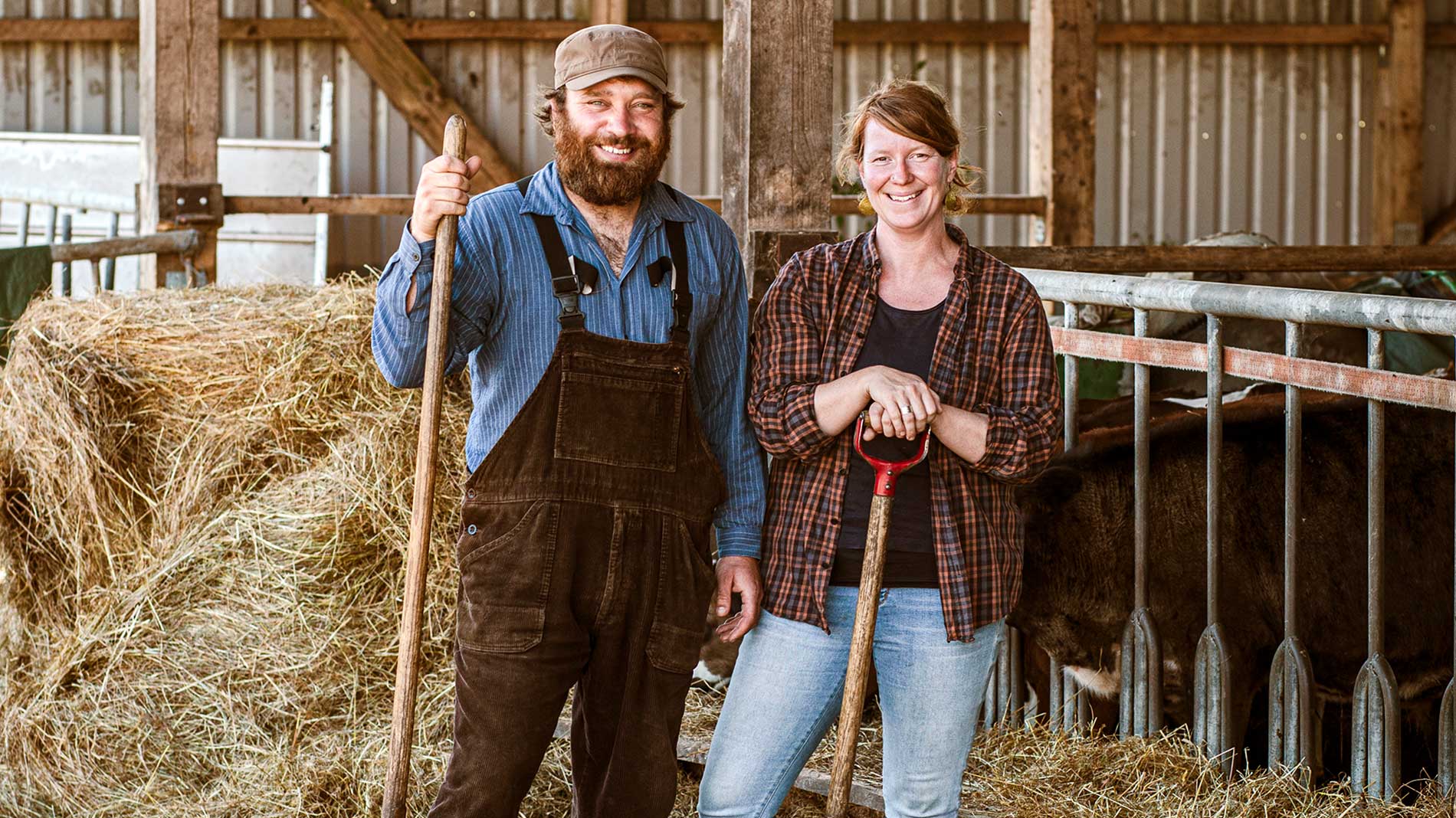
Waldhof Zydek, a supplier to Gläserne Molkerei in Schleswig-Holstein, shows what this can look like at farm level. Nils and Elena Zydek took over the farm in 2018 through a non-family succession. Previously, the farm had been run by an older farmer who had no successor within his family and was therefore looking for a solution – which he found in Nils and Elena Zydek. They already knew each other in passing, and when they happened to meet at a petrol station in 2016, the farmer called out to Nils from his car: “By the way, I’m still looking for someone to take over the farm.” “Two years later, we officially took over the farm,” Zydek recalls. Today, they keep around 50 dairy cows, farm approximately 140 hectares and, alongside milk, also market meat directly to restaurants and regional partners.
Organic milk – a scarce raw material
Organic milk is in short supply in Germany. “We experienced an extreme shortage of raw materials in the organic milk market, particularly in 2024 and the first half of 2025,” says Scherres. Demand had grown significantly faster than the amount of raw material available in Germany. In 2025, domestic demand of around 1.664 billion kilograms was met by German production of approximately 1.424 billion kilograms. The gap of around 240 million kilograms was covered primarily by imports from Denmark, the Netherlands and Austria.1 Domestic production and organic consumption are therefore increasingly diverging.
Despite high organic milk prices, hardly any conventional dairy farms have converted to organic production in recent years. The process generally takes 18 to 24 months and involves long-term investment and major changes to farm operations. During the conversion period, costs are already higher, while the milk cannot yet be marketed fully as an organic product. “If we want more organically produced milk in Germany, then it has to be paid for accordingly,” Zydek argues. According to calculations by MEG Milch Board for the 2024/25 financial year, the production costs for organic milk were 74.36 cents per kilogram. This compares with a farmgate price of 61.49 cents per kilogram – the highest price in ten years, but still enough to cover only 83 per cent of costs.2
Who will produce tomorrow’s organic milk?
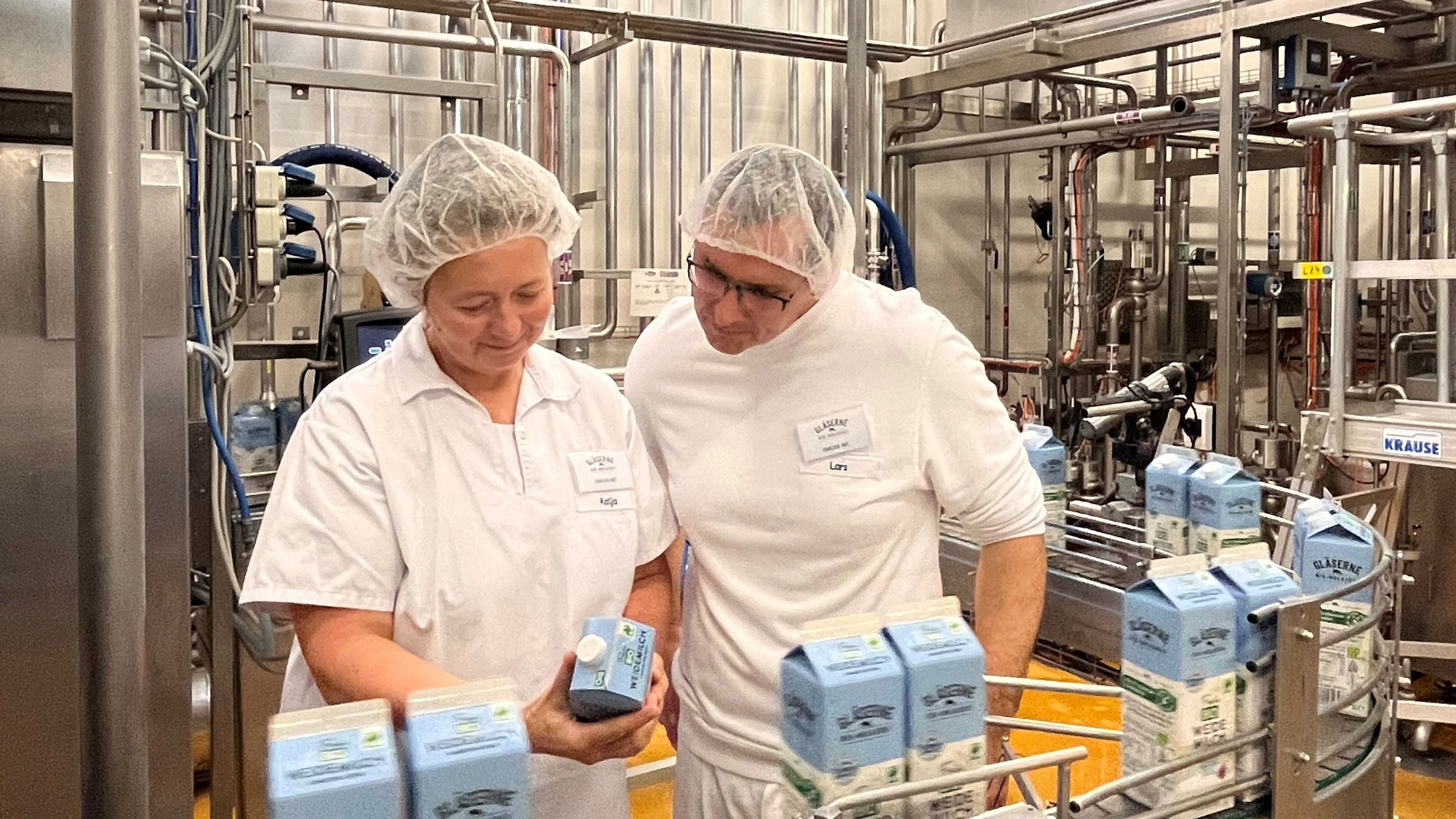
Gläserne Molkerei also wants to help preserve existing organic dairy farms and support conventional farms in converting to organic production – for example, by assisting them in their dealings with organic certification bodies and organic farming associations, as well as through long-term collaborative partnerships secured by contract. The dairy took another important step this year: since January, the Organic Milk Marker Index has been a binding component in determining the milk price. The index reflects developments in production costs and is intended to prevent the farmgate price from being determined solely by short-term market movements. “We have integrated a proportion of production costs into our supply contracts,” explains Scherres. According to the company, this makes Gläserne Molkerei the first dairy in Germany to attempt to move gradually towards a producer price that enables investment and future-proofing.
Agriculture in Germany is facing a structural problem: there is a shortage of the next generation of farmers – and this is also evident in dairy farming. Scherres points out that there are currently around 46,000 dairy farms in Germany and that this number could halve again over the next 15 years. Particularly in north-eastern Germany, there are many large farms that require substantial numbers of employees and struggle to find successors. “I believe that in the next generation there will be very few people who say, purely for idealistic reasons: producing milk is something I enjoy doing,” says Scherres. A dairy cannot create farm successors. But it can offer conditions that make taking over a farm easier to plan: long-term purchasing agreements, premiums for particularly high-quality milk and advice provided in cooperation with organic farming associations. Such agreements are crucial for Waldhof Zydek. Particularly for farms that are investing or developing new processing channels, it is important to have the security that their milk will continue to be purchased in the future. “Farmers often finance the construction of barns over the next 25 years. It is about having the opportunity to operate sustainably,” says Zydek.
When biodiversity is paid for
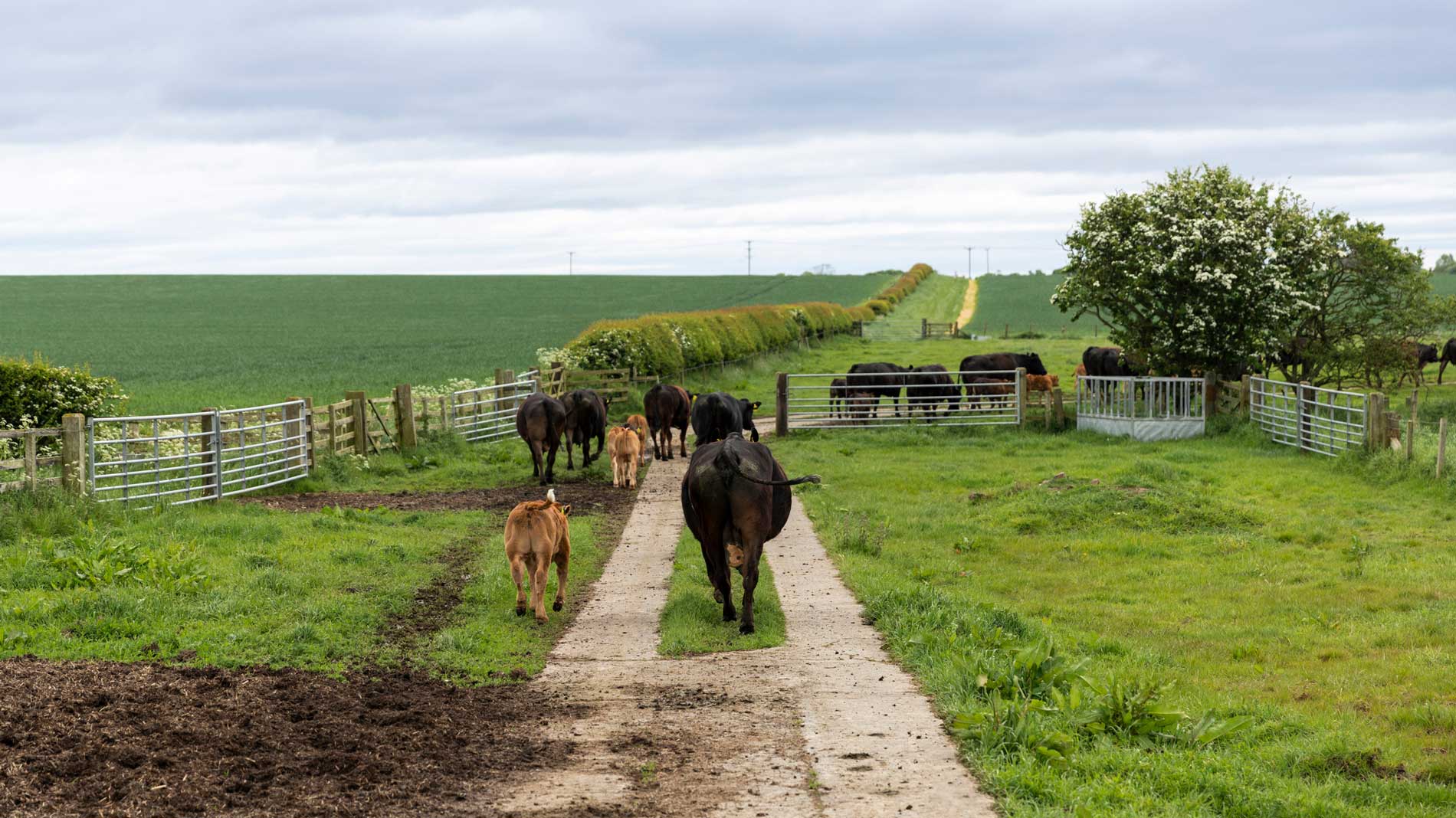
For Gläserne Molkerei, sustainable farming also encompasses the condition of agricultural land. Under the voluntary programme “Die Weide lebt” (English: „The Pasture Lives“)3, supplying farms receive support from external nature conservation advisers. Together, they record existing hedgerows, traditional orchards, extensively managed grassland and other landscape features. They then assess which additional measures are appropriate and feasible for the individual farm. Twenty-three of Gläserne Molkerei’s approximately 70 supplying farms currently participate in the programme. “The catalogue contains 20 nature conservation measures covering grassland, arable land and structural landscape elements. The minimum requirement is for 20 per cent of the area to be dedicated to biodiversity; participating farms achieve 39 per cent, which is quite substantial,” explains Scherres. One farm near Greifswald, for example, planted more than 100 metres of hedgerow along the edge of a cow pasture, which now provides habitat for birds and insects as well as shade for the cows.
Zydek considers programmes like these a crucial step. Today, agriculture should not only produce food, but also protect species, retain water, preserve soils and create diverse landscapes. These services, however, cannot be provided indefinitely without remuneration. Gläserne Molkerei’s additional payments for accessible nature conservation measures are therefore more than simply a form of recognition. “It is not just about a pat on the back. It is not about compensation. It is about payment,” says Zydek.
Related article: The price gap: why food is frequently too cheap and sometimes too expensivePartnership instead of commodity logic
Future-proofing is created on farms that preserve soils, animals and landscapes and can offer the next generation a future; and in dairies that purchase milk reliably and over the long term while taking production costs into account. “We want to operate as a team,” says Scherres. “Farmers should understand that they are the foundation, supplying us with their valuable raw material. And we are the part of the team that turns it into high-quality organic products.” Gläserne Molkerei cannot stop structural change. But it can try to treat its approximately 70 supplying farms not as anonymous sources of raw materials, but as partners in a shared value chain.
For Nils Zydek, the success of his farm is not measured by how many cows it will have in ten or twenty years. What matters is whether the farm can still be a place where people enjoy living and working, where environmental services are recognised economically and where the next generation is free to decide whether it wants to continue. Future-proofing begins with ensuring that this choice exists in the first place. His three children should not one day feel obliged to take over the farm. But the business should give them a genuine choice. To achieve that, it must function as an economic and social unit without requiring a new generation to first inherit debt, an investment backlog and structural overload.
Sources
1 Trotz hoher Nachfrage: Bio-Molkereiprodukte stecken in der Klemme 13.08.2026 (in German language)
2 EMB (European Milk Board): Was kostet die Erzeugung von Biomilch? 13.08.2026 (in German language)
3 Die Gläserne Molkerei: Die Weide lebt 08.09.2026 (in German language)
Header image: Canva