
Reading time: 5 minutes
When people talk about fungi, they are usually thinking of button mushrooms, chanterelles or porcini. Others, of course, associate them with the bright red fly agaric or mysterious fairy rings. Hardly any other group of organisms combines culinary delight, medicinal properties, toxicity and myths in such a fascinating way. Today, however, the spotlight is on them for a completely different reason. Worldwide, fungi are viewed as a biological innovation platform for sustainable foodstuffs, new materials and biotechnological processes. The Food and Agriculture Organisation of the United Nations (FAO)1 describes cultivated fungi as sustainable ‘superfoods’ that can combat malnutrition and food waste. The German Agricultural Society (DLG)2 calls them as ‘underestimated all-rounders’ – sustainable, versatile and with a great taste potential.
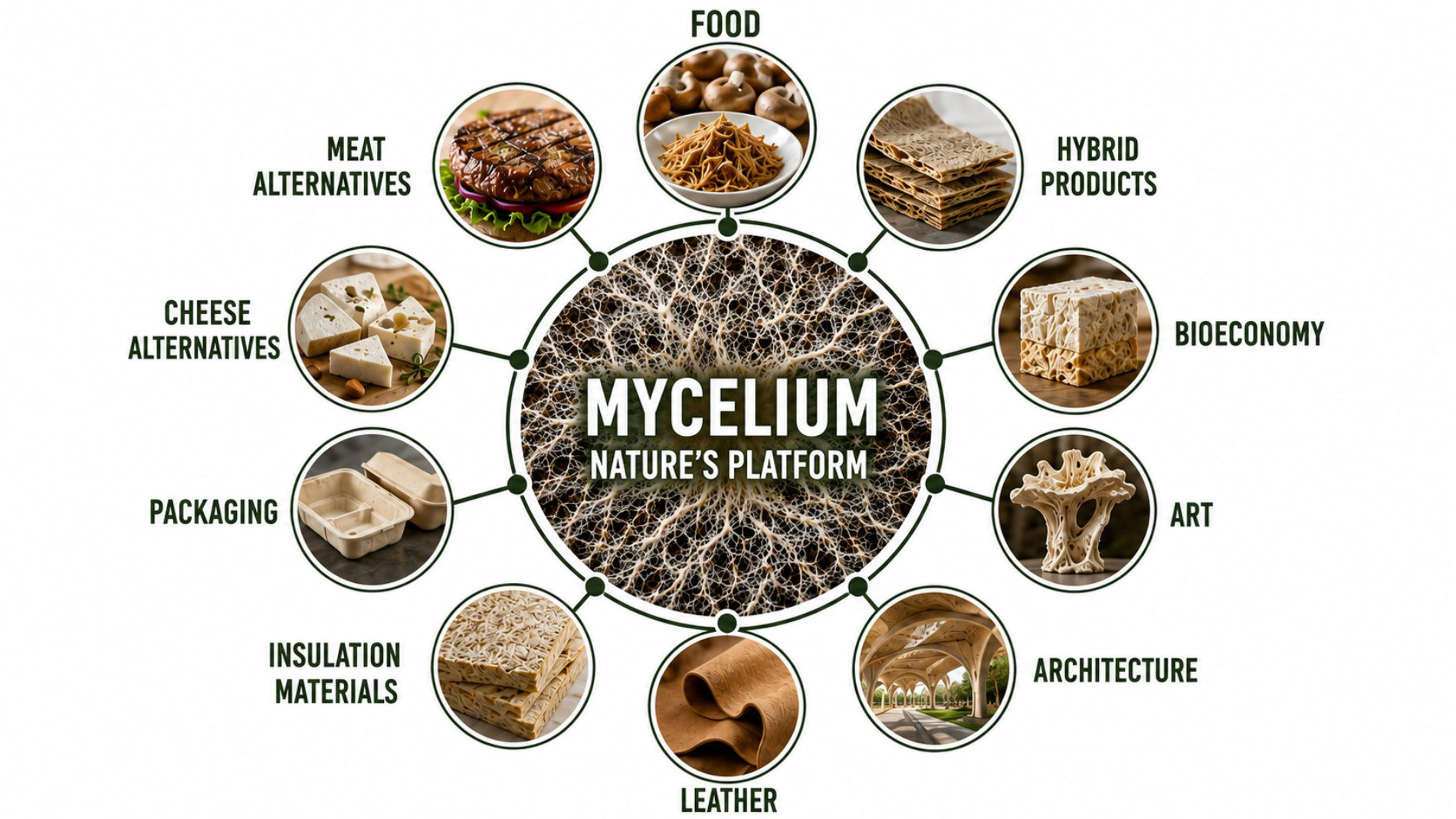
Fungi are far more than just a raw material for meat substitutes. They are evolving into a modular biological system from which a wide variety of products can be made – ranging from protein-rich foods to packaging, textiles and leather-like materials, as well as insulation materials and building components. Fungi represent a platform technology for the bioeconomy and industrial biotechnology. Image: Created by Dr. Beate Gebhardt, using Canva AI
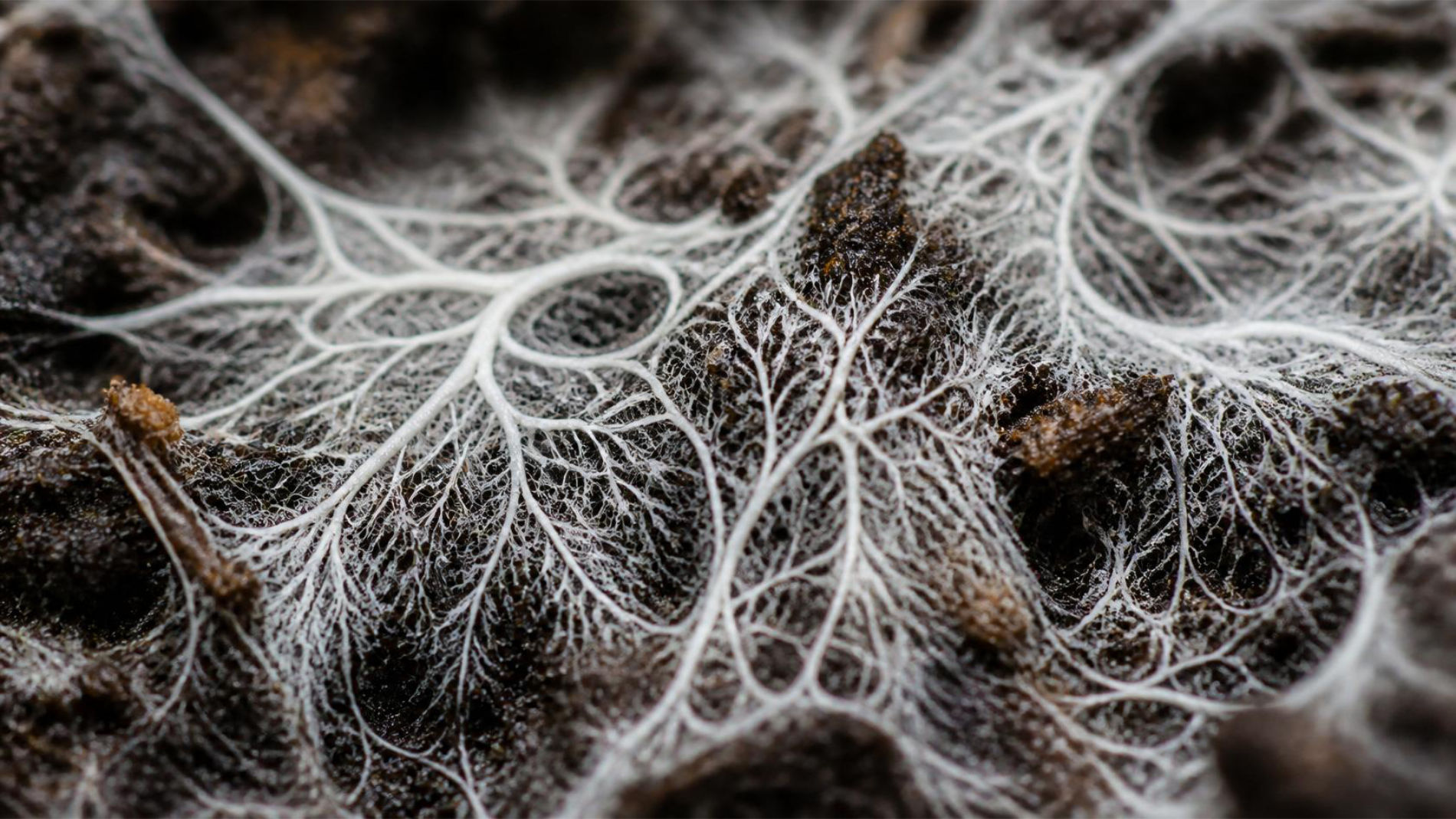
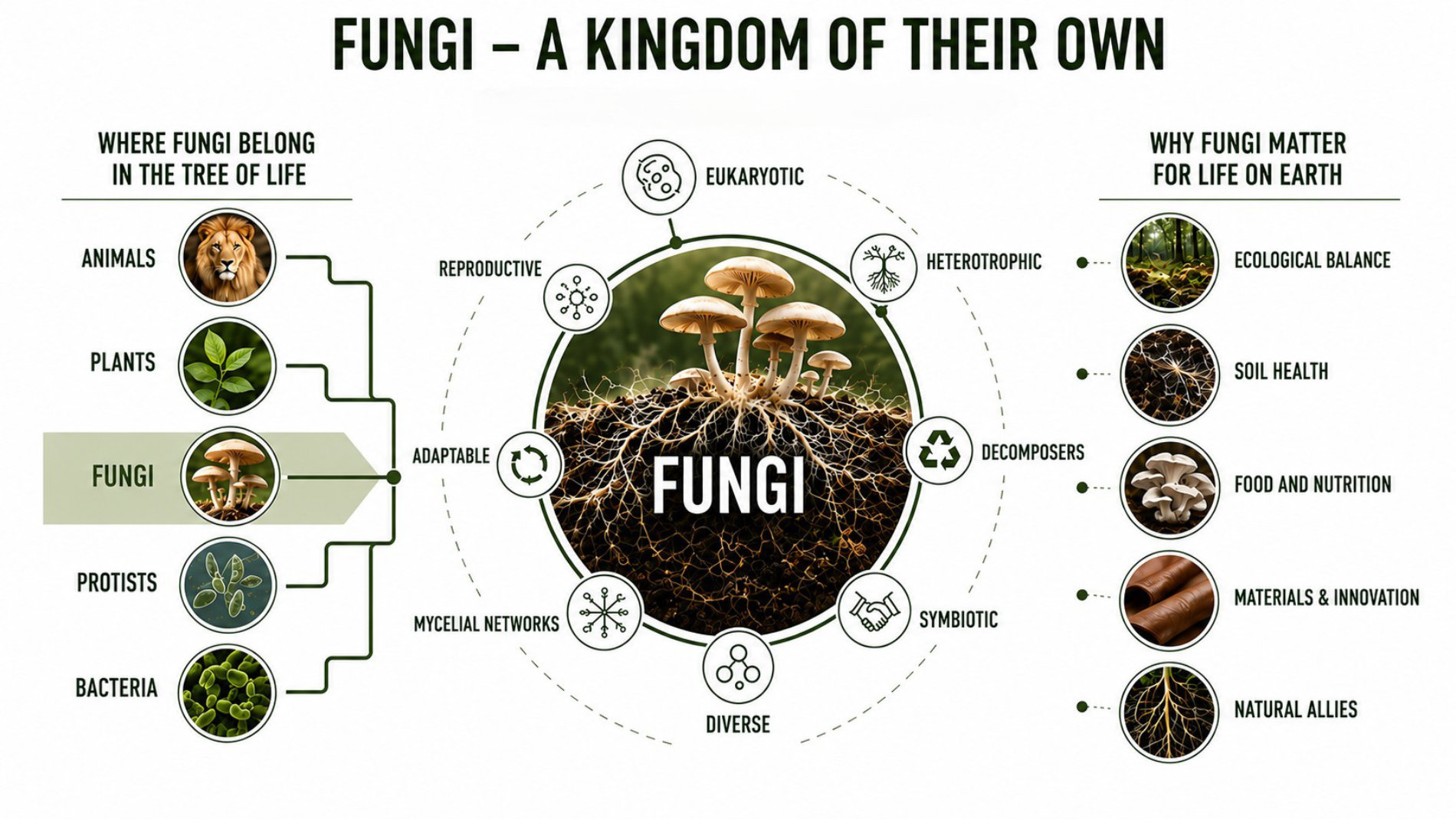
Fungi have been part of human life for thousands of years. Ötzi, the iceman, is thought to have carried birch polypores with him as a remedy. Tinder fungus, which grows on trees, was collected as far back as the Stone Age to help start fires while shiitake mushrooms have been used in East Asia for cooking and medicine for centuries. Despite its importance, the fungal kingdom remains one of the least researched biological domains. Of an estimated two to four million species, only five to ten percent have been scientifically described so far.3 Fungi originated around 1.3 billion years ago, evolving from a common ancestor with animals. Their actual organism is the mostly invisible mycelium – a finely branched network of thin fungal threads known as hyphae. The visible fruiting bodies are the reproductive organs of this largely hidden organism. Fungi are prototypical networkers and their mycelia true all-rounders. They play a central role in natural material cycles, supplying plants with water and nutrients, strengthening their power of resistance and breaking down dead biomass. The honey fungus (armillaria ostoyae) demonstrates just how extensive the invisible network with its mycelium potentially extending over several square kilometres.
From ecosystem to bioreactor

The extraordinary biological properties of fungi can now be exploited selectively in bioreactors.4 Modern fermentation technologies mean it is now possible to control and scale up industrially what fungi have been doing in natural ecosystems for millions of years. The fermenter has developed into a controlled ecosystem, within which selected fungal strains can be cultivated under precisely controlled conditions on defined nutrient substrates, to yield biomass with reproducible properties. These developments are opening up new opportunities for the food industry, as well as for fields such as building and packaging materials, textiles and design products.1 Fungal mycelium is a highly versatile platform technology for the bioeconomy.
Fermentation is one of the world's oldest biotechnological processes. Bread, beer, cheese and yoghurt would be inconceivable without microbial fermentation. “Fermentation has been part of our lives for more than 12,000 years,” says Benjamin Schramm-Völkening, Head of Business Development at Kynda, a biotech company based in Germany. “Fermentation is the happiest accidental discovery in human history,” he adds. Beer, i.e., fermented barley grains, is widely considered to mark the beginnings of agriculture and settled farming. The discovery of citric acid (the mould aspergillus niger) and penicillin (the fungus penicillium) following the advent of controlled fermentation represent major achievements in the 20th century. What is new now is the precision with which biological processes can be controlled and the way in which fungi are utilised in this context. At the heart of 21st century precision fermentation lies the mycelium – the fungus’s fine root-like network. Filamentous fungi grow in liquid fermentation bioreactors under precisely controlled conditions. Temperature, oxygen supply, pH and nutrient levels are set precisely so that protein-rich biomass can be harvested within a few hours. The natural fibre structure of the fungi binds water, giving foods a meat-like texture, and is rich in dietary fibre.4 Moreover, explains Benjamin Schramm-Völkening, the mycoproteins have a natural umami flavour, a flavour which is typical of meat and facilitates the development of foods that are sensorially appealing.

In the mid-1980s, Quorn™ became the first mycoprotein product to be marketed on an industrial scale. Following more than ten years of safety testing, it formed the basis for millions of tonnes of substitute-meat products. Today, the technology is making a giant leap forward with advances in fermentation technology, new fungal strains and improved processes expanding the range of potential applications. Companies are developing not only meat substitutes but also functional ingredients for plant-based milk alternatives, baked goods, hybrid foods and other applications. Schramm-Völkening sees a great potential for hybrid and alternative foods whereby fungal mycelium is specifically used to improve texture, flavour or nutritional value. This permits the optimisation of both plant-based and animal-based products, as well as combinations of the two. It is not a question of pitting animal, plant-based or alternative proteins against one another, says Kynda’s chief strategist. Rather, each protein source has specific functional properties. The key question in the future will no longer be ‘animal or plant-based’ but which protein best fulfils which function.
Studies suggest that fungal mycelium has positive health effects in terms of appetite control – outperforming meat or soya – and in regulating cholesterol and blood sugar levels.5 At the same time, the production of mycoprotein results in significantly lower greenhouse gas emissions than the production of animal or plant-based proteins, while also requiring less land and water.
International competition
The market for mycelium-based foods is still in its early stages of development but is growing rapidly. Market research firms estimate the global market to be worth hundreds of millions, and annual growth rates of around 15 percent are expected by 2034. Mycelium is emerging as a key platform technology for alternative proteins and global competition is already gathering pace. US companies such as Nature’s Fynd6 and Meati Foods7 are investing in industrial production capacity. With companies such as Kynda Biotech8 and Infinite Roots9, Germany is also positioning itself as an important centre of innovation for mycelium-based foods.
The route from the laboratory to the market is a long and difficult one with key challenges including the selection of suitable fungal strains, ensuring their consistent quality during mass production and the still high costs of fermentation. Additional challenges include the regulatory requirements of the Novel Food Regulation (EU 2025/228)10 and the lengthy approval procedures of the European Food Safety Authority (EFSA), as well as limited fermentation capacity and high capital requirements during the growth phase of these companies.
A prime example of this is Kynda Biotech, a start-up founded in 2019. Based in the German state of Lower Saxony, the company cultivates fungal mycelium using food processing residues such as oat hulls, sour whey or sugar by-products, and converts these waste flows into mycoprotein at the point they are generated. This gives rise to decentralised production models that reduce transport costs and strengthen regional resilience. The decentralised use of plant-based by-products as fermentation substrates is a promising approach to a circular bioeconomy.4 Following successful funding rounds, Kynda Biotech is now investing in larger bioreactors to expand industrial production.
Market acceptance is crucial for the future of mycelium-based or fermented foods. Studies11 show that this depends on consumer confidence in the technology, the perceived naturalness of the products and transparent communication regarding the manufacturing processes and benefits. Not everyone is familiar with the term ‘fungal protein’ and the public debate about ultra-highly processed foods is crucial. Pragmatically, Benjamin Schramm-Völkening says, “Price can be a good reason to buy a product.” Lasting market success occurs when economic competitiveness, compelling products and trust in the technology intersect.
Fungi – biological building blocks
Fungal mycelium is far more than just a new raw material. Indeed, it is evolving into a modular biological system from which a broad spectrum of products can be made – from protein-rich foods, through packaging, textiles and leather-like materials, to insulation materials and construction elements. The starting point is always the same biological organism, and it is the choice of fungal strain, nutrient substrate and process control that determines the properties ultimately possessed by the material. Mycelium thus becomes a platform for a wide range of applications.
And this is precisely where its great strength lies. Modern fermentation does not simply unlock another source of protein – it harnesses a biological system, the potential of which can be applied equally to food, materials and circular production processes. Fungi therefore represent not just a single innovation but a versatile building block of the bioeconomy – with a potential extending far beyond its use in food production.
Fungi are neither animal nor vegetable. They play a key role in natural material cycles by supplying plants with water and nutrients, strengthening their power of resistance and breaking down decaying biomass. Image: Created by Dr Beate Gebhardt, using Canva AI
Sources
1 FAO: Cultivated Mushrooms. https://agris.fao.org/search/en/providers/125429/records/69b979d7ce5e0ae4f878f8f6 22.07.2026
2 DLG: Zuchtpilze: unterschätzte Alleskönner. https://www.dlg.org/fileadmin/downloads/Expertenwissen/lebensmittelsensorik/2026_4_EW_SensorikPilze.pdf 22.07.2026 (in German language)
3 State of the World’s Plants and Fungi 2023.
https://www.kew.org/sites/default/files/2023-10/State%20of%20the%20World%27s%20Plants%20and%20Fungi%202023.pdf
4 Review: Growing a circular economy with fungal biotechnology. 2020
https://doi.org/10.1186/s40694-020-00095-z 22.07.2026
5 Mycoprotein: production and nutritional aspects: a review
https://doi.org/10.1039/d3fb00169e
6 Website Nature's Fynd
https://www.naturesfynd.com/ 22.07.2026
7 Website Meati Foods
https://www.meati.com/ 22.07.2026
8 Website Kynda
https://kyndatech.com/ 22.07.2026
9 Website Infinite Roots
https://www.infiniteroots.com/ 22.07.2026
10 European Commission: Novel Food
https://food.ec.europa.eu/food-safety/novel-food_en 22.07.2026
11 Consumer acceptance of precision fermentation-derived foods: A systematic review. Trends in Food Science & Technology.
https://www.cabidigitallibrary.org/doi/full/10.5555/20230369672 22.07.2026
Header image: Created by Dr Beate Gebhardt, using Canva AI