Who buys organic? Animal welfare, origin and sustainability shape purchases
23 Mar 2026
Germany’s organic meat market is growing again, driven by value-oriented and affluent consumers. Domestic production struggles to keep up with rising demand, increasing the importance of imports.
The supply of beef, pork and poultry from German organic farms is unable to keep pace with increasing demand. Although beef production rose by two percent to 72,100 tonnes of carcass weight in 2024, there has been a persistent slump since spring of 2025. The result: the price gap between cattle from conventional and organic farming is narrowing rapidly, making fattening less profitable for organic farmers. As more and more farmers give up, the supply of organic pork is also declining with German domestic production down to roughly 35,000 tonnes. Only organic poultry producers were able to ramp up production significantly, producing around 26,000 tonnes of meat 3,4.
Moreover, the end of the federal programme for the restructuring of livestock farming is exacerbating the supply of organic meat. The investments necessary for the changeover on the livestock side are lacking, meaning that meat imports must fill the gaps. In 2024, for example, the German Association for Organic Food and Agriculture (BÖLW) reported that a good third of organic pork came from neighbouring countries, such as the Netherlands and Denmark, as well as from Belgium and Spain beginning in 2025.
In 2024, the total production volume of meat products and sausages in Germany amounted to 1.38 million tonnes, of which just under 36,000 tonnes (2.6 percent) were sold as organic products. According to Benjamin Krieft, CEO of sausage and ham manufacturer Börner-Eisenacher, the segment has seen steady growth over recent years. Indeed, the company expanded its portfolio to include organic products some 20 years ago.
“The situation is difficult and prices are high. Organic pigs have become a valuable asset over recent years”.
“The share of organic sales grew from 63 percent in 2020 to 82 percent last year and this is reflected by the increase in total turnover.” With their well-established range of raw sausages, the Göttingen-based company is one of Germany’s largest producers of organic sausages and ham. According to Krieft, the range of raw cured products – including organic bacon, diced bacon and organic ham – is gaining in importance alongside salami. In Germany, Börner-Eisenacher’s products are mainly stocked on the shelves of Rewe, Edeka, Aldi Nord and Süd, Lidl and Kaufland as private-label brands. The tight supply of raw materials across the entire organic sector is also a concern for Krieft. Because there is not enough meat of German origin – particularly for cuts in high demand – his company also imports meat from neighbouring countries, including Denmark, the Netherlands and Austria.
What are the regulations for organic animal husbandry?
Since 1991, organic producers in the EU have been subject to the requirements of the EU Organic Regulation5, which are regularly updated. The regulation specifies how organic food must be produced, inspected, imported into Europe and labelled. It also lays down standards for the rearing and feeding of cattle, pigs and poultry. Additionally, the organic associations Naturland, Bioland and Demeter define their own, supplementary criteria for organic meat production.
In most cases, husbandry methods are based on allowing animals to behave naturally and interact with others of their own species. More room, access to outdoor areas and, in the case of poultry, limited flock sizes improve their welfare. Beak trimming in chickens and turkeys is taboo as is clipping canine teeth and tail docking in organic piglets. Organic calves may only be dehorned in exceptional circumstances. However, Demeter standards prohibit this practice as a matter of principle.
A completely organic diet has been mandatory for adult animals since January 2022.6 Antibiotics are permitted only in cases of confirmed illness; growth-promoting and performance-enhancing preparations are prohibited. Additional consumer safety comes from a waiting period between the administration of medication and slaughter that is twice as long as the statutory requirement.
Under the EU Organic Regulation, neither sedatives nor herding aids may be used during transport to the abattoir. Naturland and Demeter impose limits on journey times and distances; Naturland and Bioland stipulate specific stunning and slaughter techniques. Some organic farms carry out slaughter in a less stressful manner on familiar farm or pastureland. Organic retailer Alnatura was the first to launch ‘organic beef from pasture slaughter’ in 2021 but discontinued the product range due to low demand at the end of 2023.
Labelling: If the label says ‘organic’, it must be organic
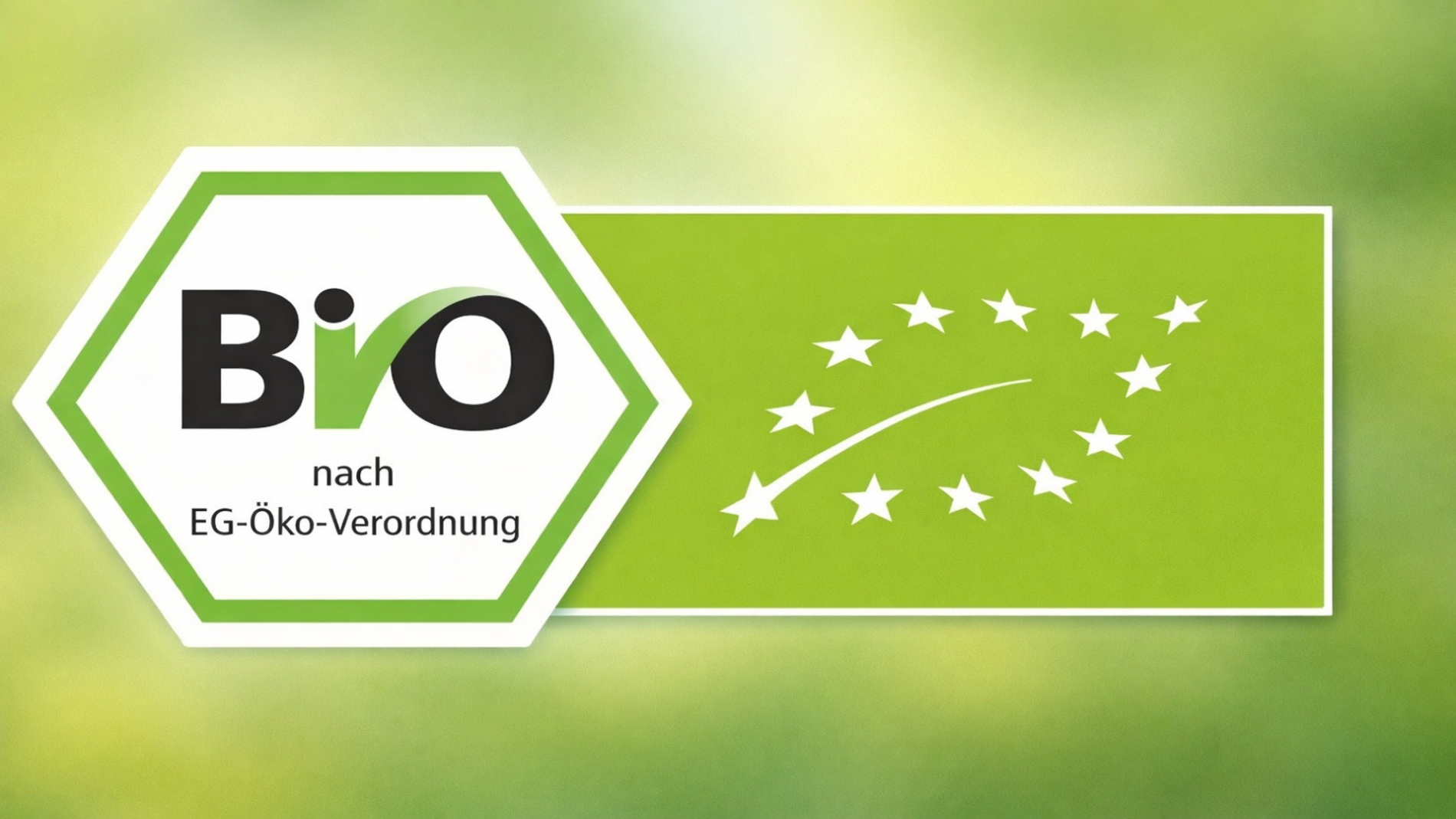
The hexagonal German organic label bearing the word ‘Bio’ has represented the criteria of the EU Organic Regulation since 2001. The EU organic label, introduced in 2010, is standardised across Europe and identifies pre-packaged organic food.
No matter whether the product is German-made or imported, if it says ‘organic’ on the label, it really is organic. The terms ‘organic’ and ‘eco’ have been legally protected since 1993. Anyone using these words in their advertising must meet the requirements of the EU Organic Regulation, which also applies to imports.
Germany's hexagonal ‘Bio’ label has been used to indicate compliance with the criteria of the EU Organic Regulation since 2001 and defines minimum standards. In Germany, it is better known than the mandatory, pan-European EU logo introduced in 2010, which features a white leaf and stars on a green background and identifies packaged organic food. Unpackaged organic products may be labelled on a voluntary basis and many products bear both labels.
German organic associations such as Biokreis, Bioland, Biopark, Demeter and Naturland have their own labels. Numerous retailers also have their own organic brands with visually striking logos or designs: Rewe Bio (Rewe), Bio or, until mid-2025 Gut Bio (Aldi Nord and Süd), BioBio (Netto), enerBio (Rossmann), K-bio (Kaufland), Bio Sonne (Norma) and Naturgut (Penny). Lidl does not have an explicit own-brand organic range and instead promotes its own products by adding an ‘organic’ label.7 Specialist organic wholesalers such as Alnatura and Dennree sell their products through their own supermarkets or supply health-food retailers and drugstores.
Why is organic meat significantly more expensive than conventionally farmed meat?
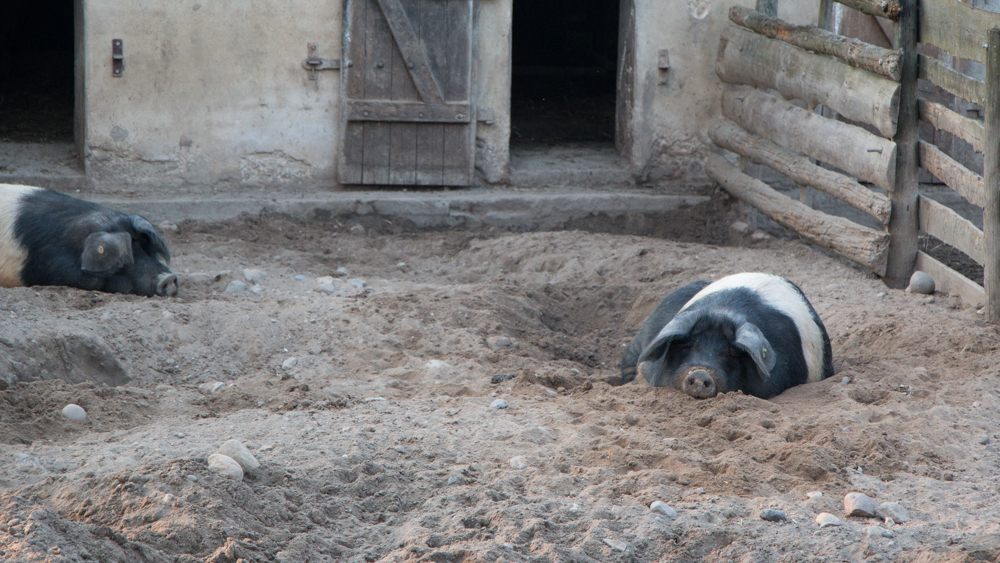
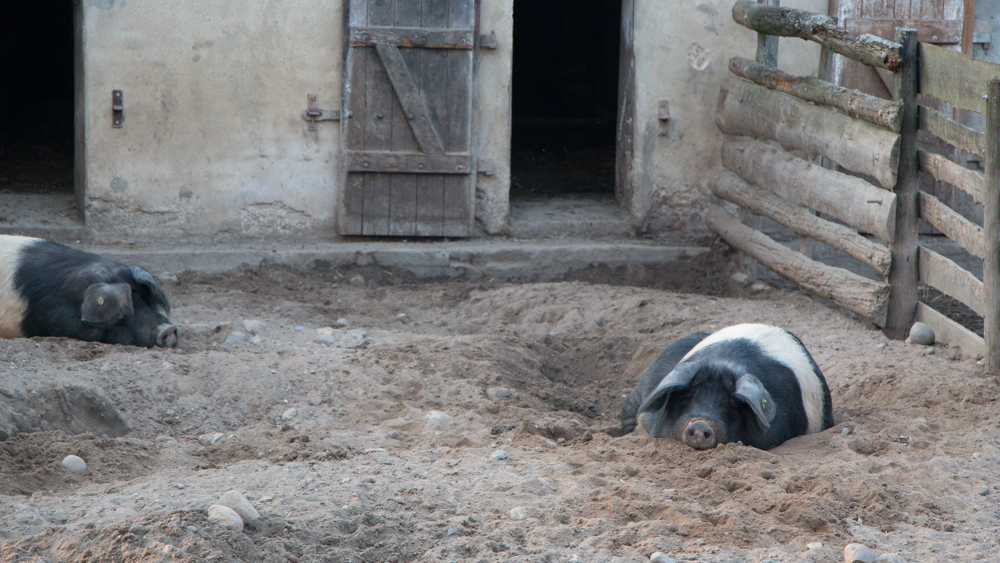
More space and access to outdoor areas improve the welfare of fattening pigs. Photo: Demeter
€21 for a kilogram of fresh chicken escalope, up to €30 for the same amount of pork escalope: consumers must dig much deeper into their pockets for organic poultry and pork than for their conventionally farmed counterparts. Factors driving up prices include extra space in animal-friendly housing with straw bedding, a longer lifespan before being slaughtered, high-quality feed from the farm’s own organic crops, and a limit on the number of animals based on the amount of farmland available.
What type of customer buys organic products and why?
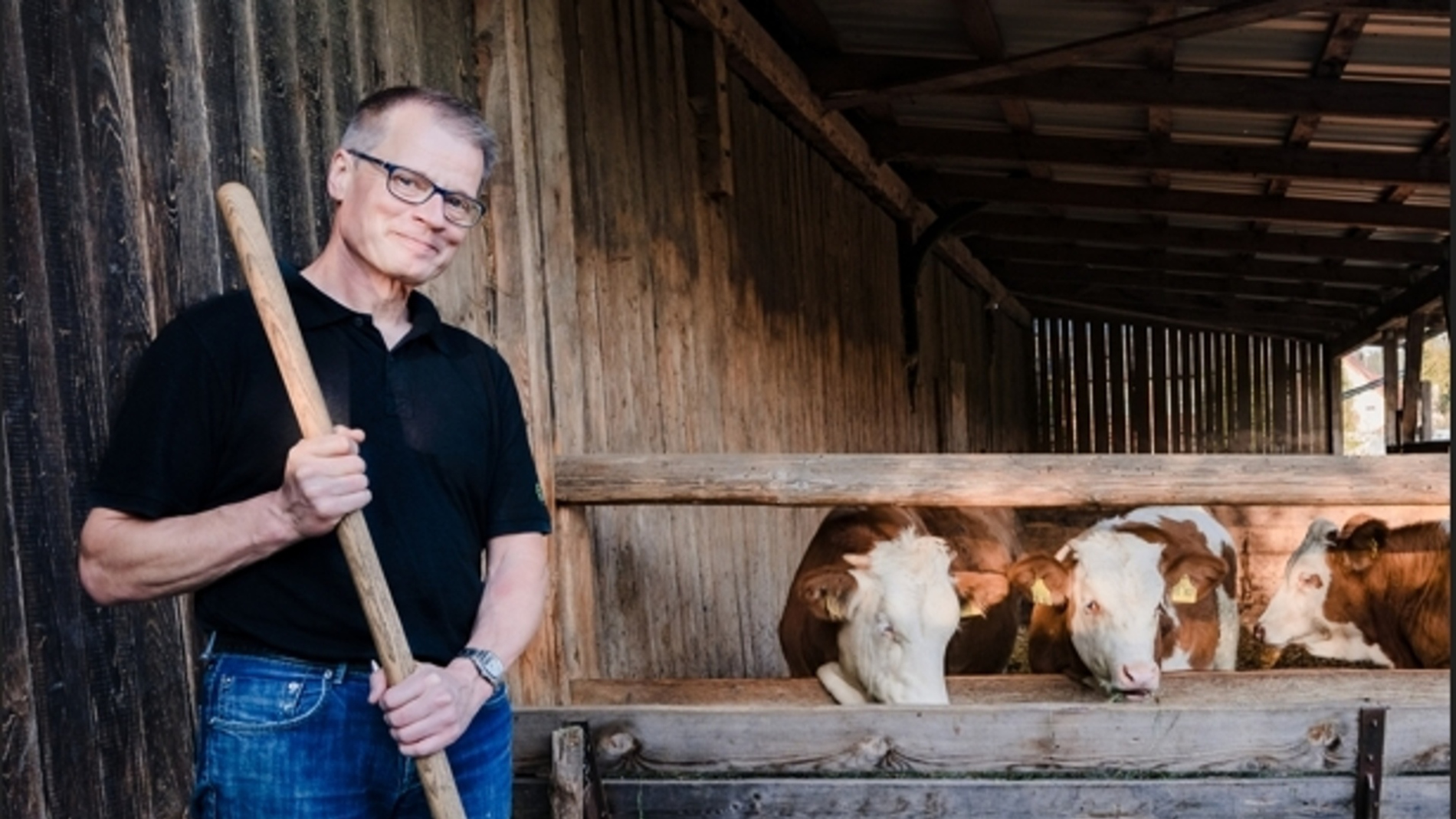
Reiner Munz knows all his livestock suppliers personally and visits them frequently on their farms. Photo: Miriam Sengebusch
Reiner Munz has been selling organic meat and sausages for many years at the Organix organic market in the Feuerbach district of Stuttgart and has built up a loyal customer base. “I can’t say exactly who makes up that customer base,” admits the 62-year-old master butcher. “However, I believe that the people who come to me are mainly affluent people, academics and true organic enthusiasts.” In the latter case, meat rarely appears on the table but when it does, it must be organic. Munz understands this and even reinforced this mindset a few years ago with a leaflet headlined: “Eat less meat.” In it, he explains his reasoning: “It’s better to buy less but of higher quality.”
Although consumers often claim in surveys that they endorse sustainable or ethical goals, such as higher meat prices or plant-based alternatives, they behave differently in their daily lives – either for reasons of convenience, out of habit, a lack of choice or because organic products are more expensive. There is a considerable discrepancy between environmentally and health-conscious attitudes and actual behaviour. In behavioural economics, this phenomenon is referred to as the attitude-behaviour gap. 8
Interest in organic products also varies by age and this is shown by a study entitled “Between Schnitzel and Conscience – A Generational Issue?,” 9 commissioned by the German Economic Institute (IW). As part of the study, 3,288 people aged 18 and over were asked in December 2024 about their willingness to pay higher meat prices for the sake of the environment. The result: despite supposedly tighter budgets, 57.3 percent of Gen Z respondents (born 1997 or later) said they would pay more for ecological standards in meat consumption. However, this willingness declines noticeably among older generations.
To understand why some people buy organic products and others do not, the NIQ Nielsen consumer panel has analysed different types of shoppers. As outlined in the 2025 BÖLW industry report10, there are four reasons that rank equally high among organic consumers: animal welfare, opposition to production methods that are harmful to health and the environment, support for local agriculture, and sustainability. On closer inspection, however, it is apparent that value for money is a decisive factor in product selection within the organic sector. Although a subjectively high price deters two-thirds of all respondents from buying organic, things are different for committed organic buyers (‘heavy buyers’): while 54 percent also mentioned price as a barrier to buying even more organic products, a significant proportion (27 percent) said, “there are not enough organic foods in the shops.” And a fifth of all respondents would like to buy more organic products – if they could find them.
From the consumer’s perspective, key sustainability criteria have been declining in importance recently. A white paper entitled “The Organic Market 2025 – Back on Track?”11 published by the Dual University of Baden-Württemberg in Heilbronn reveals that people are noticeably less willing to make personal sacrifices in terms of their standard of living when it comes to sustainability. Although organic and organic association labels remain relevant purchasing criteria, they now rank behind factors such as value for money, animal welfare, transparency, origin and regionality.
Most German consumers regard meat as an important part of a healthy diet. Although demand for organic meat and sausages is trending upwards, it only accounts for 3.9 percent12 of total meat purchases, which means – despite significantly higher prices – there is still room for growth.
Monika Mathes
Trade journalist
Reports for Foodtech Now! on growth markets in the meat and protein industry.
6 100 Prozent Bio-Fütterung – was heißt das für die Praxis?
Ökolandbau.de – das Informationsportal; abgerufen am 10.2.2026, German only
https://www.oekolandbau.de/bio-in-der-praxis/oekologische-landwirtschaft/tier/grundlagen/100-prozent-bio-fuetterung-was-heisst-das-fuer-die-praxis/
11 Stephan Rüschen, Andrea Nitsche: Bio-Markt 2025 – Back on Track?
Schriftenreihe Handelsmanagement Whitepaper #58; Kompetenznetzwerk Handel der Dualen Hochschule Baden-Württemberg Heilbronn (DHBW); abgerufen am 10.2.2026, German only https://handel-dhbw.de/schriftenreihe/whitepaper/bio-markt-2025-back-on-track/