The interplay of factors is decisive when it comes to taste
12 Oct 2026
Taste is not experienced solely via the tongue. Smell, texture, visual impressions and expectations have a significant impact on how we perceive taste. Professor René Nachtsheim of Fulda University of Applied Sciences explains the potential of multisensory approaches to product development and where their boundaries lie.
Neurogastronomy is an interdisciplinary field of research at the interface between neuroscience, psychology, sensory science and food science. It explores how the brain processes perceptions of taste, aroma and pleasure, and combines them with other impressions to form an overall assessment. The term was coined in 2006 by neuroscientist Gordon M. Shepherd. The central tenet of his approach is the thesis that flavour is not a property inherent in food itself but something that arises in the brain by processing and interpreting various sensory stimuli. Taste signals from the tongue, smells (particularly through retronasal olfaction), texture, temperature and the sounds made while eating are linked together, as are expectations, memories, emotions and the situational context. Shepherd summarised this approach in his 2012 book, ‘Neurogastronomy: How the Brain Creates Flavour and Why It Matters’. Today, this field of research ranges from the development of new foods and the design of culinary experiences to clinical applications, such as those for smell disorders or age-related loss of appetite.
Professor Nachtsheim, when it comes to product development, taste is often thought of in terms of recipes and ingredients. From a neurogastronomical perspective, that view falls short. What do you understand by 'taste'?
Firstly, it is important to distinguish between taste in the narrower sense and the overall taste experience. Sweet, sour, salty, bitter and umami are the basic taste qualities. However, what we refer to in everyday life as the ‘taste’ of a food is derived from the overall impression generated by taste, smell, texture and other sensory impressions. In the English-speaking world of sensory science, this is referred to as ‘flavour’.
“The individual sensory impressions are never perceived independently of each other, and this is why, for example, a colour or a smell can influence the perception of sweetness.”
Which sensory characteristics has product development underestimated in the past?
The significance of texture has long been overlooked. Today, when developing foods, greater use is made of different textures – such as crunchy, creamy or soft – to create a multisensory product experience. However, there is no single sense that can be universally declared the most important. The interplay of all sensory impressions is crucial to the taste experience. For example, if a butter aroma is added to mashed potato, it may be perceived as ‘fattier’, even though the actual fat content remains unchanged. The interrelationships between different sensory impressions have not yet been fully researched and hold out a great potential for the precise optimisation of food products.
Expectations form a central aspect of neurogastronomy. What role do they play?
Indeed, expectations play a very significant role. We have learnt that certain foods have specific colours, shapes and characteristics. Our brains draw on these experiences and categorise new impressions accordingly. If there are no clues, or if they contradict our expectations, categorising foods becomes more difficult and can lead to lower acceptance. This is particularly apparent in the case of products that deviate from familiar expectations of the original, or which we have come to recognise in different contexts, such as when on holiday, at the beach or in an urban setting. Well-known studies on the effect of colour in wine, for example, demonstrate just how strongly visual cues can influence the description of sensory impressions. A white wine coloured red created the expectation of a red wine and influenced the description and perception of its aromas. A transparent cola or green ketchup confused consumers and ultimately proved to be flops. Price, packaging, brand or perceived origin can also be part of this expectations framework. Hence, given the ever-expanding range of food products available, it is becoming increasingly important that these individual characteristics be coordinated carefully, to position products successfully on the market and distinguish them from the competition.
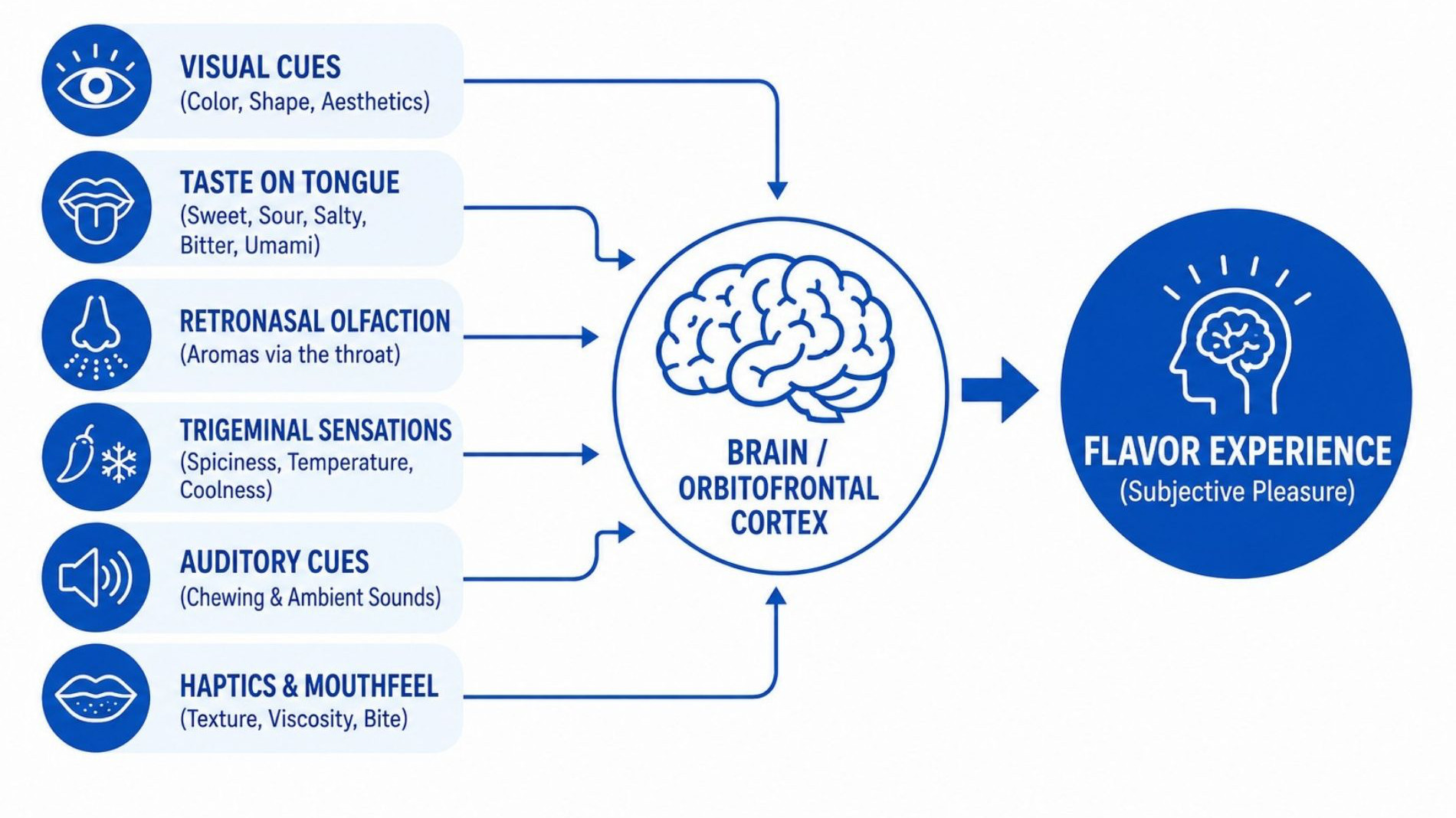
Flavour results from a combination of factors: taste on the tongue, aromas, visual, auditory and trigeminal stimuli, as well as tactile sensations and texture in the mouth are all processed together in the brain – and combine to shape the individual experience of flavour. Source: Dr. Beate Gebhardt KI-generated by OpenAI
Flavour results from a combination of factors: taste on the tongue, aromas, visual, auditory and trigeminal stimuli, as well as tactile sensations and texture in the mouth are all processed together in the brain – and combine to shape the individual experience of flavour. Source: Dr. Beate Gebhardt KI-generated by OpenAI
This is particularly interesting when it comes to plant-based alternatives. Many products claim to taste exactly the same as the animal-based originals. Is that a problem?
In some cases, it might make more sense to not claim the product is an exact replica. If it has a different taste, it might be better to communicate this clearly rather than say it ‘tastes just like the original.’ Reducing the gap between expectations and the actual experience could well lead to a more favourable taste rating.
More about flavour and texture in plant-based alternatives:
Can multisensory approaches compensate for sensory deficits in plant-based products?
Although they can enhance the sensory experience, they cannot completely conceal fundamental product issues. If a product has a distinct flavour of its own, this will not disappear simply because of the colour scheme, a different plate or the choice of music. Key developments will continue to take place on a technological level, that is, with respect to raw materials, recipes and manufacturing processes.
Can there be too much of a good thing when it comes to multisensory design?
Of course. Sensory impressions can become too intense, in which case they are more likely to distract from than to enhance enjoyment. What one target group finds stimulating or surprising may cause irritation or rejection in others. Therefore, it is essential that the individual elements match the product, the target group and the specific situation in which it is consumed.
Where do you see potential for health and sustainability?
If we can better understand which sensory stimuli influence acceptance and enjoyment, we might be able to apply this knowledge to health and sustainability goals. For example, products with less sugar or salt could be reformulated to ensure they remain appealing to the senses. When it comes to sustainable alternatives, the first step is to understand which characteristics win people over and how their expectations can be managed meaningfully.
“Taste is not the only factor when it comes to the overall impression made by meat alternatives.”
Where do you draw the line between legitimate sensory design and manipulation?
For me, misleading advertising is an obvious red line. Thus, a good texture, a matching aroma or a pleasant ‘crunch’ experience are perfectly legitimate aspects of product development. The problem arises when the advertising suggests characteristics or ingredients that are not actually there.
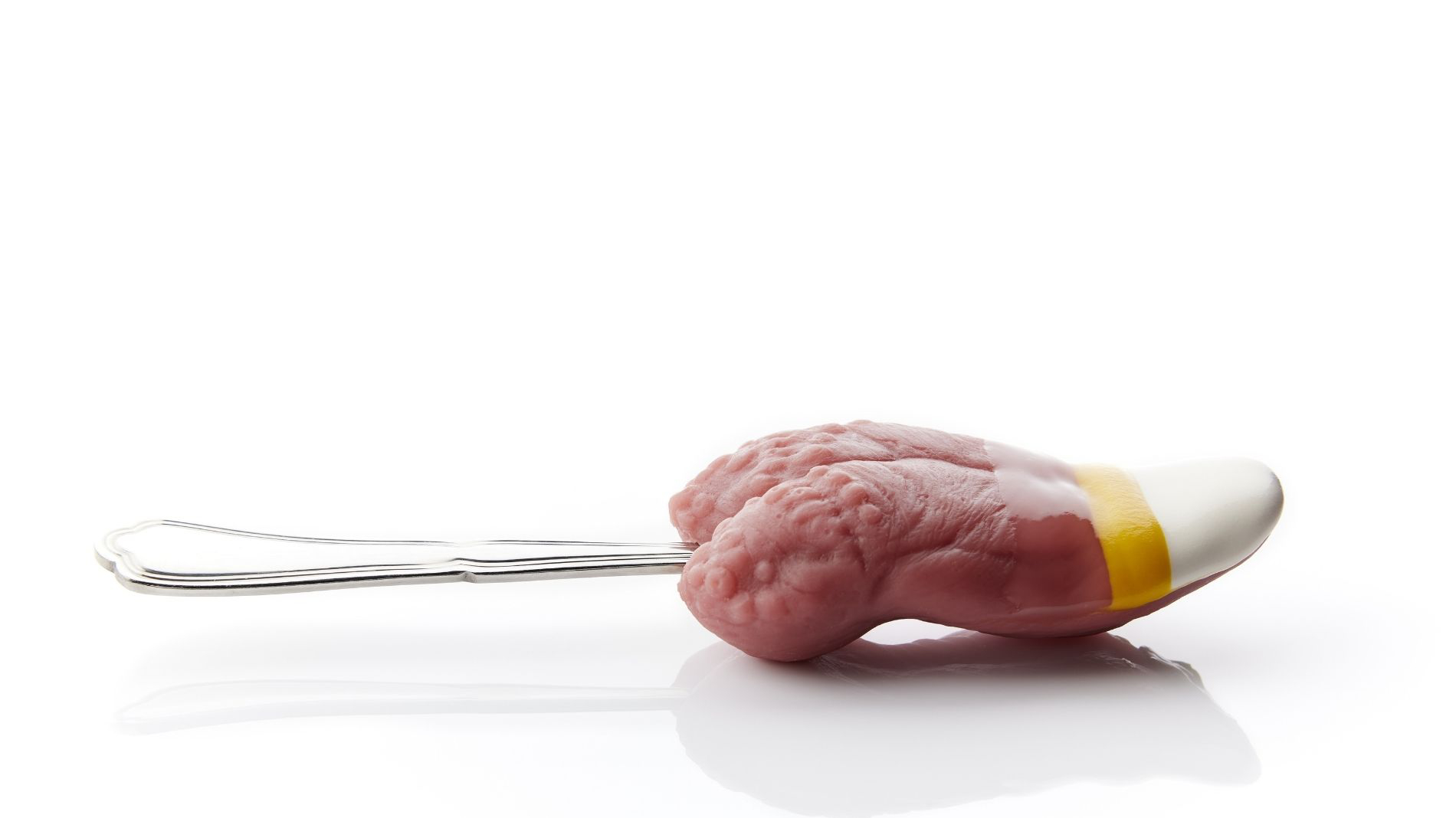
What we experience as taste doesn’t begin just when the food reaches the tongue: the ‘Tongue Kiss’ at Copenhagen’s Alchemist restaurant plays with expectations, contradictions and how we perceive our bodies - and brings gastrophysics to life.
Source: Alchemist, https://alchemist.filecamp.com
Restaurants offering ‘immersive dining’ are distinguished by a curated environment. Which aspects of this can be applied to mainstream food products?
There is still a great need for research in this field. Numerous multisensory effects have been studied under controlled conditions or in specific dining situations where account is taken of factors such as lighting, music or the weight of the cutlery. Nevertheless, it remains unclear whether an effect observed in a restaurant can be transferred to a supermarket product or home consumption. It might be necessary to consider each product category on its own merits. We need to investigate much more thoroughly which multisensory effects are truly relevant under such realistic, everyday conditions at home.
Finally, let’s look into the future: how could technology change the way we savour food?
In the first place, we must gain a better understanding of which factors influence our perception and under what conditions they occur. Technologies such as virtual reality can be particularly helpful in research, enabling us to simulate different eating scenarios: does a product taste different when consumed at home compared to when eaten on the go or in a specific environment?
Indeed, personalisation could also become more important. Multisensory effects do not necessarily work in the same way for everyone. They depend, among other things, on individual experience, cultural influences and learned associations. If we gain a better understanding of for whom and in which situations certain sensory combinations work, products could in future be tailored more specifically to different target groups and needs.
Neurogastronomy is an interdisciplinary field of research at the interface between neuroscience, psychology, sensory science and food science. It explores how the brain processes perceptions of taste, aroma and pleasure, and combines them with other impressions to form an overall assessment. The term was coined in 2006 by neuroscientist Gordon M. Shepherd. The central tenet of his approach is the thesis that flavour is not a property inherent in food itself but something that arises in the brain by processing and interpreting various sensory stimuli. Taste signals from the tongue, smells (particularly through retronasal olfaction), texture, temperature and the sounds made while eating are linked together, as are expectations, memories, emotions and the situational context. Shepherd summarised this approach in his 2012 book, ‘Neurogastronomy: How the Brain Creates Flavour and Why It Matters’. Today, this field of research ranges from the development of new foods and the design of culinary experiences to clinical applications, such as those for smell disorders or age-related loss of appetite.
Flavour refers to the holistic sensory experience of a food. Indeed, flavour is more than just the actual taste, which is perceived via receptors that detect stimuli such as sweet, sour, salty, bitter and umami. Smell, taste, trigeminal stimuli, such as heat or coolness, as well as mouthfeel, texture and temperature all contribute to flavour. The brain integrates this information to form the overall impression, which in everyday language is simply referred to as ‘taste.’
Eating is a multisensory experience. The brain simultaneously processes information from a variety of sensory channels – such as sight, smell, taste, hearing and touch – and combines them to form an overall impression. It is not only the ingredients and the recipe that influence our perception. Colour, shape, packaging, background noise, cutlery and the atmosphere can also alter expectations and, therefore, the taste experience. Such connections are based on cross-modal correspondences – often learned or culturally shaped links between different sensory impressions. The brain uses these connections to categorise and interpret sensory information.
Retronasal olfaction is a key component of flavour perception when eating. During chewing, volatile flavour compounds are released from food. They travel via the throat into the nasal cavity, where they are detected by the olfactory receptors. This is why food often tastes significantly less intense when one has a cold or a reduced sense of smell: although the basic taste qualities – sweet, sour, salty, bitter and umami – can still be detected by the tongue, many characteristic flavours cannot.
Trigeminal sensations are sensations such as sharpness, coolness, warmth, tingling or irritation, which are transmitted via the trigeminal nerve. The burning sensation of chilli, the cooling effect of menthol or the fizz of carbonated drinks are typical examples.
Sonic seasoning refers to the targeted use of sounds and music to influence the perception of food and drink. Studies show that the brain can link certain pitches and sound characteristics to specific taste qualities. High-pitched, bright sounds, for example, are more frequently associated with sweetness, while low-pitched, harsh or dissonant sounds can highlight other dimensions of taste, such as bitterness. The sounds produced by a food itself also influence how it is perceived. Thus, the renowned experiments by Charles Spence and his colleagues showed that altering the crunching sound led to crisps being perceived as fresher and crispier.
Gastrophysics studies ways in which physical, psychological and multisensory factors influence the way we eat and drink. It focuses on so-called ‘off-the-plate’ factors, such as crockery, cutlery, packaging, lighting, sounds and the social setting. Charles Spence, Professor of Experimental Psychology at the University of Oxford, is a leading pioneer in this field. In 2017, he compiled numerous findings in his book ‘Gastrophysics: The New Science of Eating’. For the catering industry and product development, gastrophysics opens up new options for holistically shaping taste and pleasure, and presenting them in a way that appeals to the senses.
Spence, C. (2017). Gastrophysics: The New Science of Eating. Penguin Random House.
Sensory-specific satiety describes the phenomenon whereby acceptance of a specific taste, smell or texture decreases dramatically during prolonged consumption, while appetite for foods with a different sensory profile remains entirely unaffected. This is one reason why there is often still ‘room for dessert’ after a big main course. From an evolutionary perspective, sensory-specific satiety instinctively ensures that we eat a more varied and, therefore, nutrient-rich diet.
Dr Beate Gebhardt is an author and research consultant who brings science to the point and sustainability into practice at the Foodtech.Now! editorial office.