
Reading time: 2 minutes
Publikation auf einen Blick
Type of publication: Policy review and analysis
Publisher: Standing Committee on Agricultural Research (SCAR) – Protein Task Force
Commissioning body: None specified
Geographical focus: European Union
Year of publication: 2025
Target audience: Policymakers, researchers, the agriculture and food industry, and stakeholders across the protein value chain
What is the publication about?
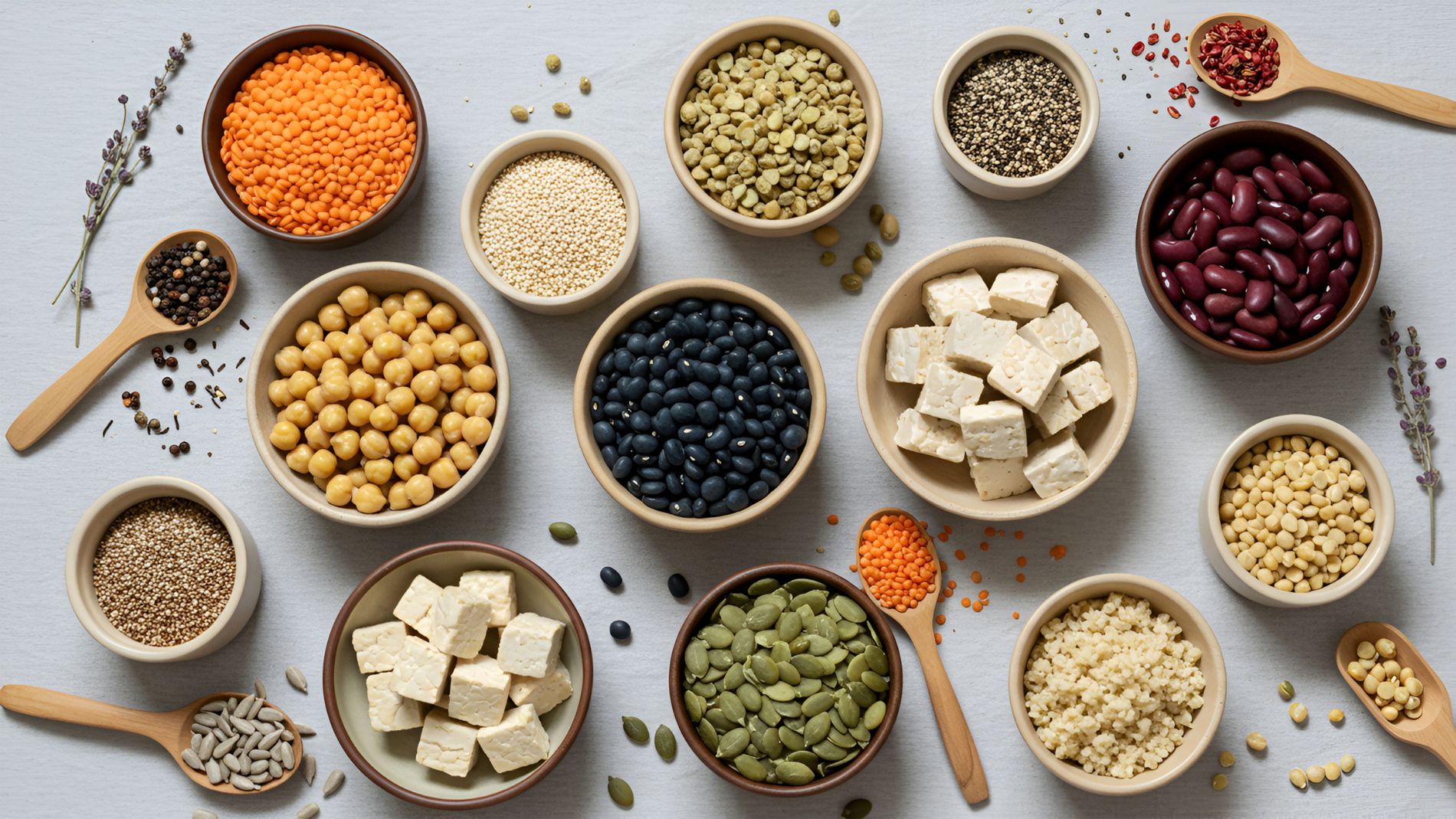
The publication explicitly presents the transformation of Europe’s protein system not as the replacement of existing protein sources with new alternatives, but as a process of coexistence and diversification. Animal proteins, plant proteins and novel sources such as algae, insects, microbial proteins and cultivated meat are viewed as components of a more resilient overall system.
From the authors’ perspective, the future of Europe’s protein supply therefore depends less on individual technologies than on the ability to connect research, agriculture, processing, feed production, food development and consumer acceptance across a shared value chain.
Import dependency as the starting point for the debate
The analysis identifies Europe’s high dependence on imported protein feed as a key driver for action. According to the publication, 66% of high-protein feed is imported, with the import share for soya bean meal reaching 96%. These figures refer to the European Union and, in the authors’ view, illustrate its vulnerability to geopolitical developments, market changes and supply chain risks.
The analysis connects this situation with the question of how Europe can strengthen its own protein sources without setting existing agricultural systems or individual protein categories against one another.
Research across the entire protein value chain
A major focus of the publication is the entire protein value chain. Research and innovation should not only develop new protein sources, but also connect breeding, cultivation, processing, feed, food production, distribution and the circular economy more closely.
The authors identify both established crops, such as legumes and oilseeds, and sources including algae, insects, microbial proteins and cultivated meat as relevant fields of research. At the same time, the publication makes clear that many of these approaches still face challenges relating to scale-up, processing, regulation or consumer acceptance. The analysis therefore presents these technologies not as ready-made solutions, but as research and innovation fields at different stages of development.
Protein diversity instead of either-or choices
Rather than advocating the wholesale replacement of existing protein sources, the publication describes diversification as the guiding principle for future protein strategies. It argues that regional differences, existing agricultural structures and varying dietary and production systems should all be taken into account.
This systemic perspective runs throughout the analysis. Its recommendations include expanding regional protein crops, investing in processing infrastructure, making greater use of side streams, improving shared data and research platforms, and strengthening cooperation between policymakers, researchers and industry. The aim is to develop a protein economy that addresses supply security, sustainability and competitiveness together.
Why is the publication worth reading?
The analysis offers an unusually broad perspective on Europe’s protein economy. Rather than focusing on individual protein sources or technologies, it examines how research, agriculture, animal feed, food production and policy frameworks interact.
Readers seeking to understand the future role alternative proteins could play alongside existing production systems, and which research fields across the entire value chain are currently considered particularly relevant, will find numerous starting points for further exploration.
Read the full report here:
* Transparency Notice: The publications featured on Foodtech Now! are selected and curated by the editorial team based on their relevance to the international protein industry. The analysis of the original publication and the preparation of this article were carried out with the support of artificial intelligence. This article is intended as an overview and does not replace reading the full original publication. The original source remains the authoritative reference for all content and statements.
Header image: Adobe Stock | Дмитро Жалдаков