
Reading time: 6 minutes
Plant-based foods have moved from niche products to an established part of the food market in recent years. While plant-based drinks are now available in almost every supermarket, cheese alternatives still face considerably greater technological challenges. Consumers expect far more than a cheese-like taste: the products should slice, grate, melt and stretch while approximating the typical texture of cheese as closely as possible. It is precisely this combination that makes their development one of the most demanding tasks in food technology.1;2
German retail figures make clear how demanding this becomes. In 2024, supermarkets and discounters sold around 7.7 million kilogrammes of vegan cheese – practically the same as the year before. Revenue, however, fell to EUR 94.3 million, noticeably below the previous year's figure.3 Volume is holding steady, then, while the category's value declines – a finding that has less to do with demand than with what is happening technologically behind the scenes: private-label products are pushing into the entry-level segment with simpler, cheaper formulations, while the real innovation is taking place elsewhere.
Whether cheese alternatives assert themselves more strongly in future, both on price and on function, comes down largely to one question: how closely can texture, meltability and flavour actually be brought in line with conventional cheese? Three lines of development are currently attempting to answer that – ranging from optimised plant-based recipes to precision fermentation, which recreates the missing milk protein itself.
Why cheese is so hard to replicate
The reason lies in the particular structure of dairy cheese. During cheesemaking, the milk protein casein forms a three-dimensional network that is chiefly responsible for texture, water binding and meltability. Under heat, this network loosens in a controlled way rather than simply breaking down – a process food scientists call a gel-sol transition, and one that gives cheese its characteristic flow.1 Plant proteins behave quite differently: they respond differently to heat and bind water in a way that does not produce a comparable protein matrix.1;4
Just how large the difference is in practice was quantified more precisely for the first time by a study published in 2025. A commercial plant-based cheese alternative achieved a stretch length of 2.5 centimetres, compared with 26.2 centimetres for classic cheddar – the gap, then, is not a nuance but an order of magnitude. A laboratory formulation based on the maize protein zein managed 19.5 centimetres, showing that targeted recipe work can indeed narrow the gap, even if it cannot yet close it entirely.6
To bridge what remains of that gap, manufacturers today combine various plant-based raw materials: proteins from soy, peas or oats, together with plant fats, starch and hydrocolloids that create structure and mouthfeel through viscosity rather than a genuine protein network – with noticeable consequences for nutritional value and functionality.5
This limitation also shows up in flavour. The characteristic taste of cheese develops through ripening, as enzymes and microbial cultures break down milk proteins and fats into complex flavour compounds over weeks. In a recipe without milk protein, that substrate is simply missing, which is why flavour has so far mostly had to be added rather than allowed to develop.
Routes out of the technological dead end
Research, too, is working intensively on new solutions. In the „Pulse2Cheese“ project, the Fraunhofer Institute for Process Engineering and Packaging (Fraunhofer IVV) is working with international partners to develop meltable cheese alternatives based on pulses. The focus is on protein and starch fractions from legumes and their functional properties; the resulting model recipes are fermented with starter cultures and matured into sliceable alternatives.8 The project illustrates just how much technological potential still lies within the classic plant-based recipe.
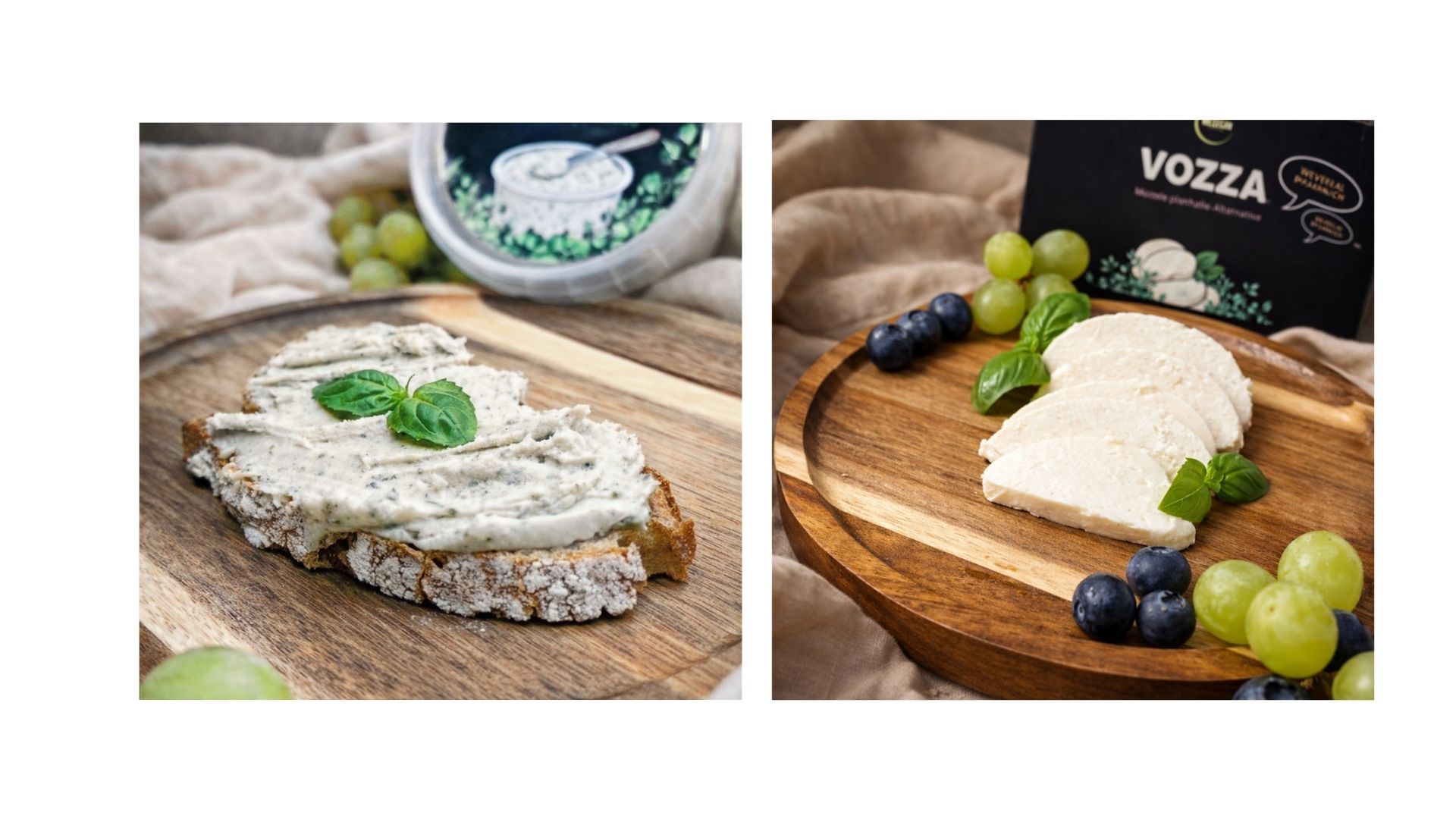
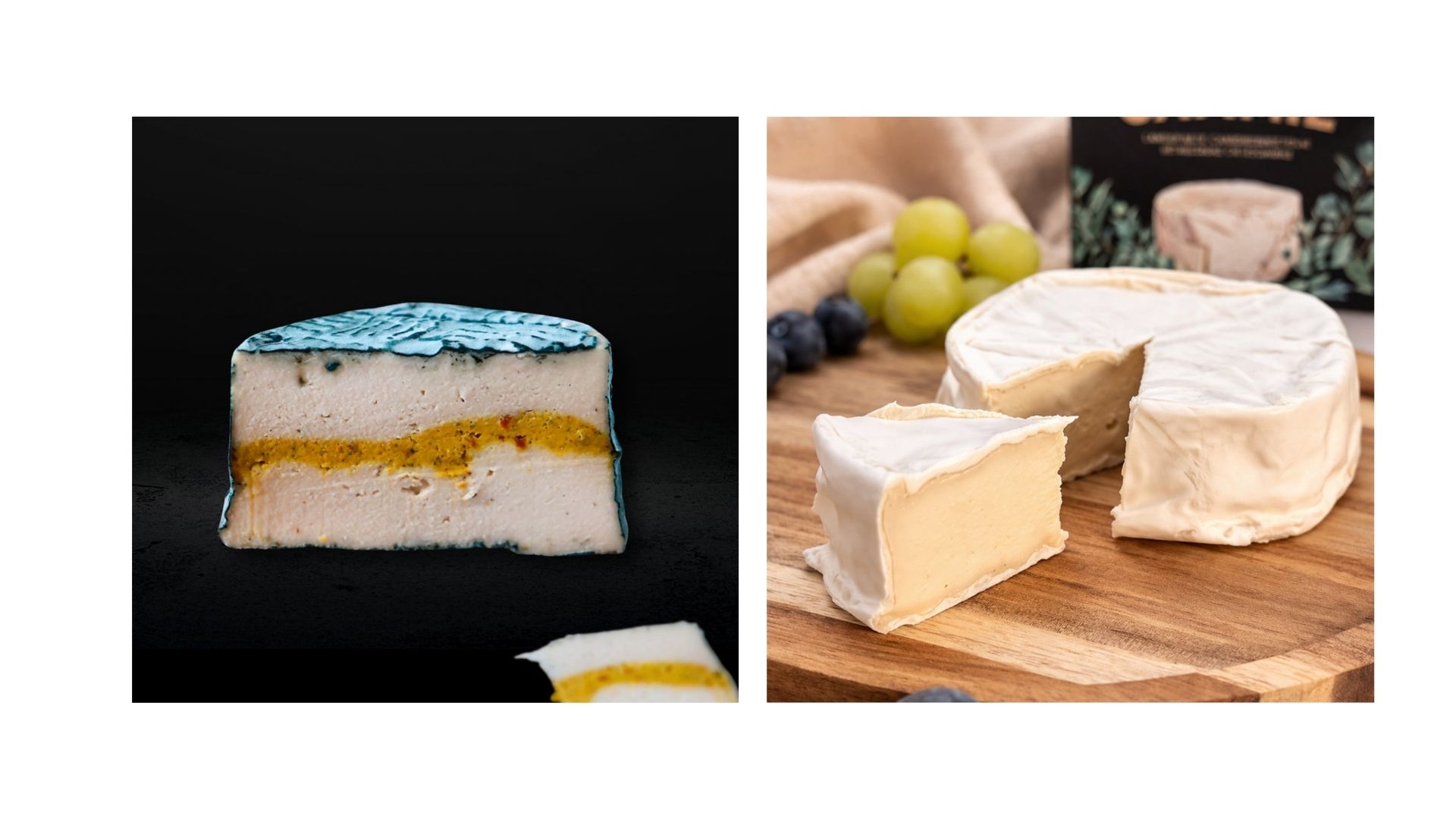
Alongside research institutions, companies are also pursuing different strategies. Established European suppliers of plant-based cheese alternatives include Simply V and Violife, while the German start-up VEEZE has opted for fermented, matured alternatives based on cashews.9;10 What unites all these approaches is the goal of bringing taste, texture and functionality as close as possible to conventional cheese – simply by different routes and at different stages of maturity.
A second, technologically more far-reaching route uses fermentation not to improve the product but to produce the protein itself. Berlin-based company Formo relies on koji mould, known for centuries from the production of soy sauce and miso, which supplies proteins that improve texture and flavour.9 The decisive advantage here is regulatory: because koji has a long history of use in food, the resulting products are not classed as novel foods and are already on sale – unlike the next, more far-reaching step in this development.
Precision fermentation as a possible next step
Whereas traditional fermentation methods mainly contribute to flavour and texture, precision fermentation takes a fundamentally different approach. Purpose-engineered micro-organisms are used to produce functional milk proteins such as casein or whey proteins without requiring any animal milk. These proteins match their natural counterparts and have the potential to replicate cheese-typical properties such as meltability and elasticity far more precisely than purely plant-based recipes can.2;3;4
Just how far this technology has already come is illustrated by the Belgian company Those Vegan Cowboys, which produces casein via a platform it calls „Margaret“; according to the company, the result is up to five times more stretchable than animal casein.11 In late 2025 the company raised EUR 6.25 million, with investors including the Dutch cheese group Westland Kaas.12 Berlin-based foodtech company Formo is likewise pursuing precision-fermented casein for the long term, while its first products are still based on fungal proteins and plant-based ingredients.9
Find further contents relating to fermentation on Foodtech Now!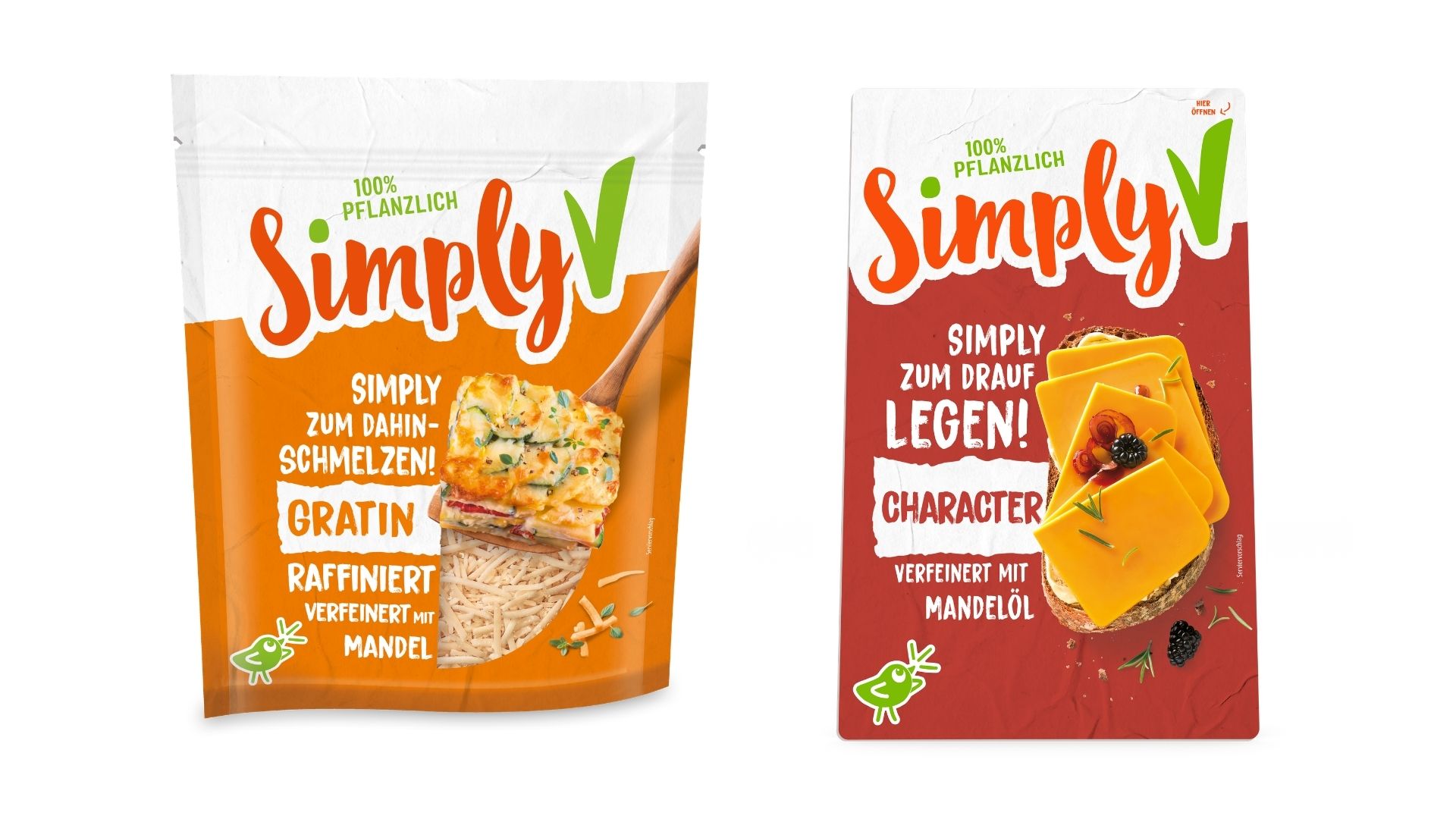
It is notable that this technology is no longer being driven by start-ups alone. Since January 2025, dairy group Hochland has been trialling casein from Those Vegan Cowboys; given a growing world population, precision-fermented casein could make a real difference, says Dr Sarah Borg, who is responsible for start-up innovation at the company.13 At the same time, Hochland has been restructuring its existing business: its own brand, Simply V, moved into Hochland Deutschland GmbH, while the group itself additionally entered the private-label business. „The plant-based category has outgrown its start-up phase after around ten years,“ chief financial officer Hubert Staub said of the move.14 A company consolidating its existing business while simultaneously investing in its possible replacement is about as clear an illustration of the industry's upheaval as one could ask for.
Despite this potential, precision-fermented milk proteins still face substantial regulatory hurdles in Europe. Because they are generally classed as novel foods, they require authorisation under the Novel Food Regulation (EU) 2015/2283 before they can be marketed; in the approval process, the European Food Safety Authority (EFSA) assesses the safety of the products concerned.15;16 In practice, none of these proteins is yet authorised in the EU. The only two applications submitted so far did not even concern casein, but the whey protein β-lactoglobulin: the application from US company Perfect Day, filed in 2022, was declared invalid in 2024, since the EFSA had not even begun its risk assessment, as regulatory expert Dr Hannah Lester notes.17 Market entry in Europe is currently estimated to take three to four years – a timeframe well beyond typical product development cycles, which manufacturers need to factor into their planning correspondingly early.
Fermentation technologies in alternative dairy and protein production
Article on how precision fermentation is used in alternative proteins:
Conclusion and outlook
Plant-based cheese alternatives have grown, in recent years, from a niche development into a key innovation field for the food industry. At the same time, comparison with conventional cheese makes clear that texture and meltability remain the greatest technological challenge – and that this gap is measurable, not merely noticeable.
Contrary to how it might first appear, further development depends less on whether cheese alternatives succeed than on precisely where they do so. In the budget entry-level segment, price increasingly decides the matter, and private labels have already taken the lead there. Value is therefore emerging elsewhere: in the short term in the premium and branded segment, where taste and texture justify a higher willingness to pay, and in the medium term in precision fermentation, once authorisation is granted in Europe.
How seriously the industry is taking this second route is evident from the fact that established dairy groups such as Hochland are investing in it themselves, even as they restructure their traditional business in parallel. For suppliers, this development cuts both ways: those supplying hydrocolloids and flavourings for plant-based recipes are serving a segment that precision fermentation could shrink over the long term, whereas those supplying bioreactors, purification technology and measurement systems for the new protein production stand to benefit from this shift.
Optimised plant-based recipes, classic fermentation and precision fermentation will likely continue to coexist, each playing to its strengths depending on the application.1;2;3 Whether by plant-based recipe, biomass or precision fermentation: how quickly cheese alternatives become mainstream will ultimately be decided not by technological maturity, but by regulatory approval.
Sources
1 Tekin, A.; Hayaloğlu, A. A.: Overcoming the flavour and textural/rheological problems of plant-based cheese alternatives: Challenges and solution strategies. Future Foods, 2024, 10, 100531. DOI: 10.1016/j.fufo.2024.100531. Accessed: 10.07.2026.
2 McClements, D. J.; Grossmann, L.: Next-Generation Plant-Based Foods: Challenges and Opportunities. Annual Review of Food Science and Technology, 2024, 15, 79–101. DOI: 10.1146/annurev-food-072023-034414. Accessed: 10.07.2026.
3 Germany plant-based food retail market insights: 2022–2024. Good Food Institute Europe, June 2025. Based on Circana and NIQ Homescan data. Available at: gfieurope.org. Accessed: 10.07.2026.
4 McClements, D. J.: Novel animal product substitutes: A new category of plant-based alternatives to meat, seafood, egg, and dairy products. Comprehensive Reviews in Food Science and Food Safety, 2024. DOI: 10.1111/1541-4337.13330. Accessed: 11.07.2026.
5 Colloidal aspects of cheese and protein-based cheese analogues. Current Opinion in Colloid & Interface Science, 2025. Accessed: 13.07.2026.
6 Organic Acid-Induced Structural Modifications Improve Melt-Stretch Properties and Mouthfeel of Plant-Based Cheese Alternatives. PubMed Central (ncbi.nlm.nih.gov), 2025. Accessed: 14.07.2026.
7 Regulation (EU) No 1308/2013, Annex VII Part III; Judgment of the CJEU of 14 June 2017, Case C-422/16 – Verband Sozialer Wettbewerb eV v TofuTown.com GmbH. EUR-Lex. Accessed: 16.07.2026.
8 Pulse2Cheese – Development of fermented cheese alternatives from pulses. Fraunhofer Institute for Process Engineering and Packaging (Fraunhofer IVV). Available at: ivv.fraunhofer.de. Accessed: 15.07.2026.
9 A vegan cheese that actually tastes good? Thank this ancient fungus. CNN Business (cnn.com), 16 December 2024; Formo Cleared to Sell Cow-Free Casein in US. Green Queen (greenqueen.com.hk). Accessed: 10.07.2026.
10 Simply V, company and product information (simply-v.de); Violife, company and product information (violife.com); VEEZE (veeze.de). Accessed: 15.07.2026.
11 Those Vegan Cowboys Debuts Animal-Free Casein. Green Queen (greenqueen.com.hk). Accessed: 10.07.2026. Stretchability figures are company claims.
12 Those Vegan Cowboys secure €6.25M to advance animal-free casein. DairyReporter (dairyreporter.com), 18 December 2025. Accessed: 06.07.2026.
13 Those Vegan Cowboys team up with Hochland in cow-free casein trial. DairyReporter (dairyreporter.com), 23 January 2025. Accessed: 14.07.2026.
14 Hochland restructures plant-based cheese alternatives business. top agrar (topagrar.com), October 2024; Simply V, the leading brand in the shrinking cheese-alternatives market, continues to lose share for Hochland. Lebensmittel Zeitung (lebensmittelzeitung.net), 31 January 2025. Accessed: 10.07.2026. Staub quotation translated from the German original.
15 Regulation (EU) 2015/2283 on novel foods. EUR-Lex. Accessed: 12.07.2026.
16 Novel Foods. European Food Safety Authority (EFSA). Available at: efsa.europa.eu/en/applications/novel-food. Accessed: 11.07.2026.
17 Precision fermentation: Navigating the legalities. FI Global Insights (insights.figlobal.com), 19 November 2025. Accessed: 10.07.2026.
Header image: Canva
Labelling of plant-based cheese alternatives
Terms such as ‘milk’, ‘cheese’ or ‘butter’ are reserved exclusively for dairy products within the EU. Plant-based products may therefore not be marketed as ‘cheese’. Terms such as ‘vegan cheese alternative’ or ‘alternative to Gouda’ are permitted. (Regulation (EU) No 1308/2013; ECJ, C-422/16 ‘TofuTown’)