
Reading time: 2 minutes
Fewer farms, larger herds
- 14,700 pig farms – down 3.6% year-on-year
- 21.0 million pigs – herd up 0.6% compared with May 2025
- 10.4 million cattle – herd remains virtually unchanged year-on-year
Pig farming is currently one of the agricultural sectors experiencing the most significant structural transformation. As of 3 May 2026, around 21 million pigs were kept in Germany. This means the overall pig population has remained largely stable over the past three years. Compared with ten years ago, however, livestock numbers have declined by 22.5%.
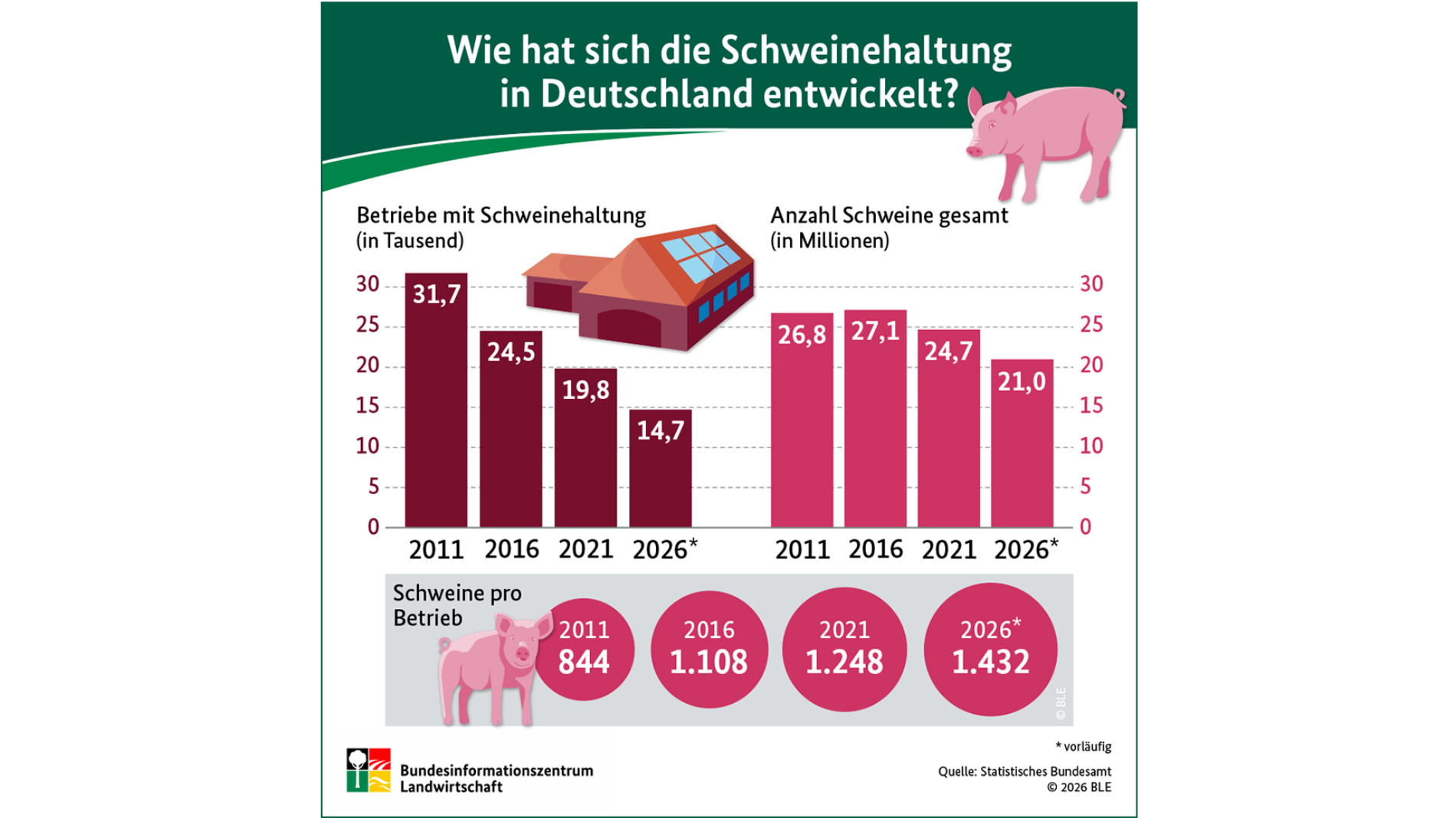
How has pig farming developed in Germany (number of farms (in thousand); total of pigs (in millions); below: Number of pigs per farm)
At the same time, the number of pig farms continues to fall. In May 2026, Germany counted 14,700 pig farms, representing a decrease of 3.2% compared with November 2025 and 3.6% compared with the previous year. Since 2016, the number of pig farms has fallen by 40%, and by almost 54% over the past 15 years.
As this structural change continues, average herd sizes are increasing. In 2026, the average farm kept 1,432 pigs, almost 70% more than in 2011. By comparison, 50 years ago, the average German pig farm kept just 31 animals.
Specialisation is reshaping pig production
The ongoing structural transformation is accompanied by increasing specialisation across pig production. Breeding, piglet production and finishing each require different housing systems and management practices. In addition, hygiene regulations as well as environmental and tax requirements often make it necessary to separate production stages geographically. As a result, most farms today focus on only one or two stages of production.
Overall pig population remains stable
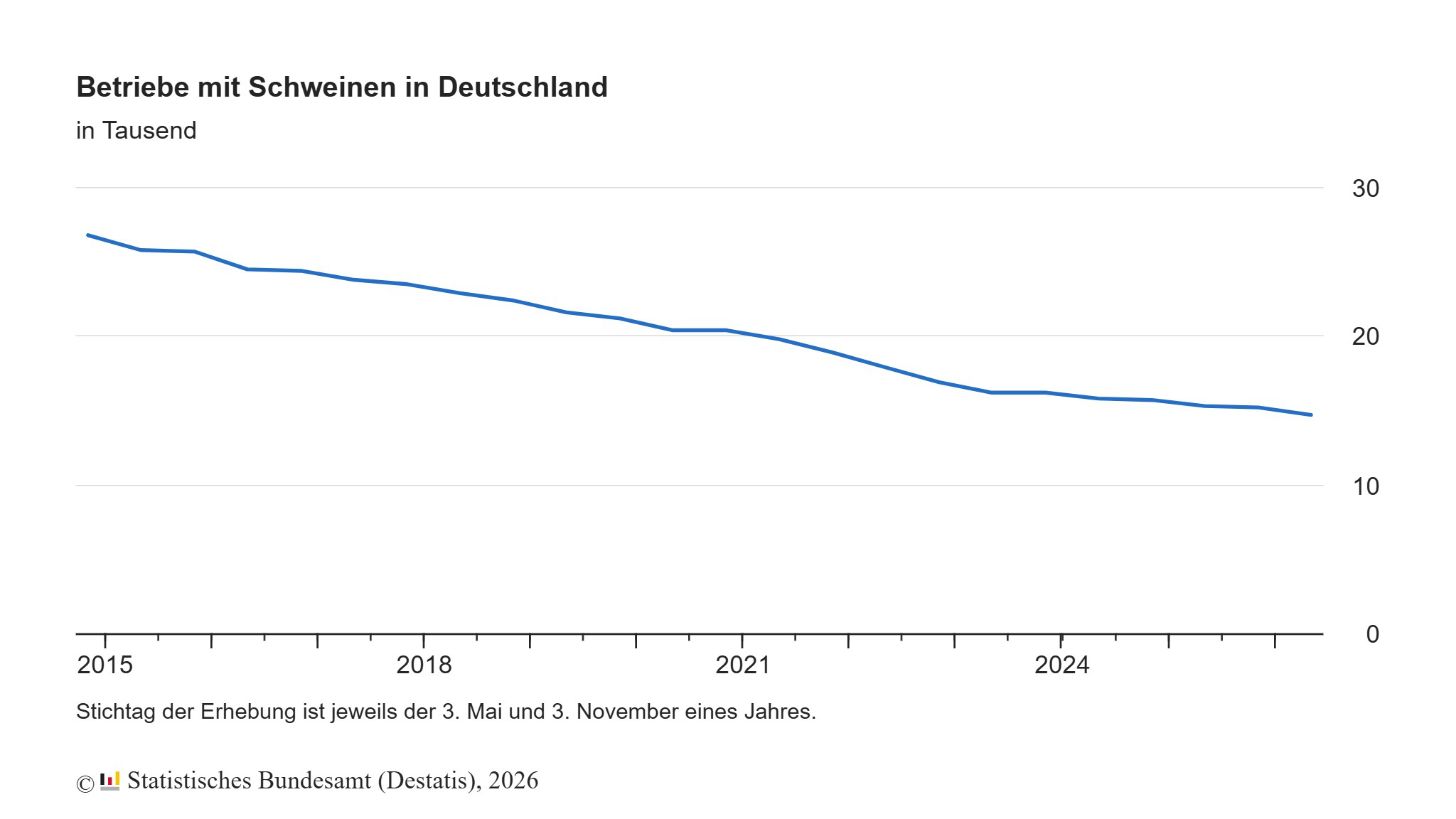
Pig farms in Germany (in thousands)
Germany's pig population stood at around 21.0 million animals in early May 2026. Compared with November 2025, the number declined by 2.3%, while year on year it increased slightly by 0.6%. Looking at the longer term, the downward trend continues, with pig numbers falling by 22.5% since 2016.
The distribution across production categories reflects the current structure of the sector. Around 62% of all pigs were growing and finishing pigs weighing at least 20 kilograms. Finishing pigs weighing 50 kilograms or more accounted for approximately 9 million animals. A further 31% were piglets, while just under 7% were breeding pigs. These included around 1.4 million breeding sows and approximately 10,600 breeding boars.
Development by production category
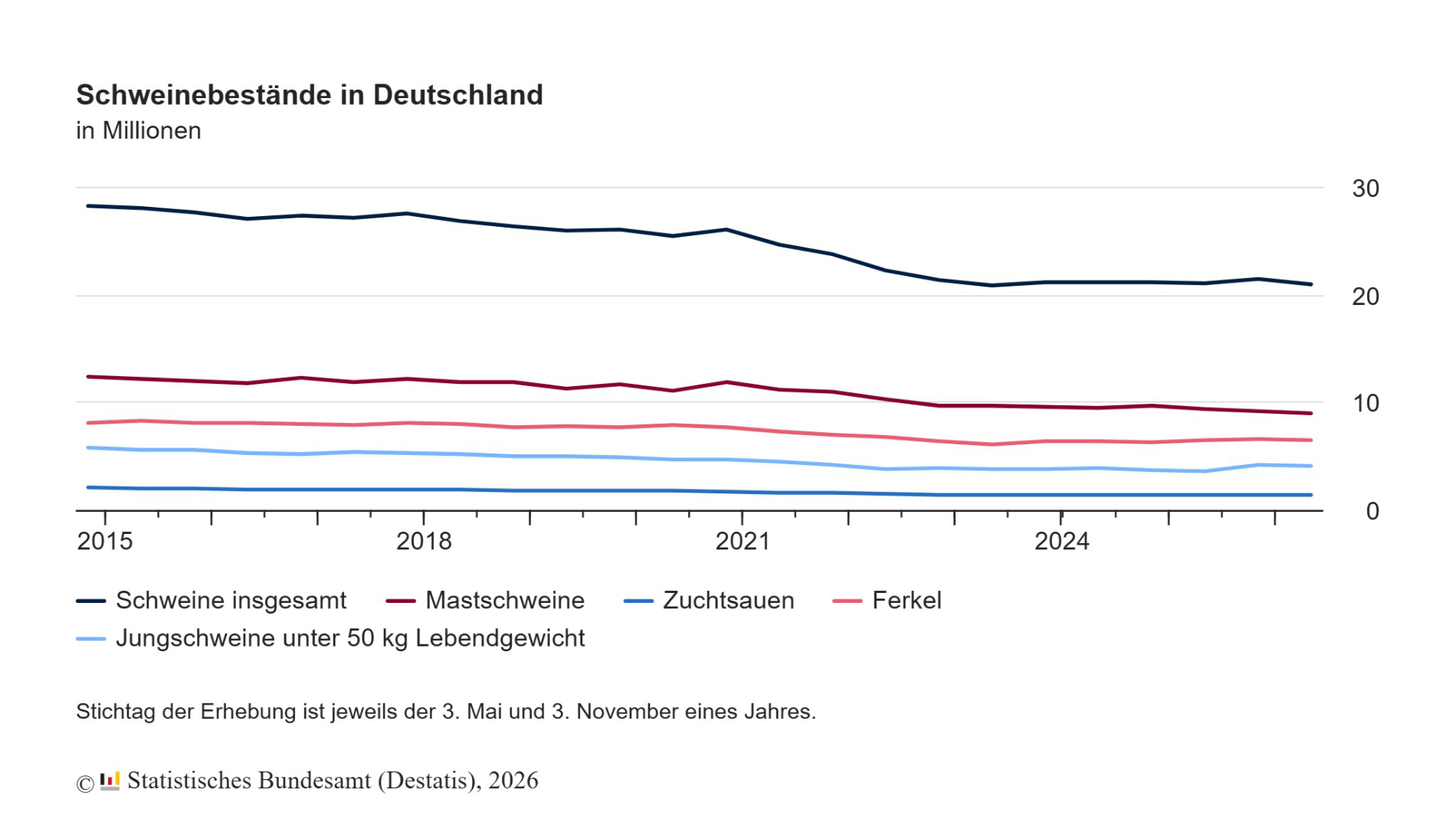
Pig population in Germany (in millions) (black: total; purple: fattening pigs; blue: piglets; red: young pigs under 50 kg live weight)
The number of finishing pigs totalled 9.0 million animals. This represented a decline of 2.5% compared with November 2025 and 4.2% compared with the previous year. Piglets and growing pigs together accounted for 10.6 million animals. While their number decreased by 2.3% compared with November, it was 5.1% higher than a year earlier. The breeding sow population stood at around 1.4 million animals, down 0.9% compared with November 2025 but up 0.9% year on year.
Cattle population remains largely unchanged
Germany's cattle population totalled around 10.4 million animals as of the reporting date, including 3.6 million dairy cows. Compared with the previous year, the cattle population remained almost unchanged, increasing by just 0.2%, while it declined by 0.7% compared with November 2025. Over the past ten years, however, the downward trend has continued, with cattle numbers falling by 17.6% since 2016.
The dairy cow population also remained largely stable over the past year. Compared with November 2025, numbers declined slightly by 0.2%, while they increased by 0.3% compared with the previous year. Over the past decade, however, the dairy cow population has fallen by 16.0%.
The number of cattle holdings also continued its long-term decline. Compared with November 2025, the number of cattle farms fell by 1.8% to 120,300 holdings, while dairy farms declined by 2.0% to 46,200. Compared with 2016, the number of cattle holdings has decreased by 18.7%, and the number of dairy farms by 35.2%
Source: Destatis (Federal Statistical Office Germany), Zahl der schweinehaltenden Betriebe sinkt weiter: -3,6 % im Mai 2026 gegenüber dem Vorjahr - Statistisches Bundesamt (in German language only), 26.06.2026.
BMEL-Statistik: Schweinehaltung (in German language only), 17.07.2026
Header image: Canva