Traceability in the meat industry: how monitoring becomes a system. A network of systems and technology companies, working in collaboration with manufacturers, is protecting consumers more effectively than ever before.
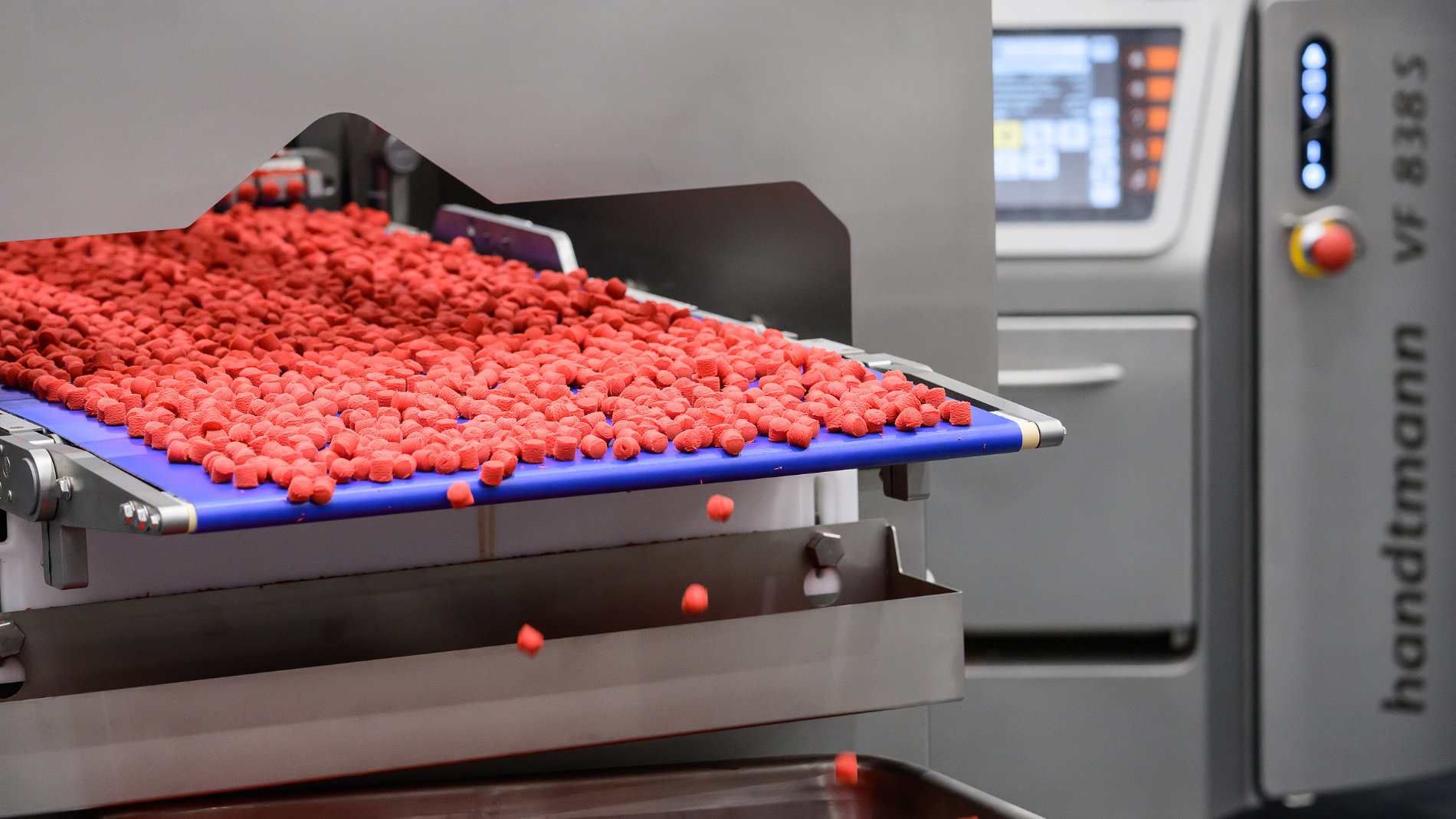
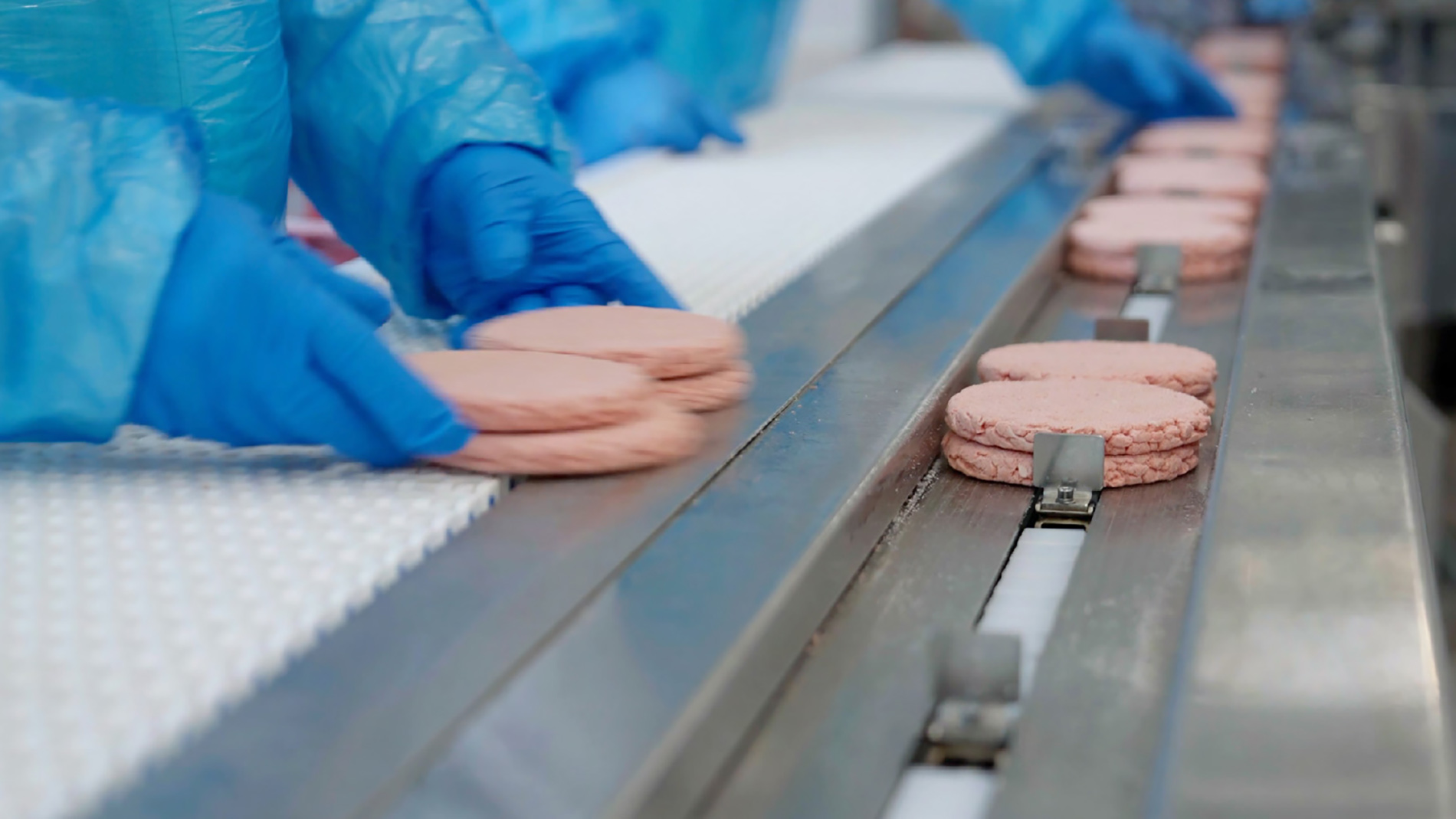
Traceability, the ability to track a product’s journey through the value chain without any gaps, has evolved from a secondary consideration to a core infrastructure requirement in the meat industry. Photo: Wipotec
“Meat remains a particularly sensitive product,” says Markus Hensgen, Head of the Meat Industry and Food Retail Division at QS, in an interview with Foodtech Now!. “In some respects, even more sensitive than before. Today, it’s no longer just about microbiology or chemistry, but also about origin, farming practices, and animal welfare. Insuring quality standards for meat is more important today than ever before —with new legal requirements and ever-rising consumer expectations.”
This “multiplication of challenges” explains why traceability—the ability to seamlessly track a product’s journey through the value chain—has evolved from a secondary concern to a core infrastructure in the meat industry. “In the German food retail sector, around 95 percent of fresh meat comes from the QS system,” says Markus Hensgen. However, it is not the percentage alone that matters, but rather the consistency of the rules across all stages of the value chain.
“Meat remains a particularly sensitive product.”
From Formal Control to Robust Capacity for Action
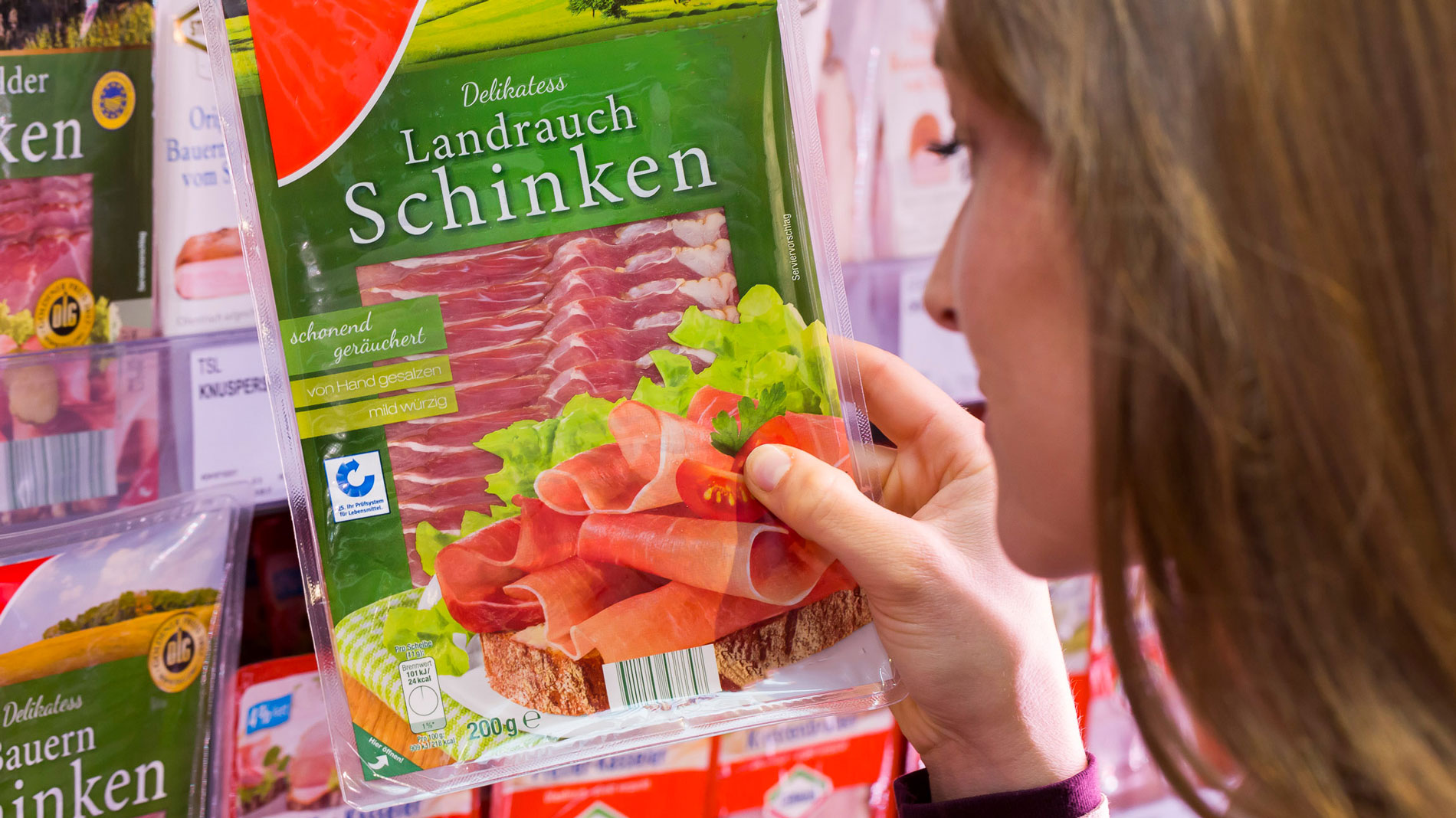
The QS quality mark indicates that a food product has been inspected throughout the entire production chain in accordance with set standards and is traceable. You will find it on animal products such as meat, but the QS system also covers fruit and vegetables. Photo: QS Qualität und Sicherheit GmbH/www.q-s.de
QS-system, Europe’s leading food safety organization, has had their headquarters in Bonn for 25 years. “Twenty-five years ago, in the wake of the BSE crisis, we wanted to establish a uniform, reliable food safety system,” explains Hensgen. “Today, the QS-system also covers fruits, vegetables, and potatoes—but when it comes to meat, product sensitivity remains particularly high. We look at the entire supply chain: “With meat, it starts with the food the animals are being fed and ends in retail.” You can read a detailed interview with Markus Hensgen about the “protective power” of the QS-system here.
Thanks to QS’s Europe-wide network, its extensive and far-reaching partnerships, as well as a large and constantly growing number of technology firms, who all contribute to traceability, the safety architecture in Germany and many European countries is significantly more robust today than it was 25 years ago. Standards are more precise, inspection processes are more rigorous, and evidence is more reliable.
Traceability isn’t the only reason for this, but it is the infrastructure that enables rapid response, precise containment, and reliable tracking. Markus Hensgen of QS calls this “the difference between formal control and the ability to take reliable action.”
Prevention is Key, Rather Than Finding Mistakes Afterwards
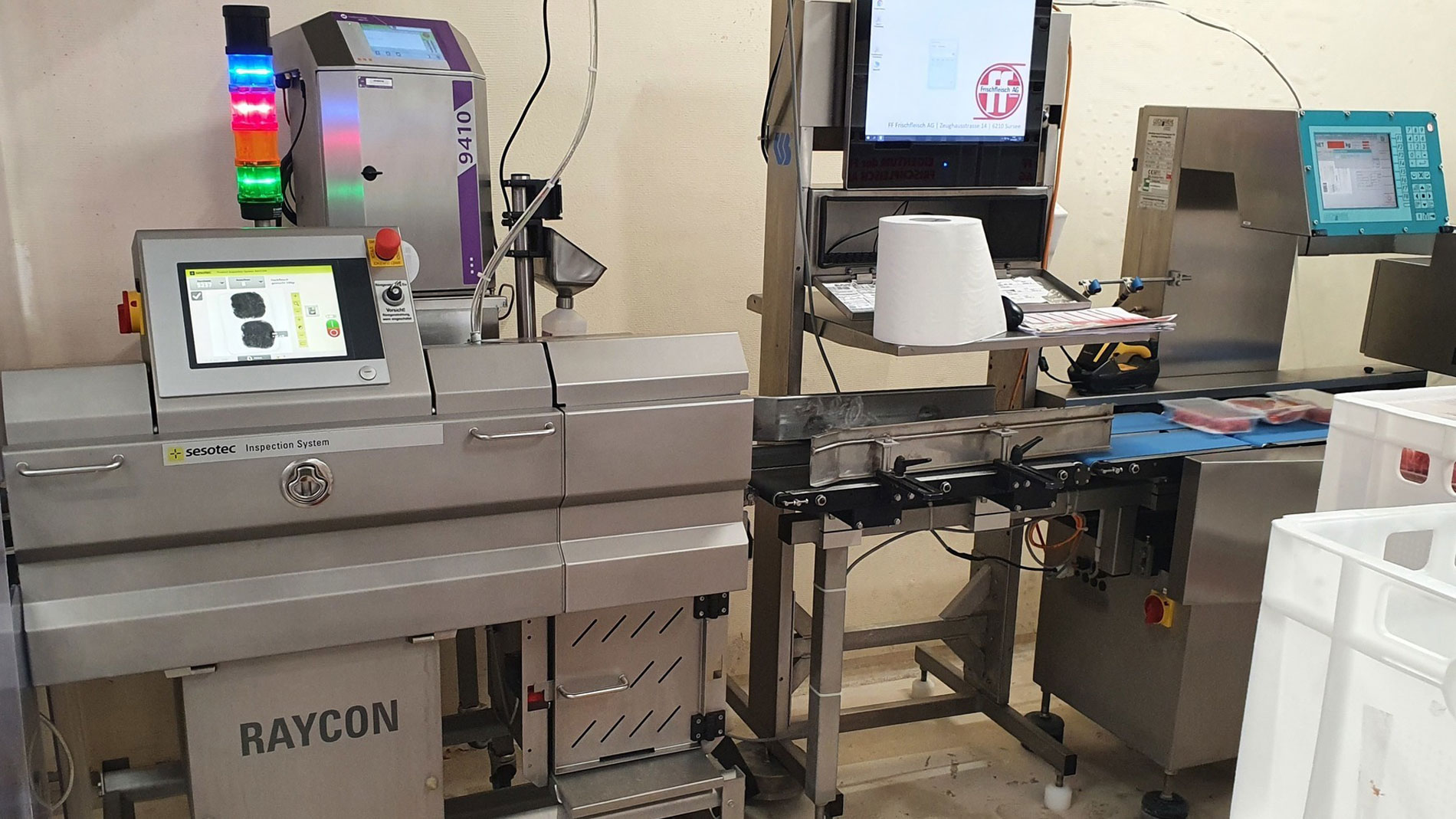
The RAYCON X-ray inspection system from Sesotec can detect foreign objects in packaged food. Photo: Sesotec
This system-based approach faces very specific risks in production. It is here that Sesotec comes in. The globally active technology company, headquartered in Schönberg, Lower Bavaria, specializes in foreign object detection and inspection.
“Foreign object detection is a key component of preventive quality strategies. It plays a significant role in systematically minimizing risks and in ensuring and further enhancing the high level of safety in meat processing on a long-term basis,” says Sesotec. The company specifically identifies meat and sausage products as an area where raw materials and processing “pose particular risks.” Even “the tiniest splinter of metal in ground meat” or “a piece of bone in sausage production” can have serious consequences.
Sesotec therefore deliberately positions its own contribution as a preventive measure. “What matters is not just the technology itself, but how it is integrated into the process.” Modern inspection systems are designed to operate in a hygienic, audit-compliant, and reproducible manner, thereby actively contributing to prevention—rather than simply identifying defects at the end of the process.
“The preventive approach is a key reason why product safety—especially in the sensitive field of meat processing—is at a significantly higher level today than it was 20 years ago,” according to Sesotec1. Early detection is supposed to be particularly crucial in meat processing lines with high speeds and changing batches.
The Contribution of AI to Safety, Sustainability, and Efficiency
In addition, Sesotec is focusing on digital innovation: According to Sesotec, AI in the THiNK-environment2 is not viewed “as an end in itself,” but rather as a tool that makes processes “more transparent, robust, and proactive.” Adaptive models are designed to detect deviations more accurately, reduce false alarms, and maintain line stability when switching between products.
When it comes to sustainability, AI creates the foundation on which a more mindful use of resources rests. By more accurately distinguishing between good and bad products, unnecessary rejections are avoided, food waste is reduced, and raw materials are used more efficiently. From the perspective of Sesotec, the greatest value is created when safety, sustainability, and efficiency are not considered in isolation: “With THiNK, we use AI to link these goals together—and thus make a measurable contribution to safe, sustainable, and responsible supply chains,” says a Sesotec expert.
Accurate Data and Intelligent Labeling
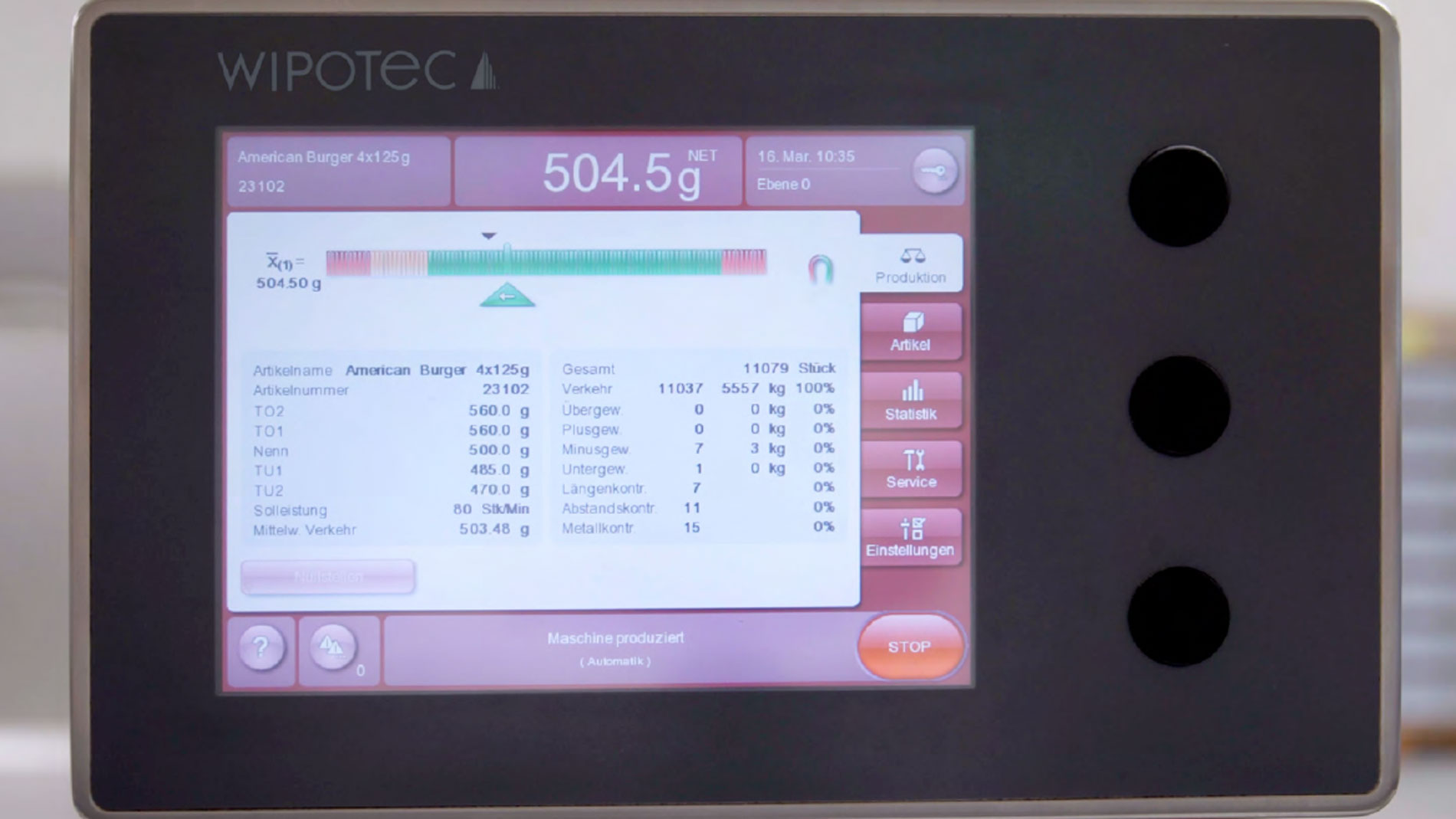
The checkweigher automatically weighs products during the production process and rejects any that do not meet the required specifications. This ensures continuous quality control. Photo: Wipotec
Wipotec offers a third perspective. Headquartered in Kaiserslautern, the company is best known in the industry for checkweighers, inspection systems, and integrated labeling solutions—on a global scale that is. Oliver Holzwarth sums up the Wipotec approach in a few words: “Is what is inside, the same as what the label says on the outside? Or more?” After all, contaminants also show up in the weight measurements of the precision scale. Holzwarth: “This is very clear when it comes to meat. We use a lot of stainless steel in production. When stainless steel rubs against stainless steel, it creates metal shavings, and you don’t want those in the product.”
Holzwarth’s colleague, Volker Ditscher, who oversees traceability at Wipotec, bridges the gap to day-to-day production by focusing on issues such as 2D coding. “The consistent integration of components is key,” he says, “isolated individual solutions create friction in practice. Weighing, x-ray inspection, marking, verification, and plausibility checks must work together so that inspection translates into real action.”
“The higher the traceability requirements, the better the underlying data must be.”
What Do 2D Codes Do Better?
Ditscher describes the difference as follows: “A standard 1D barcode essentially contains a product number. A 2D barcode can contain more contextual information: batch number, date logic, and, depending on the design, serialization as well.”
Just how helpful this can be is illustrated by the example of a Wipotec customer for whom expired ready-to-eat meals on the shelves became a reputational issue. After switching to 2D labeling with date information, the POS system was able to block the sale of expired products. Ditschers’ conclusion is equally succinct: With better information directly attached onto the product, “manual errors” are reduced and processes become more stable all the way through to the retail level.
At Wipotec, which primarily operates in the packaged food sector, the pharmaceutical industry is regarded as a benchmark in technology development. “The pharmaceutical industry was an early adopter of many methods: serialization and aggregation at multiple levels. In many countries, this was driven by regulatory requirements. This has demonstrated how effective unique product identification is when combined with valid data chains,” says Holzwarth.
“In some countries, there was widespread billing fraud in the healthcare sector,” Ditscher reports. “Through individual identification and database matching, the problem was effectively eliminated. This laid the groundwork for future applications in other industries—such as the food industry.”
“The higher the traceability requirements, the better the underlying data must be,” adds Oliver Holzwarth. “2D simply expands the scope of information we can utilize. But data must be generated during the process, not pieced together afterward.”
“Product salvation means targeted X-ray inspection instead of blanket disposal.”
Reduce Recalls by Millions, Prevent Wildfires
The key benefit of traceability is particularly evident in recalls of meat and sausage products. Volker Ditscher: “Recalls are expensive and damaging to a company’s reputation.” Without reliable data, recalls tend to be too broad when in doubt; with robust traceability, however, it is possible to pinpoint exactly which batch, which time period, and which distribution channels are actually affected. “No manufacturer wants to go public with recalls involving millions of products,” adds Ditscher.
The Sesotec interview also notes that avoiding a recall not only saves on direct costs for logistics, destruction, and replacement shipments, but also prevents losses such as production downtime, contractual penalties, damages to reputation, or the loss of retail listings. In practice, according to the interview, “we’re quickly talking about six- to seven-figure sums per incident,” depending on the product, market, and distribution structure.
The most telling example from the Wipotec discussion illustrates just how much traceability can limit damage in an emergency: the “screw in eight tons of ground meat.” Oliver Holzwarth explains that in the past, out of uncertainty, products were often disposed of en masse in such situations. “In the past, the reaction was often: get rid of it, total write-off,” says Holzwarth. Volker Ditscher counters: “Product salvation means targeted X-ray inspection instead of blanket disposal.” Here, the benefits become doubly apparent: economically efficient due to lower depreciation costs and sustainable due to less waste.
Customer Case Studies: Block House and Snackmaster
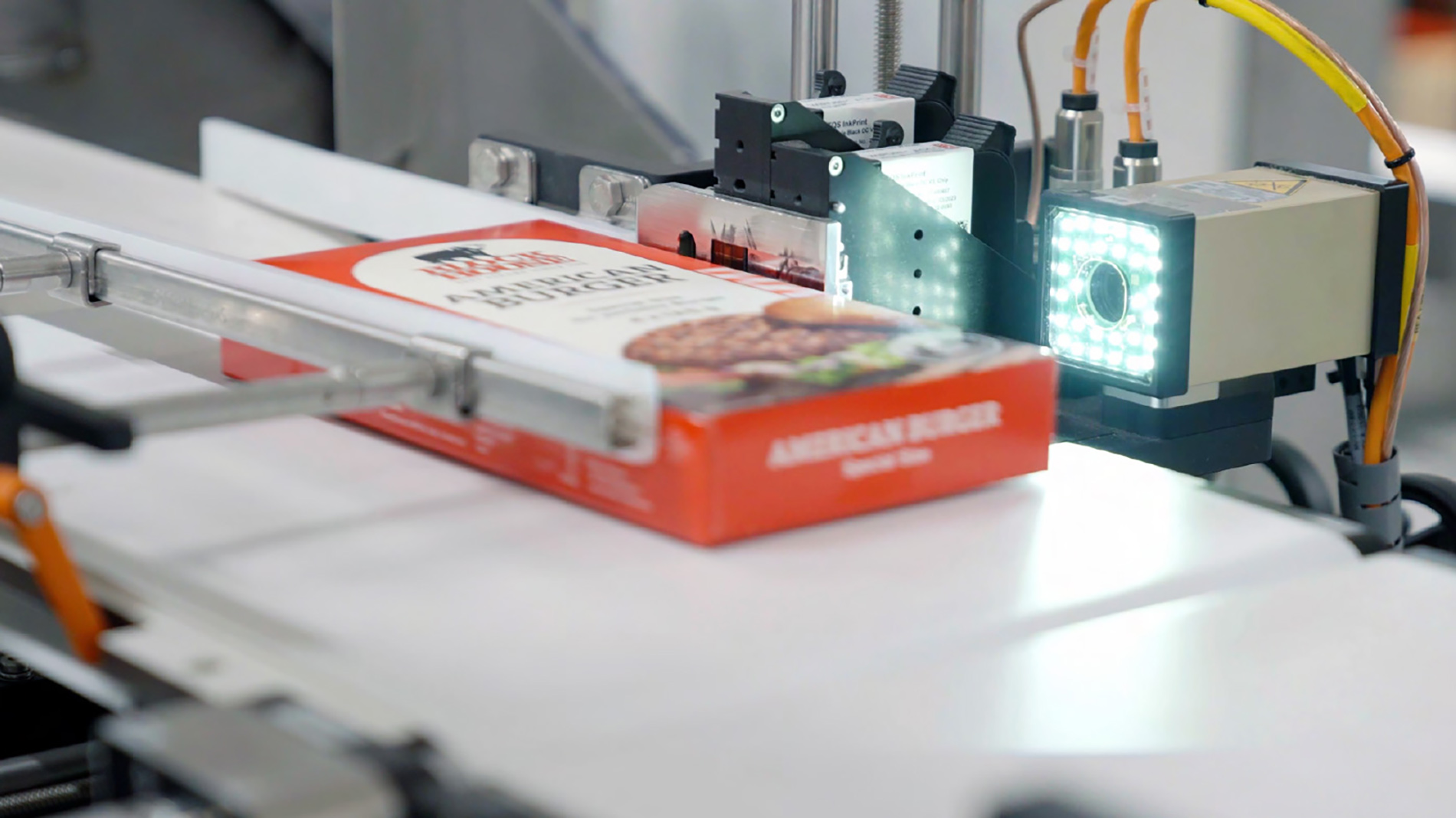
Photo: Wipotec
Two prominent examples among Wipotec’s customers demonstrate that the integration of further steps in the process is central to traceability. At Block House, the Hamburg-based restaurant chain with production and wholesale operations, end-of-line is described as an integrated quality model: checkweighing, metal detection, x-ray inspection, and the Traceability-Quality-System (TQS) are all interconnected. The data layer is crucial here.
At Snackmaster, a manufacturer of potato products and part of the Schne-frost group, increasing production pressures led to a similar development. The solution is an integrated modernisation of inspection, weighing, and label printing—with plans to add in-line coding using QR and 2D codes in the future.
The Industry is Learning to Make Concrete Decisions Based on Data
Ultimately, all three perspectives point in the same direction. QS provides a cross-level regulatory and verification framework, Sesotec enhances preventive detection with robust documentation, and Wipotec combines technology and data into a production line architecture suitable for everyday use. Markus Hensgen sees this as a “shift toward infrastructure.” Oliver Holzwarth describes it as the ability to “translate control into dependable process security.” And Volker Ditscher adds to this core operative focus: The key is to use data to make concrete decisions, for example regarding recalls––“It’s important to know immediately what can be released, what needs to be halted, what is being specifically recalled, and what can be salvaged.”
This appears to reflect the level of maturity the meat industry has reached in 2026 when it comes to food safety: not in individual inspection steps, but in the quality of the decisions derived from interconnected data. For manufacturers, this means fewer ad hoc responses and more predictable quality assurance.
1 At IFFA, Johannes von Stein from Sesotec presents practical solutions for foreign object detection along the entire food production line—from raw material intake to final packaging. The focus is on efficiency, safety, and traceability: Detektionsmöglichkeiten von Fremdkörpern in Lebensmitteln 23.03.2026.
2 Sesotec’s THiNK technology is an AI-based solution specifically designed for foreign object detection in the food as well as in the plastics industry. It is primarily used in INTUITY
Picture Header: Messe Frankfurt Exhibition GmbH / Pietro Sutera
Michael Hopp
Author at Foodtech Now! editorial office, who wants to show through his stories that tradition and innovation belong together.