
Reading time: 6 minutes
Nutrition is today, more than ever, a complex topic – shaped by societal expectations, political frameworks and individual lifestyles. Between the desire for indulgence and climate goals, between animal welfare and everyday practicality, a growing target group is seeking its own path: flexitarians.
According to the 2025 Nutrition Report by the German Federal Office for Agriculture and Food (BLE), 37% of Germans (n = 1,000) describe themselves as living a flexitarian lifestyle – among women, the figure is as high as 43%. Especially younger people (under the age of 30) increasingly opt for plant-based alternatives, driven by a growing awareness of sustainability, health and climate protection1. Flexitarians are individuals who consciously and actively reduce their meat consumption, without completely giving up meat. In contrast to vegetarians, they choose flexibly from meal to meal between a plant-based or meat-based option.
At the same time, meat remains a symbol of familiarity, taste and cultural identity for many people. The food industry faces a demanding task: developing products that resolve this ambivalence – convincing in terms of flavour, more environmentally compatible and technologically scalable.
What exactly is a hybrid product?
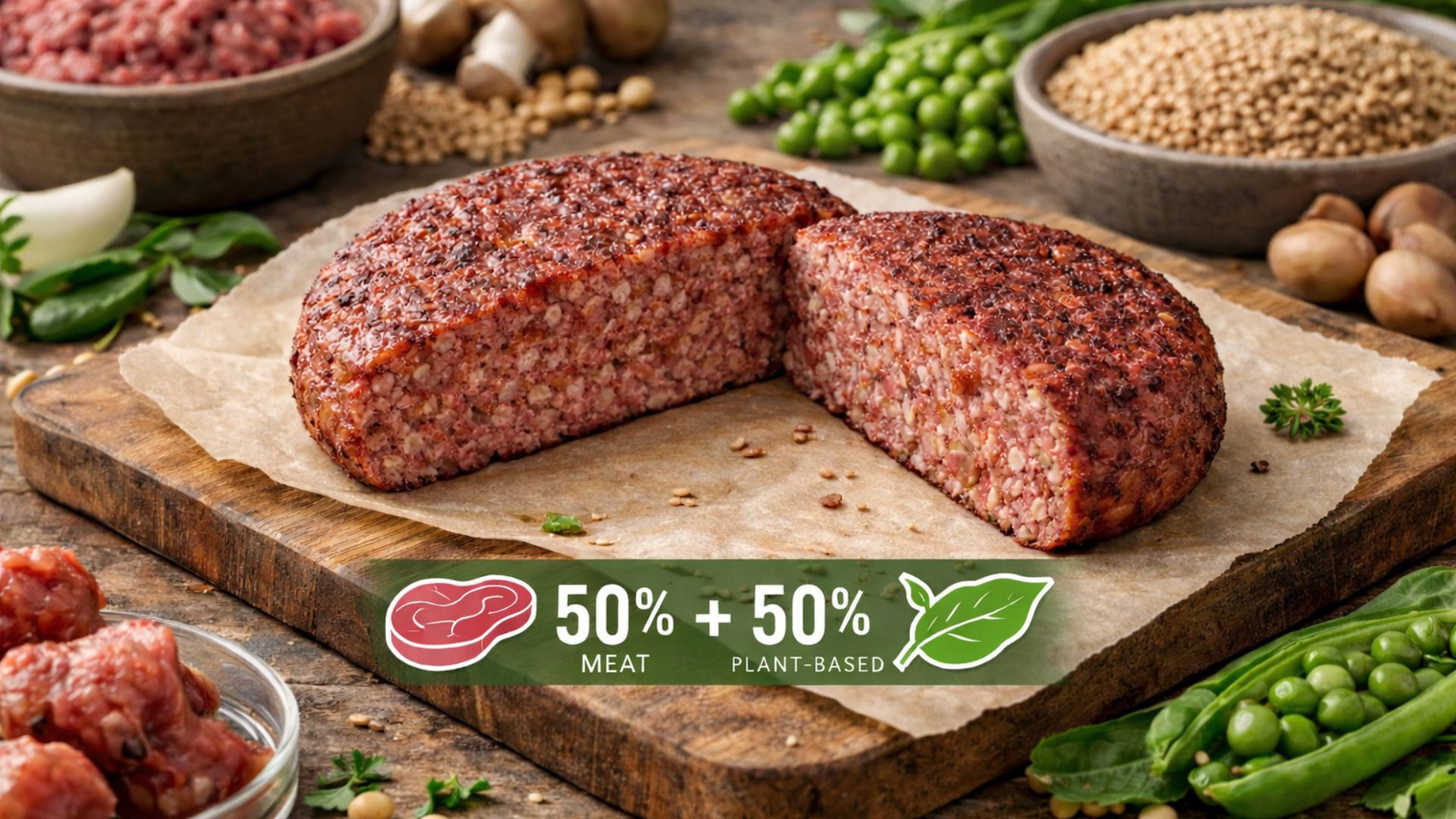
Hybrid products are emerging in this dynamic market environment. They deliberately combine animal components with plant-based or alternative protein components. In doing so, they function as a technological link for a modern diet. The objective is efficient resource conservation and the reduction of CO₂ emissions. At the same time, the familiar taste experience as well as the customary texture are fully retained.
Unlike purely plant-based alternatives, these products are not a substitute for meat. Rather, they are conceived as a meaningful extension of the existing product range. In this way, they offer a long-term solution for a food landscape in which high-quality meat and innovative alternatives coexist permanently.
The terminology is still evolving: “blended meat” or “hybrid meat” often refers to products containing plant-based additions (e.g. vegetables, pulses, plant proteins). In addition, there are innovative approaches using proteins produced through fermentation, such as mycoprotein, as well as more visionary concepts involving cultivated meat components, which are still awaiting regulatory approval.
A structured classification is provided in the following overview, differentiated by meat content and level of market readiness.
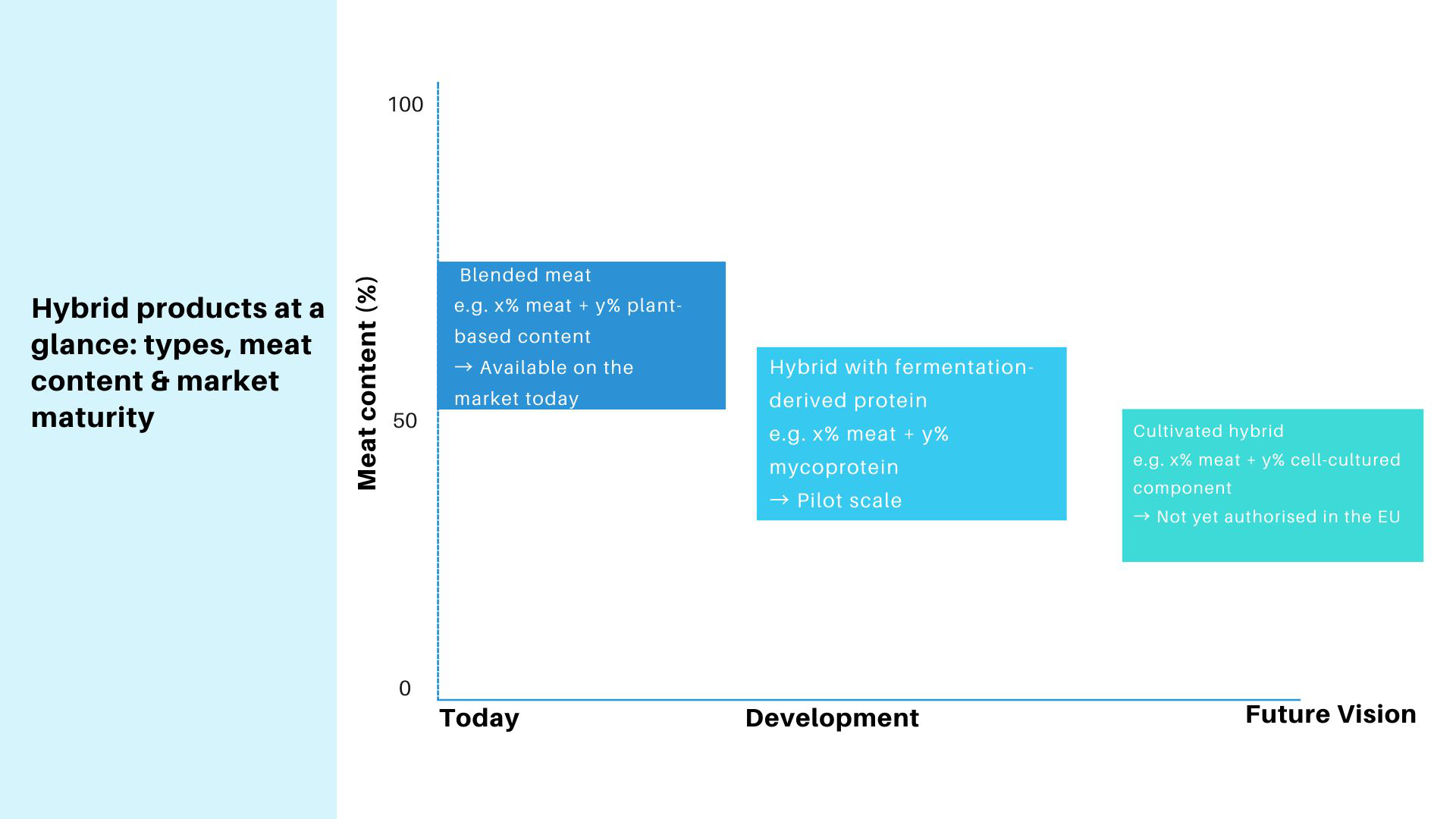
Three variants of hybrid products, differentiated by meat content and market maturity. Cultivated meat is not yet authorised in the EU and is still under development. Values x/y indicate variable mixing ratios. Source: Zhanar Sadyk / Foodtech Now.
The fact that hybrid products have now gained a foothold across the food industry is summed up by Christoph Minhoff, CEO of the German Food Federation (BVE): “The topic is currently engaging both industry and retail.” He sees “great potential” in combining conventional meat or fish with vegan alternatives: “There no longer must be a total opposition. Instead, a bridge is now being built between the two worlds”2.
Market overview of hybrid products
Hybrid products – understood as a combination of animal meat and plant-based ingredients – are still a relatively small but increasingly relevant segment. Their core promise lies in their bridging function: less meat, without consumers having to completely forgo familiar textures and sensory expectations.
The global market delineation varies depending on the source. According to Meticulous Research, the market volume for hybrid products in the narrower sense (meat + plant) was USD 58.7 million in 20203; the forecast predicts an increase to nearly USD 674 million by 2028, with an average annual growth rate of 36.6%. Other sources, such as Dataintelo, already estimate the global market for blended meat in 2026 to be significantly higher – at around USD 4.1 to 5.0 billion4. The discrepancies mainly reflect different definitional approaches: while Meticulous only counts clearly declared hybrid products (i.e. combinations of meat and plant-based components), Dataintelo also includes other mixed segments.
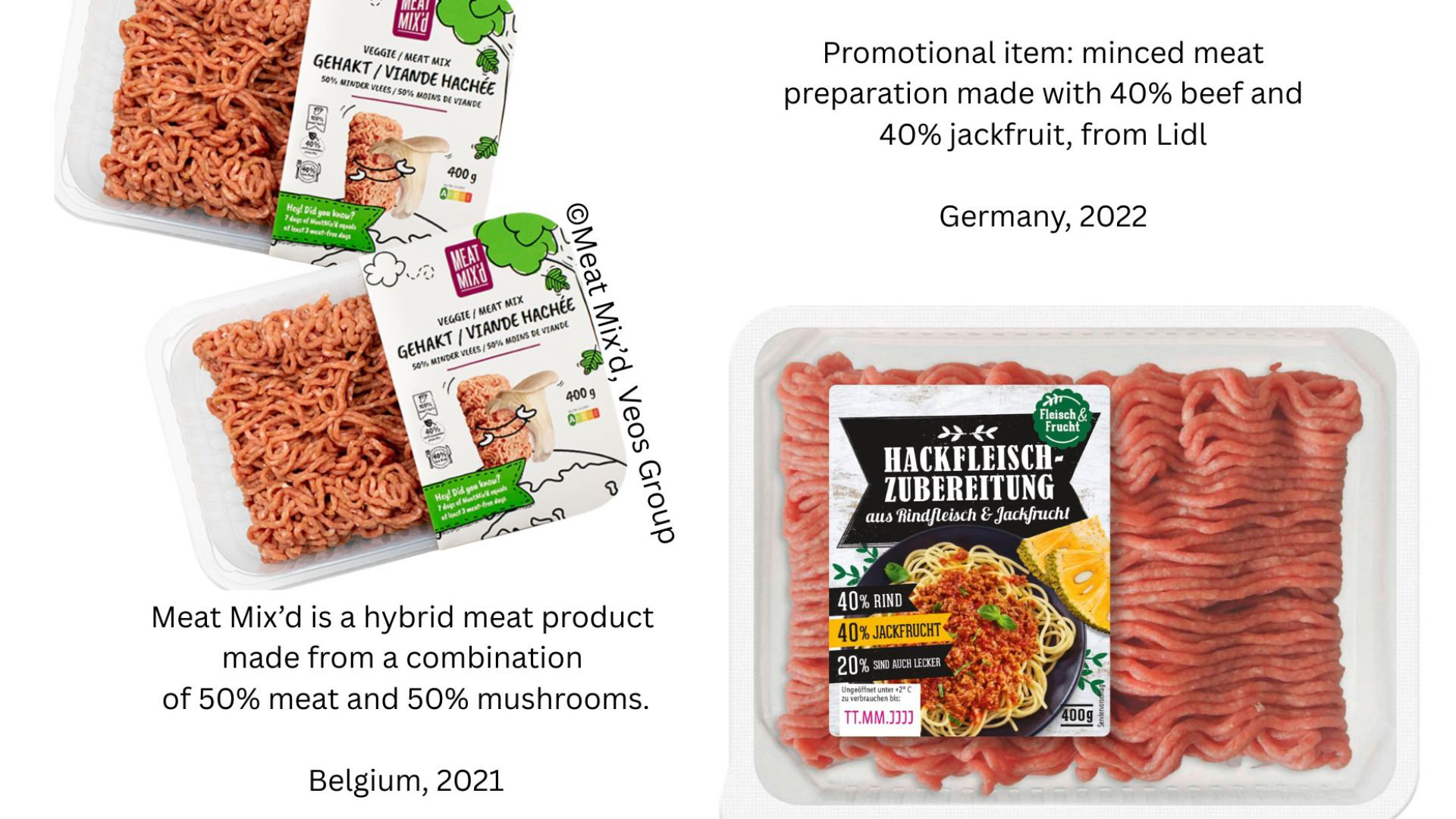
Hybrid minced meat at retail level: combinations of meat and plant-based ingredients such as mushrooms or jackfruit reduce the animal content while maintaining conventional usage. Source: Innova New Products Database, © Both
Market figures for Europe are more fragmented. According to GFI Europe and Circana, retail sales of meat alternatives (including hybrid products) amount to around EUR 2.0 billion (2025); hybrids are included but are rarely reported separately5. At the same time, Europe presents a heterogeneous innovation landscape: while countries such as the Netherlands, the United Kingdom and the Nordic countries are considered pioneers of plant-based concepts, hybrid product solutions in many places are still at pilot stage. A consumer study by the Smart Protein Project indicates that around 51% of European consumers are actively reducing their meat consumption – an environment in which hybrid concepts can, in principle, gain traction6.
Within Europe, Germany is considered a key market for hybrid innovations, not least due to the strong role of the food retail sector and a high proportion of flexitarians. However, concrete sales figures for hybrid meat products (meat plus plant components) are not publicly available. According to the Federal Statistical Office (Destatis), the production value of meat substitutes rose by 16.6% in 2023 to EUR 583.2 million8. Hybrid products are not yet recorded separately in official statistics but are increasingly appearing in the assortments of major retailers – partly as mixed products with reduced meat content in the mid-price segment. As additional context for Germany: plant-based alternatives generated retail sales of EUR 1.7 billion in 2024, according to a study by AFC Consulting Group and “Die neuen Protein NL Partner für Deutschland”; from 2022 to 2024, the market grew by an average of 3.3% per year9.
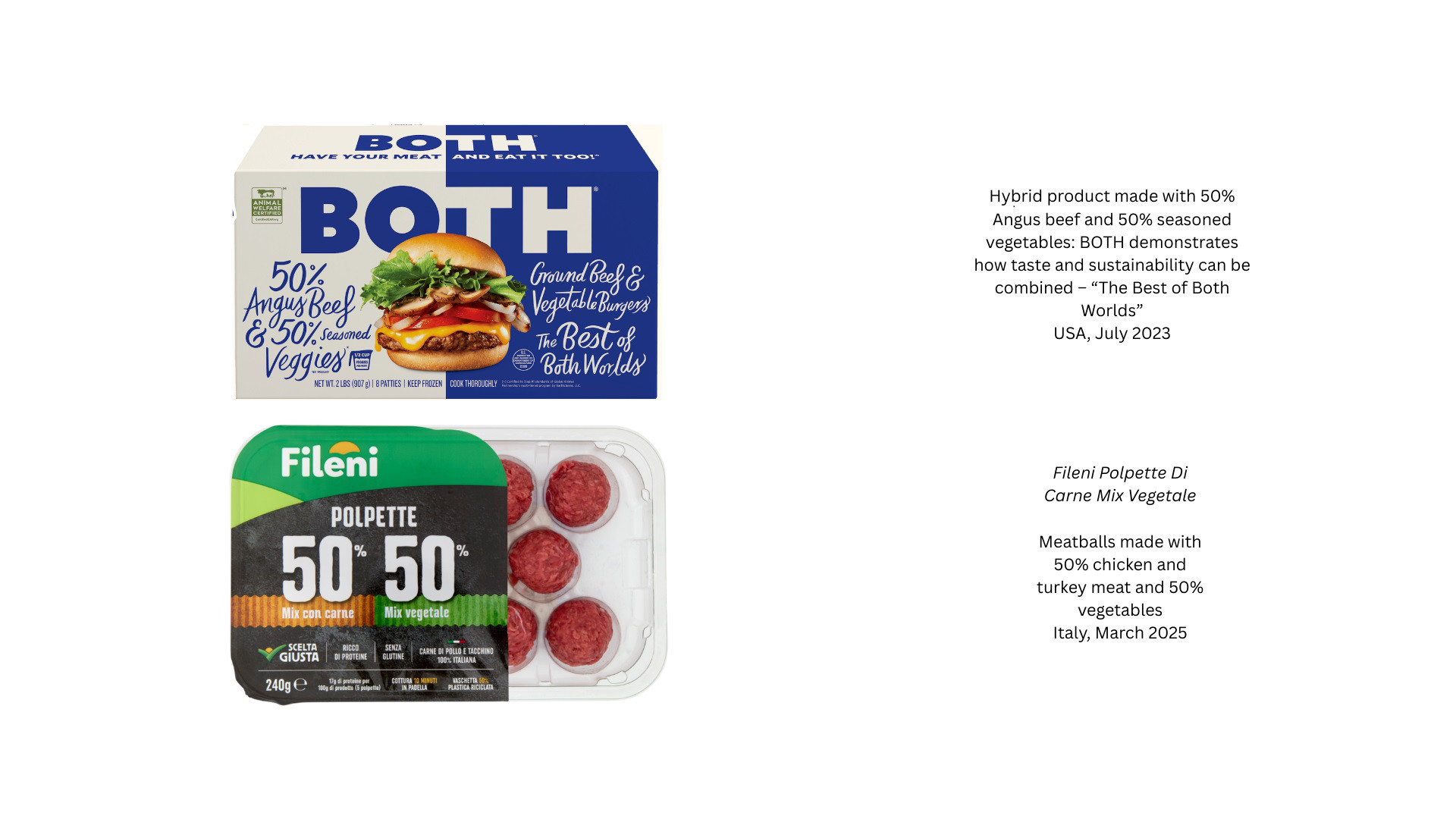
Industry and retail are responding to these developments: start-ups, private labels and machinery and plant manufacturers are advancing formulations and process solutions – for example through mixing technologies and structuring processes such as co-extrusion (see Figure 4). In practice, fresh products currently dominate the hybrid range, including burgers, minced meat and sausages (see Figures 1 and 2).
International examples of hybrid products: burgers and meatballs, each containing 50% meat and 50% plant-based ingredients, exemplify the trend towards more sustainable meat products with a reduced animal content. Source: Meat Mix’d / Veos Group, © Lidl
Hybrid products: Why the breakthrough has (so far) failed to materialize
Despite increasing innovation momentum, hybrid products have yet to achieve broad market success. There are several structural hurdles – technological, economic and regulatory in nature.
From a technological perspective, hybrid products place high demands on the combination of different protein types: differences in water-binding and fat behavior often lead to quality losses during heat treatment or storage, particularly in terms of texture and emulsification. These challenges are considered a key technical barrier in industrial implementation10.
In addition to traditional mixing and comminution technologies, novel processes are increasingly being used to create complex hybrid structures. Processes developed by Handtmann for co-extrusion and marbling, as well as automated layering, enable targeted design of three-dimensional structure and texture, reports Dr Michael Betz, Head of Food Technology at Albert Handtmann Maschinenfabrik GmbH & Co. KG7.
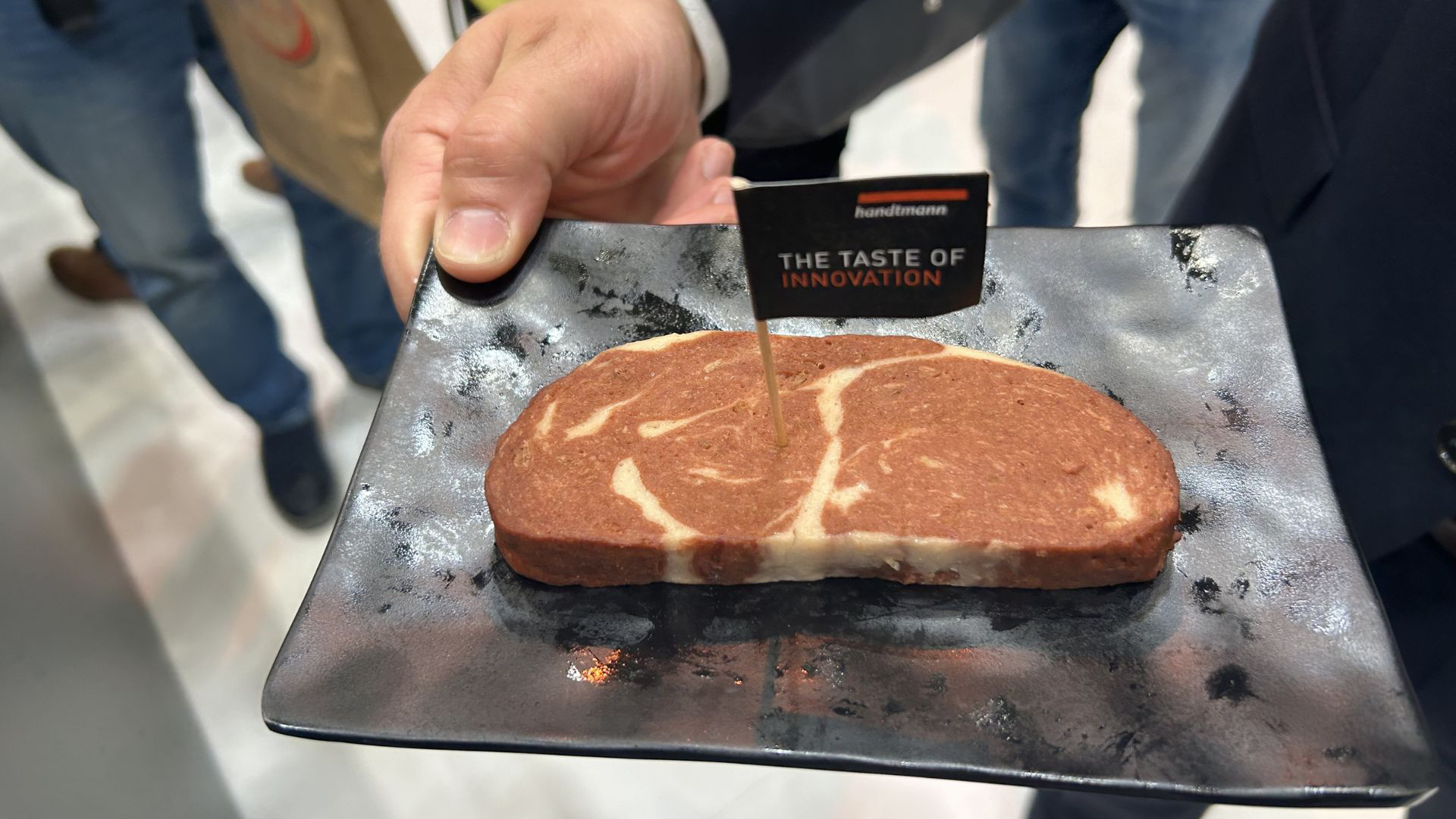
From an economic standpoint, high innovation costs, expensive ingredients – such as mycoprotein – and unstable supply chains hinder economies of scale. By comparison, conventional meat is still significantly cheaper. The currently low market share also makes entry into the mass market more difficult and reduces price competitiveness.
Regulatory conditions are more complex than often portrayed. The frequently cited “60 per cent threshold” for meat content does not refer to a legally defined limit but rather to an industry-specific guideline for product categorization. While the Food Information to Consumers Regulation (EU) No 1169/2011 clearly governs ingredient labelling, it does not define product naming itself. This remains a grey area between legal interpretation, consumer understanding and marketing strategy – further complicating the positioning of hybrid products10. In practical labelling work, detailed issues are gaining importance: Dr Tanja Grünewald (Bavarian State Office for Health and Food Safety) emphasized at the Hybrid Products Symposium in Gerlingen “that every food enzyme must be declared if it has a lasting effect in the final product”7.
From the consumer perspective, there is often a lack of trust and clarity. Studies show that many consumers perceive hybrid products as a difficult-to-classify “in-between solution” – neither meat nor alternative. Market success therefore requires convincing sensory performance, transparent communication and consistent naming that provides orientation11.
Current Status and Market Position of Hybrid Products
Hybrid products are increasingly developing into a strategic element within the food industry’s innovation portfolio. As a bridging technology between conventional meat and plant-based alternatives, they offer a pragmatic solution for companies seeking to reconcile sensory appeal, sustainability goals and economic viability.
Growing demand comes primarily from a consumer segment that is not ideologically driven but guided by everyday practicality: flexitarians are looking for products that deliver familiar sensory qualities while containing less meat. This differentiated set of expectations requires carefully developed formulations and convincing product concepts.
At the same time, the segment is technologically, regulatorily and economically complex. Combining different protein types of places high demands on texture, emulsification and shelf life. The lack of legal clarity regarding the labelling of hybrid products complicates market communication. In addition, economies of scale are still difficult to achieve due to low market shares and costly ingredients such as mycoprotein.
Nevertheless, the strategic relevance is unmistakable: industry reports, pilot projects and initial retail listings point to growing acceptance and development potential. Those who invest in hybrid product concepts today are positioning themselves in a future-oriented space – not only between meat and plants, but also between societal expectations and entrepreneurial opportunity.

References
1 Germany, as It Eats – the BMLEH Nutrition Report 2025. (2025, 27 November). BMEL. https://www.bmleh.de/DE/themen/ernaehrung/ernaehrungsreport2025.html; accessed 10 January 2026; German only https://www.bmleh.de/DE/themen/ernaehrung/ernaehrungsreport2025.html
2 Dierig, C. (2026, 5 January). “Hybrid Meat”: What Lies Behind the New Phenomenon. DIE WELT. German only. https://www.welt.de/wirtschaft/plus6946d88ff6fc544dba9aefbf/hybridfleisch-das-steckt-hinter-dem-neuen-phaenomen.html; accessed 20 January 2026
3 Tertel, J. (2024, 5 December). Hybrid meat products: Sales drivers for different requirements. Hydrosol. https://hydrosol.de/en/press-releases/hybrid-meat-products-sales-drivers-for-different-requirements/; accessed 25 January 2026
4 Dataintelo, More, A. B. & Dataintelo. (2025, 28 June). Hybrid Meat Product Market Research Report 2033. Dataintelo. https://dataintelo.com/report/hybrid-meat-product-market; accessed 22 January 2026
5 Williams, A. (2025, 11 June). European plant-based sales data - GFI Europe. GFI Europe. https://gfieurope.org/european-plant-based-sales-data/; accessed 25 January 2026
6 Evolving Appetites: An in-depth look at European attitudes towards plant-based eating. (2023, November). Smart Protein Project. Accessed 22 January 2026, from https://smartproteinproject.eu/wp-content/uploads/Smart-Protein-European-Consumer-Survey_2023.pdf
7 Sadyk, Z. (2025). Meat Technology in Transition. Food Aktuell, 60–63. German only.
8 The trend towards meat substitutes remains unbroken: Production increased by 16.6% in 2023 compared to the previous year. (n.d.). Federal Statistical Office. https://www.destatis.de/DE/Presse/Pressemitteilungen/2024/05/PD24_N018_42.html; accessed 27 January 2026, German only.
9 Import, M. & Import, M. (2025, 11 November). Study Predicts Further Growth. Prozesstechnik Online. https://prozesstechnik.industrie.de/news-food/studie-sagt-weiteres-wachstum-voraus/; accessed 28 January 2026. German only.
10 Hennings, L. (2025, 4 September). An Insight into Blended and Hybrid Meat Products: What They Are, Why They Matter and Exactly Who They Are Suitable For. Vegconomist. https://vegconomist.de/food-and-beverage/fleisch-und-fischalternativen/einblick-gemischtes-und-hybrides-fleisch/; accessed 29 January 2026. German only.
11 Hybrid Meat: Bridge Technology Between Animal and Plant. (n.d.). https://foodhub-nrw.de/news/hybrid-meat-bruckentechnologie-zwischen-tier-und-pflanze; accessed 28 January 2026. German only.