Reading time: 2 minutes
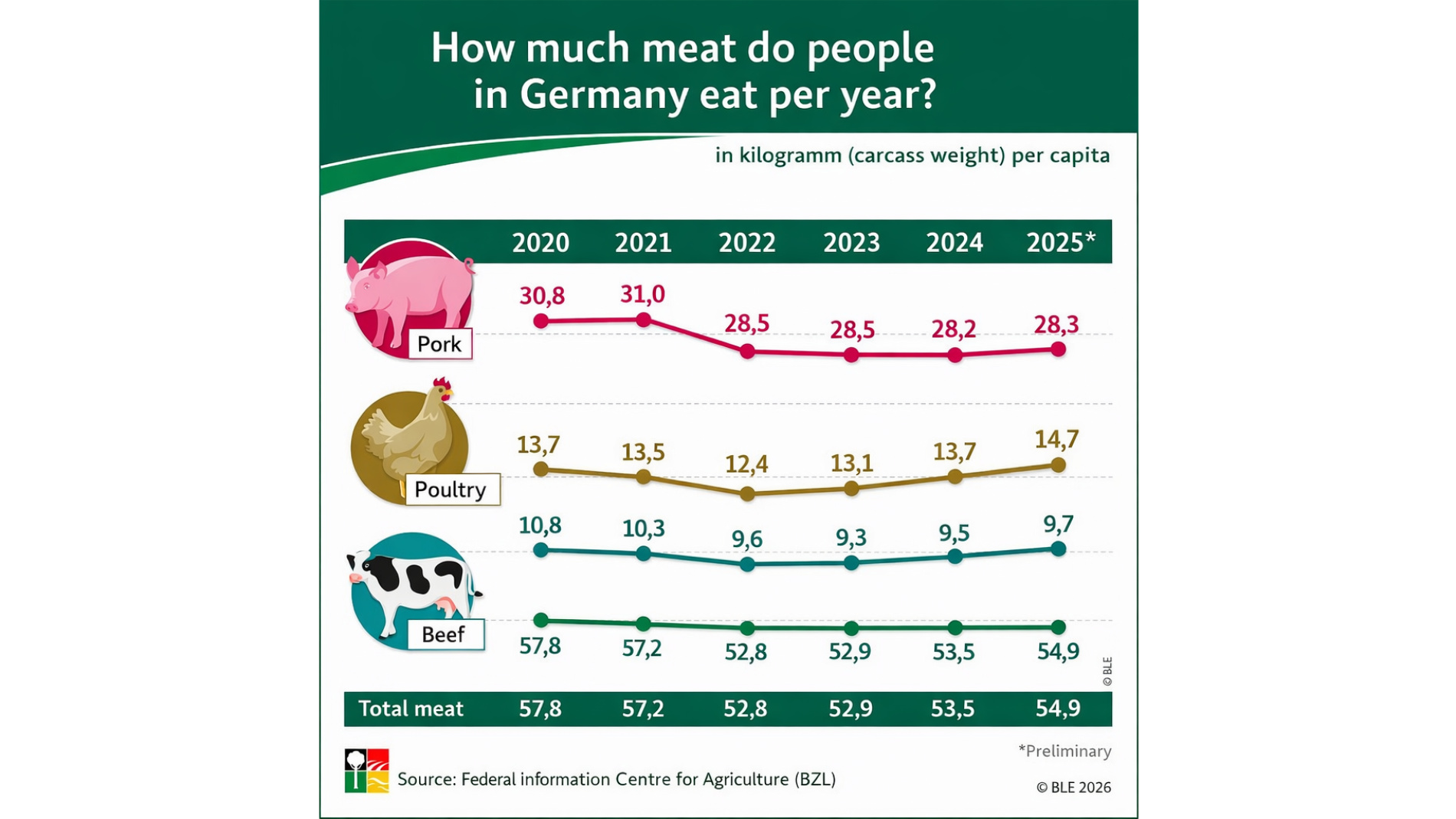
Meat consumption in Germany per year. Source: Federal Office for Agriculture and Food (BLE)
Meat consumption in Germany increased for the third consecutive year in 2025, but remains below previous peak levels. According to preliminary figures from the Federal Information Centre for Agriculture (BZL), consumption amounted to 4.6 million tonnes, up 2.7 per cent on the previous year. Per capita consumption averaged 54.9 kilograms – 1.4 kilograms more than in 2024.
Poultry was the main driver of this development: consumption reached a new record of 14.7 kilograms per person. Chicken in particular saw strong growth, supported by comparatively moderate price increases and rising popularity. Pork remains the most important type of meat at 28.3 kilograms per capita, accounting for just over half of total consumption. Beef and veal also recorded a slight increase to 9.7 kilograms despite higher prices.
Production declines slightly
While consumption rose, meat production decreased marginally. Output fell by 0.3 per cent to 7.3 million tonnes. Beef production in particular declined significantly, partly due to fewer slaughters. Poultry production remained below the previous year’s level, also as a result of avian influenza. By contrast, pork production increased slightly, as livestock numbers stabilised and slaughter weights rose.
Trade gains importance
To meet rising demand, significantly more meat and meat products were imported. Imports increased by almost eleven per cent, particularly for beef, poultry and lamb. Exports also rose slightly and continued to exceed imports. Overall, the available supply of meat increased by 4.5 per cent to 6.37 million tonnes. In addition to consumption, this figure also includes losses, industrial use and processing.
The self-sufficiency rate declined slightly. While pork production still exceeds domestic demand in purely statistical terms, imports remain necessary for particularly popular cuts. For beef and poultry, domestic production falls short of demand.
Find more contents from our section „Figures, Facts & Studies“