Reading time: 3 minutes
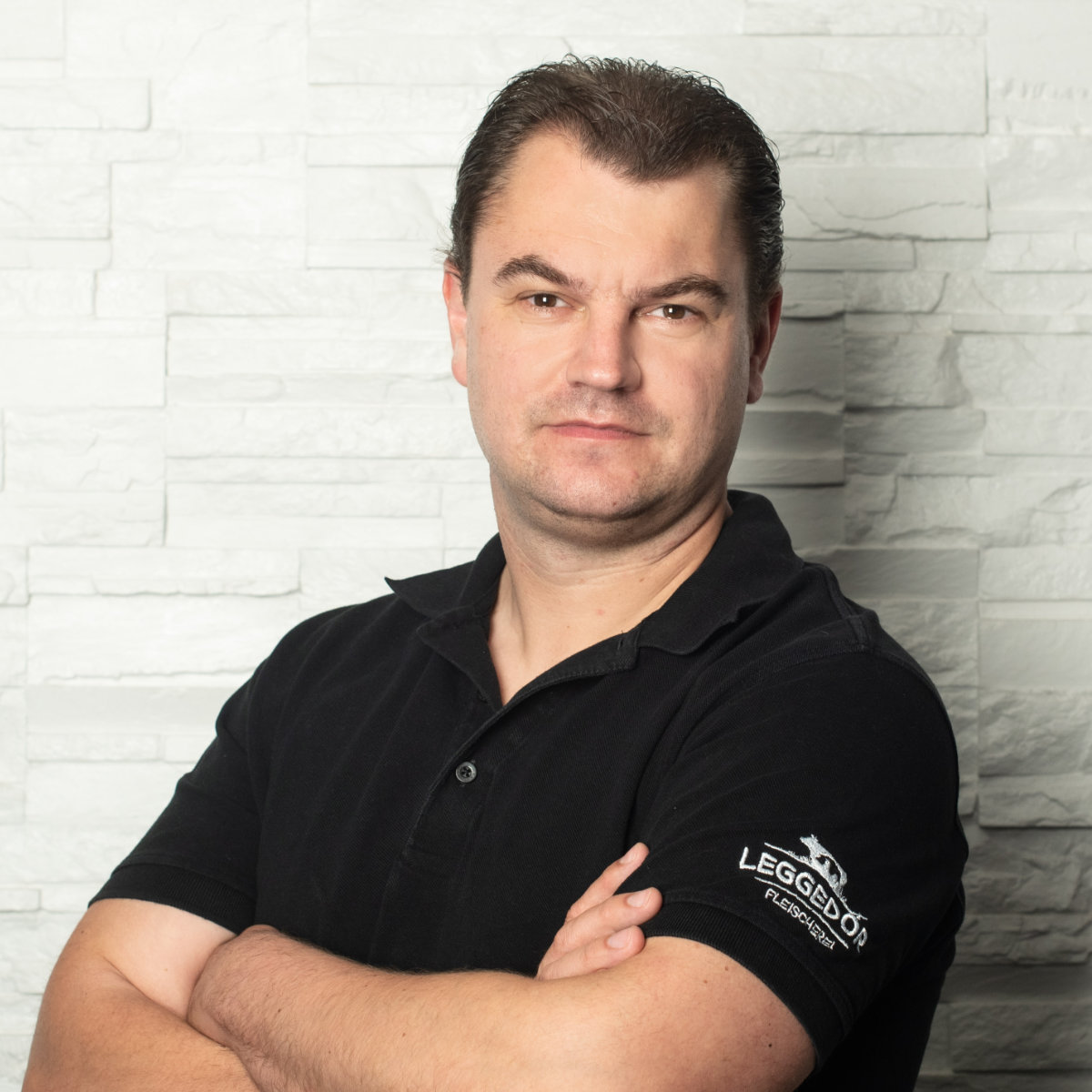
Born in Lower Saxony, Germany, and raised in Osterode near the Harz mountains as the son of a master butcher, he has dedicated the past 30 years to the organic food movement – and describes himself as an “organic meat activist”. “I’ve always wanted to produce high-quality food,” says Dreymann. This principle forms the foundation of Metzgerei Dreymann (Butcher’s Dreymann) and has driven its growth for more than two decades.
From apprentice to organic butcher
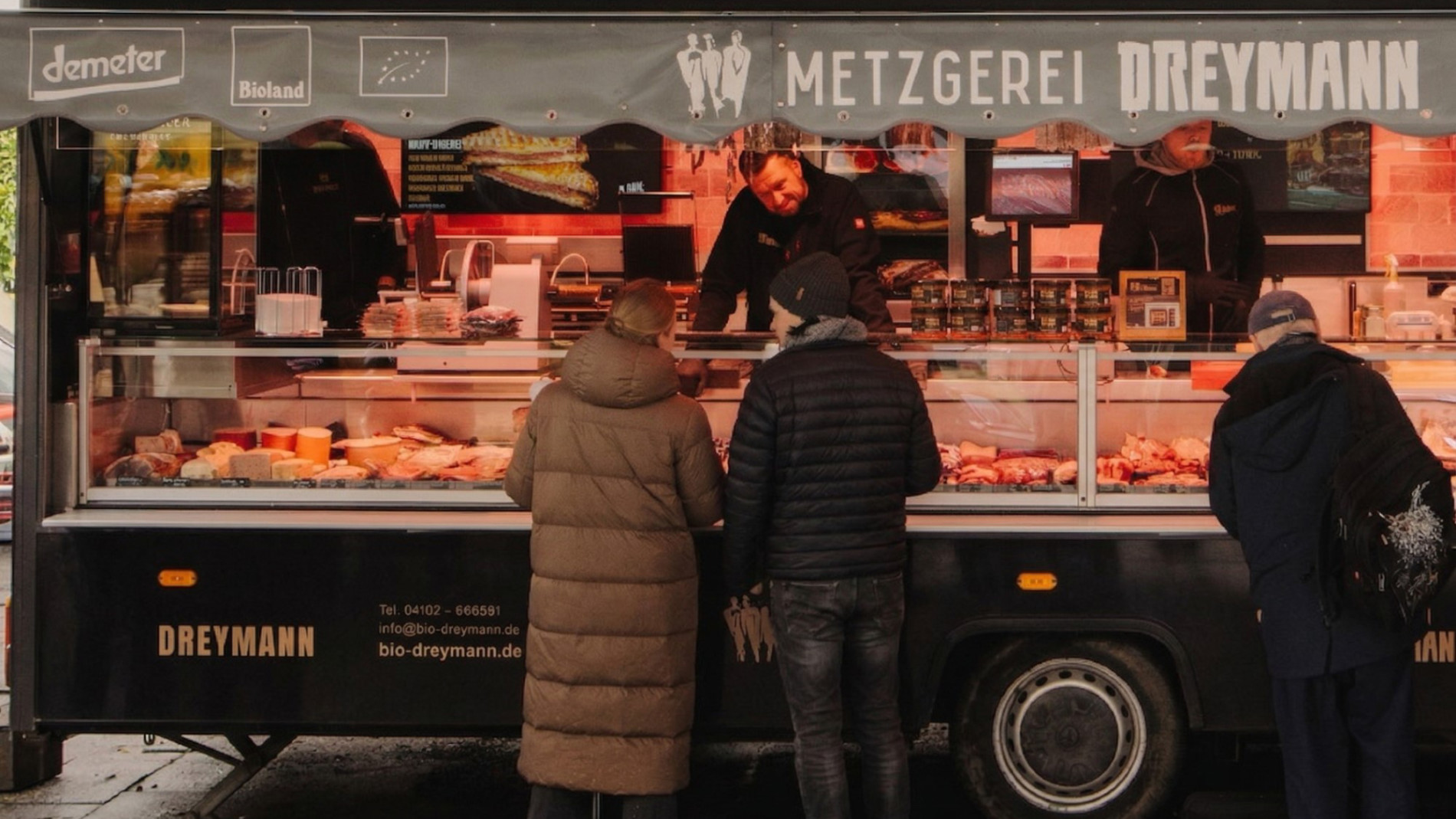
The roots lie in his father’s trade: Andreas Dreymann trained as a butcher in the family business, refined his skills in Hamburg’s wholesale meat trade, and ultimately found his defining inspiration at the organic butcher Fricke in Hamburg – the principles of the organic movement. What began as an interest became a guiding philosophy. On 13 September 2002, he opened his own butcher’s shop in the farm shop of the Demeter-certified Gut Wulfsdorf near Ahrensburg – today operating with around 350 square metres of production space on a 360-hectare biodynamically managed farm.
“We were already consistent at a time when consumers were not yet questioning meat production so critically,” recalls the master butcher. He helped shape the organic scene when it was still considered niche, while consistently embracing innovation. Early on, he invested in modern sales vehicles where minced meat was prepared on site and dry-aged products were visibly presented – a concept that was highly unusual at the time.
Since its founding, the business has grown steadily, adding a new weekly market and a new employee each year. Today, Metzgerei Dreymann is present at 26 weekly markets across Hamburg with five mobile sales units, operates its own meat counter at the Gut Wulfsdorf farm shop, and since 2022 a “Steak Boutique” in Löwenstraße 1 in Hamburg’s Eppendorf district. This is where the now-famous pastrami sandwich was created, which is now available at all sales locations.
Read more articles from “People from the butchers’ trade”Meat with clear standards
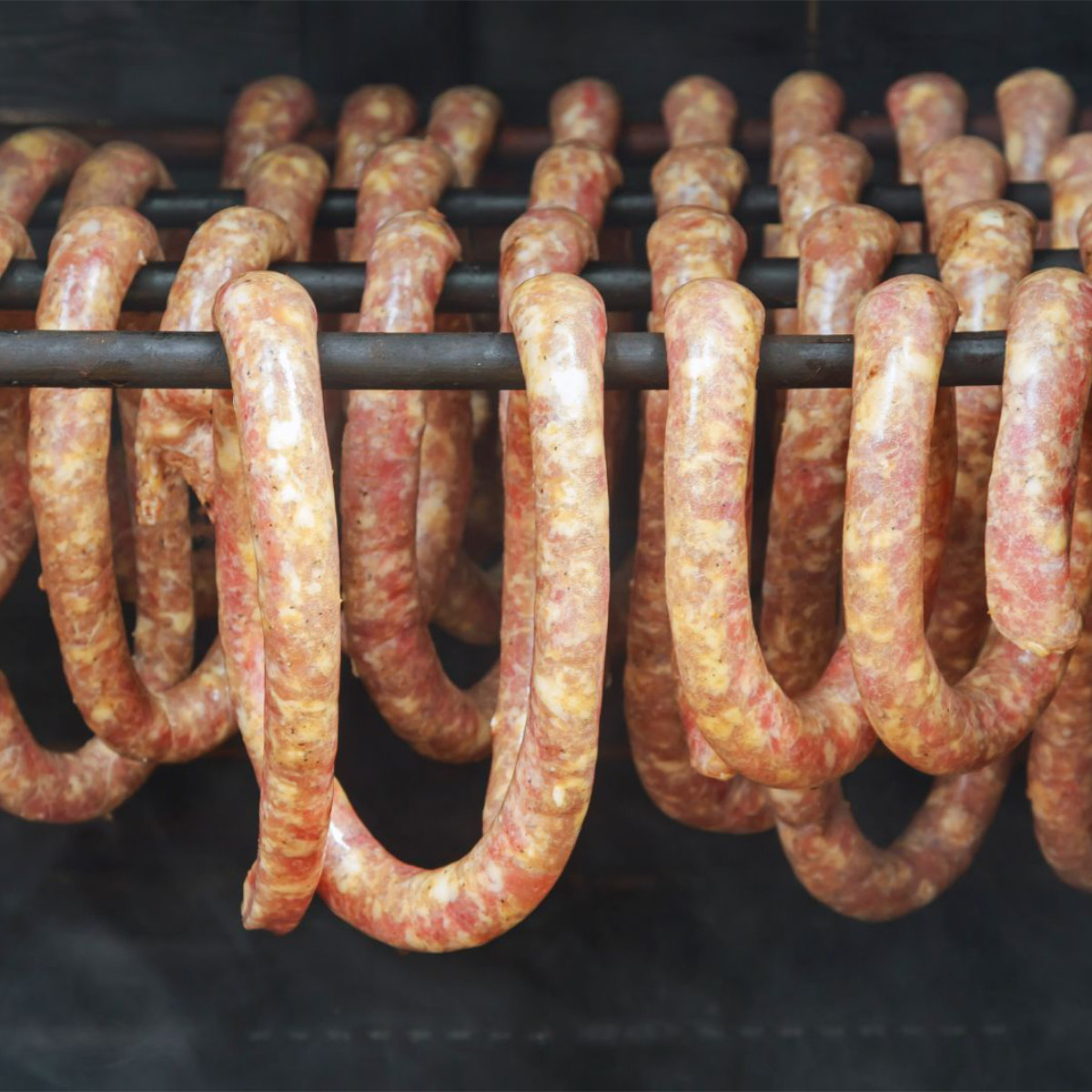
What sets Dreymann apart is the consistency with which he implements his standards. The level of in-house production exceeds 70 % – from warm meat processing to dry ageing, as much as possible is produced internally. He combines traditional craftsmanship with modern techniques. Each week, the team processes around six cattle, twelve pigs, as well as poultry and salt marsh lamb. In addition, Dreymann refines approximately ten beef loins and other premium cuts per week.
The range of around 100 products is sourced from a network of carefully selected business partners (suppliers): heritage-breed cattle from Biosphärenreservat Elbtalaue (Elbe Valley Biosphere Reserve) and Schleswig-Holstein; salt marsh lamb from Landschlachterei Burmeister in Viöl; pork and beef from Schwäbisch-Hällischen Erzeugergemeinschaft (producer cooperative); Demeter poultry from Bauckhof; Bioland turkeys from the Lojdl family; around 60 Bioland Wagyu cattle from Bavaria; and organically certified Black Label Iberico from Extremadura. In addition, the Demeter-certified Gut Wulfsdorf supplies approximately 500 pigs, 400 geese, 50 cattle and several lambs each year.
Supplier and animal requirements are clearly defined: cattle must be at least three years old, pigs 13 months. Otherwise, they are not processed. Dreymann pays close attention to genetics and marbling when selecting animals. In production, he consistently avoids phosphates, yeast extracts, glutamate and added foreign proteins. He calls the result “meat with character”. A phrase that captures his philosophy precisely.
Dario Dreymann: The Next Generation
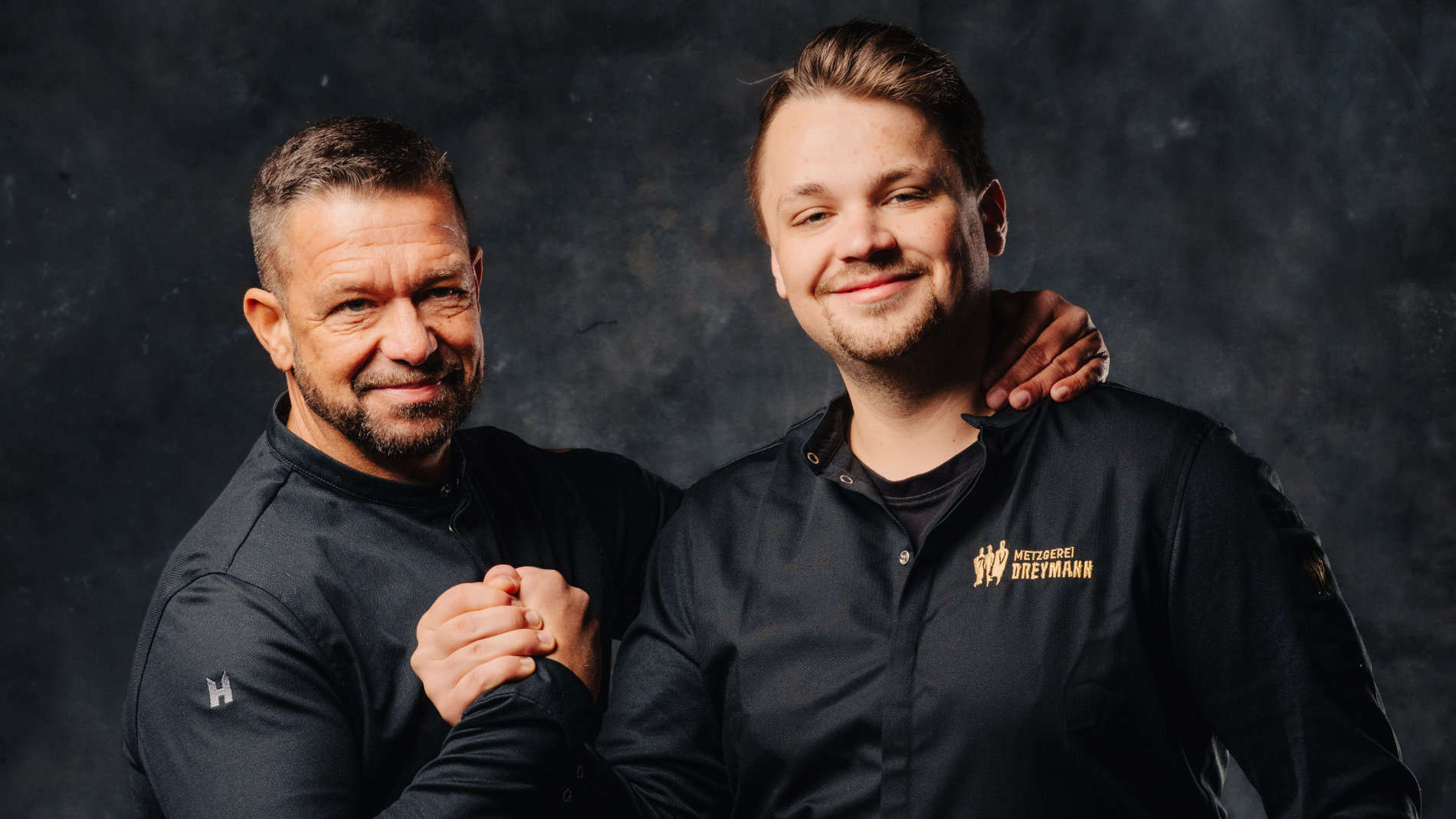
Alongside Andreas Dreymann, his eldest son Dario works in the business, bringing his own perspective. Two years ago, he completed his master craftsman qualification at the First Norddeutschen Fleischerfachschule in Hamburg (North German Butchery school), strengthening his role in the family business. He now officially represents the fourth generation. His approach to the craft differs from his father’s, without contradicting it.
Organic as a Mindset
What distinguishes the Dreymanns from many other organic providers is the authenticity of their conviction. Here, organic is not a marketing strategy but a core business principle. The animals are sourced exclusively from Demeter, Bioland and Biopark-certified farming systems. They are not given prophylactic antibiotics or hormones. Animal husbandry is guided not by minimum standards but by ethical consistency. Farmers are treated as equal partners and paid fairly – because high-quality animal welfare comes at a cost, and that cost should be justified. The same principle applies internally: employees are remunerated based on performance.
That organic meat is now also perceived as a lifestyle product – shedding the image of past decades – is a shift Dreymann has actively helped to shape. The brand and its presentation are modern, without compromising substance. Perhaps the most unusual compliment a butcher can receive is when customers say they do not eat meat as a rule – except Dreymann’s.
All images: Metzgerei Dreymann
People in the Butchery Trade
The people who work with meat and sell meat products are just as diverse as the tasks involved in the butchery trade.
Our global series profiles creative and skilled individuals, from traditional butchers to those who have switched careers.