Global market data, new product concepts and changing eating habits
Fast, diverse, innovative: why the convenience food market is growing worldwide
21 Jan 2026
Changing lifestyles, lack of time and evolving dietary expectations are driving a market segment that is expanding rapidly across the globe. Convenience food, such as ready meals, frozen products and snacks, now ranks among the most dynamic areas of the food industry, benefiting from innovation, sustainability concepts and international consumer trends.
Worldwide, three out of five consumers purchase ready meals once a week or more frequently.
Photo: Canva
Globally, convenience food has become a fixed part of everyday life for many consumers. It has not only found its way into almost all product ranges available in food retail, but also simplifies work in the foodservice sector and is experiencing a clear upward trend. Plant-based and vegan options as well as chilled pasta products are enjoying growing demand. Until now, Europe has accounted for the largest share of global convenience food sales at 41 per cent. In the near future, analysts expect increasing growth rates in the Asia-Pacific region as well as in North, Central and South America.
Worldwide, three out of five consumers purchase ready meals once a week or more frequently, with one in five doing so more than once a day. This was identified by market research institute Innova Market Insights in a trend study. Forty-one per cent of respondents state that convenience has a strong influence on their purchasing decisions.
At Anuga Chilled & Fresh Food – one of the ten trade fairs under the umbrella of Anuga 2025 in Cologne – Innova Market Insights presented further market data and attributes a clear upward trend to the chilled and fresh food segment. Continuous product launches in the convenience food category achieved an average compound annual growth rate (CAGR) of three per cent. Almost half of all new chilled and fresh food products are launched in Western Europe, while Asia represents the second-largest region with a share of 13 per cent. Between 2019 and 2023, Africa (+11 per cent) and the Middle East (+7 per cent) were the fastest-growing regions according to Innova. Looking at individual countries, the United Kingdom recorded the highest number of product launches during this period, followed by the United States with eight per cent and France with six per cent.
For the coming decade, Towards FnB – a global consulting firm based in Canada and India – expects further sustained growth in the global market. Analysts forecast that between 2025 and 2034 the global market size will increase from around €460 billion to €740 billion. They estimate an average annual growth rate of 5.3 per cent. While Europe dominated the market in 2024 with a 41 per cent share, particularly strong growth rates are expected in the Asia-Pacific region – especially in India, China and Japan – but also in North America as well as Mexico and Brazil due to their well-established fast-food cultures.
Trends in convenience food
As awareness of healthy and sustainably produced food continues to grow, particularly among European consumers, demand for plant-based and vegan options is also rising within the convenience food market. Chilled pasta products are also gaining in popularity. According to German trade magazine “Lebensmittel Zeitung”, which reported in June 2025 on an analysis by NielsenIQ (NIQ), pasta, gnocchi and similar products recorded a sales increase of 6.9 per cent in the overall German market between April 2024 and April 2025 compared with the previous year.Chilled pasta products are likewise on trend. According to an analysis by NielsenIQ (NIQ) covering the period from April 2024 to April 2025 compared with the previous year, pasta, gnocchi and similar products recorded a sales increase of 6.9 per cent in the overall German market. This trend is also observed by Liechtenstein-based Hilcona AG, an internationally active food manufacturer. The company focuses on seasonal pasta creations and specially developed products for air fryers.
“The trend towards fresh pasta in the convenience segment is clearly noticeable for us as well. At the same time, customers’ expectations in terms of quality and processing are increasing.”
In addition to bowls with various ingredients or pulses, which are valued for their high protein content, Statista experts have identified growing demand for products that address specific dietary requirements and health aspects, such as gluten-free or lactose-free options, particularly high-protein products, or items without additives and preservatives. This offers manufacturers good opportunities to respond to changing consumer preferences and establish unique selling points. For example, the Bremerhaven-based company Frosta has been producing all of its frozen products without additives or flavourings since 2003.
“Additives and flavourings are often used in the food industry to reduce costs and save on high-quality ingredients. Both contradict our understanding of good food – which is why we consistently avoid them at Frosta.”
Due to its sustained growth momentum, the Heristo Group, headquartered in Bad Rothenfelde, intends to place an even stronger focus on chilled ready meals in the future. In addition, the company plans to expand its range from classic dishes to modern, healthy and sustainable variants.
“With the single-portion meals of our YOUCOOK brand, we are adding further international cuisines to our portfolio and thus responding to consumers’ desire for variety.”
Nestlé intends to capitalise on the trend towards medicinal treatment of obesity with suitable convenience products. In 2024, the world’s largest food manufacturer launched a range of frozen ready meals under the name “Vital Pursuit” in the US market, featuring high levels of protein, fibre and essential nutrients. The portion sizes are tailored to the appetite of users of weight-loss medication.
Why Is Convenience Food Booming – and Who Are the Target Groups?
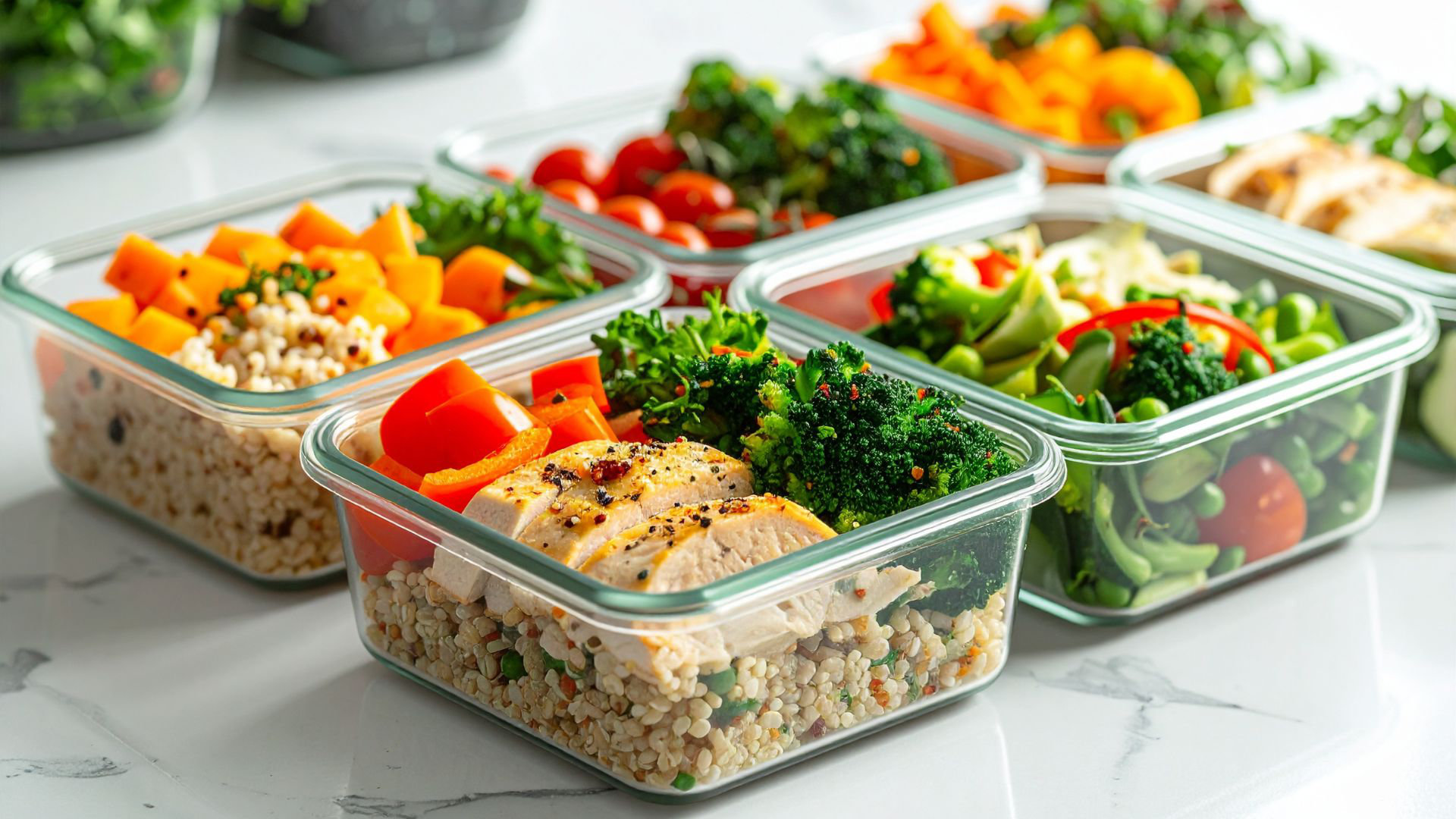
Convenience food also flexibilises eating habits – fixed meal times and rituals are losing importance.
Photo: Canva
Demand for convenience food is being driven by a variety of factors. The most important include changing lifestyles with increasing employment rates, a growing number of dual-income households, lack of time, limited cooking skills and expanding urban populations. As a frequently chosen alternative to canteen meals or lunchtime dining, convenience food is also replacing increasingly expensive restaurant visits as a quickly prepared evening meal.
The growing acceptance of convenience food also reflects a shift in attitudes towards cooking: it is no longer regarded as a moral obligation. Due to childcare responsibilities, everyday stress and working from home, convenient solutions are considered a legitimate option. Convenience food also flexibilises eating habits, as consumers no longer orient themselves around fixed mealtimes or rituals, but around their individual needs. Accordingly, analysts at YouGov observe a change in their report: “Cooking from scratch remains important, but it is no longer the sole standard.”
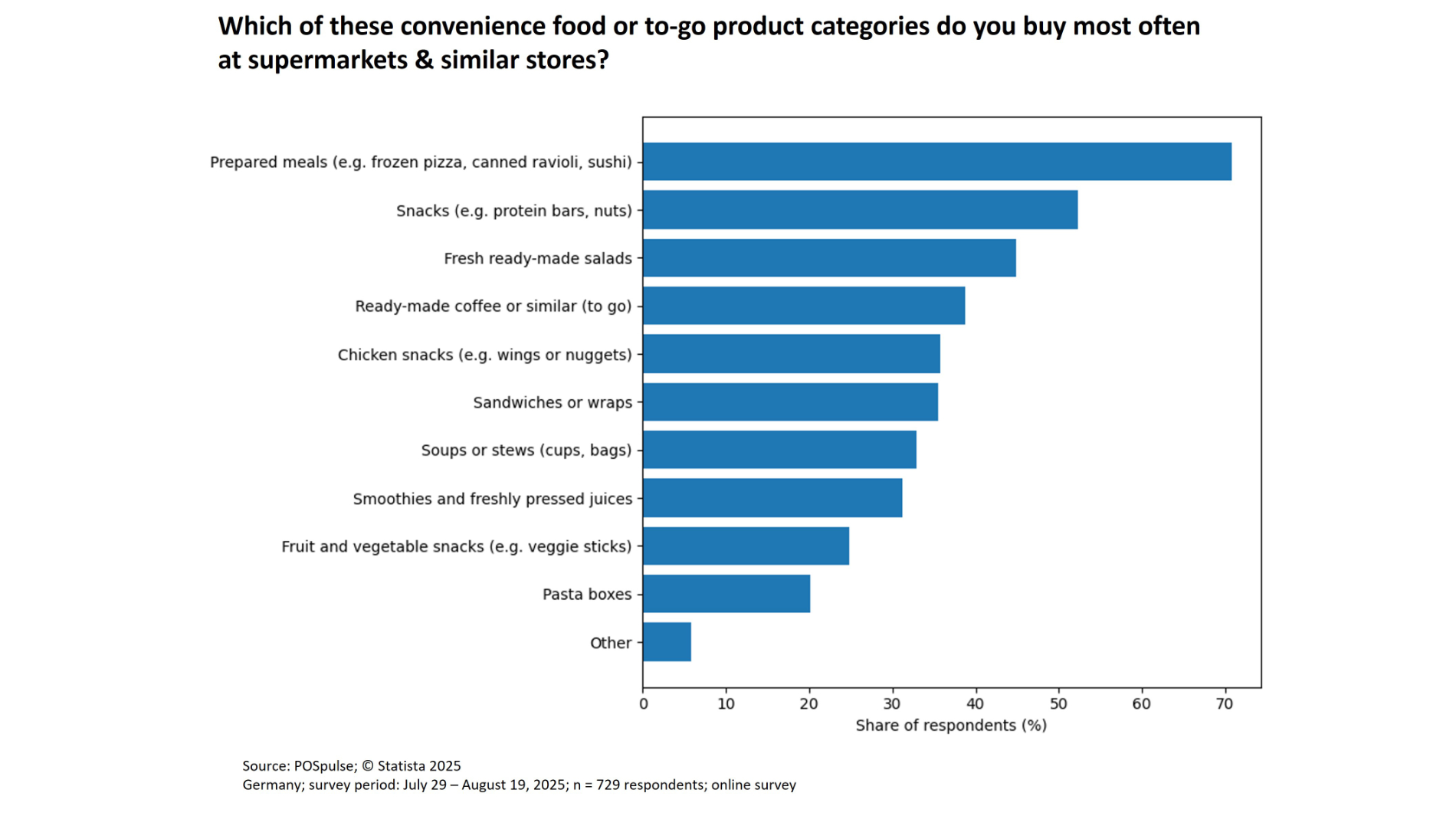
The benefits of convenience food are particularly appreciated by younger generations. According to the report, one in three consumers from Generation Z and Millennials chooses convenience products at least once a week. There are also differences between genders: men are significantly more likely than women to put ready meals in their shopping baskets. A recent survey among German consumers shows which products are purchased most frequently.
What Is Convenience Food?
From bite-sized pre-portioned fruit and pre-washed salads to pre-cooked components and packaged snacks, bowls or complete meals in trays or tins: discounters and supermarkets offer a wide range of convenience or ready-made foods. The Federation of German Consumer Organisations defines convenience food as cooked, washed, peeled and seasoned foods that simplify or replace kitchen work or supplement meals, for example as side dishes. A distinction is made between products that are ready-to-cook or ready-to-eat and those that can be consumed after adding hot water, such as packet soups or instant noodles. Convenience meals are also available as complete, pre-portioned dishes that only need to be heated in a microwave, air fryer, oven, bain-marie or on the hob. Consumers value simple preparation with minimal time investment, reduced food waste and easy stockpiling tailored to individual needs with long shelf life. However, recipes with a high proportion of additives, excessive salt and vitamin loss in industrially produced meals are not necessarily conducive to a healthy diet. Consumer and environmental organisations also criticise the higher energy consumption during production and the comparatively large amount of packaging made from plastic, cardboard, glass and aluminium.
Levels of Processing in Convenience Products
Chilled food
This term refers to chilled fresh products at various stages of preparation, usually vacuum-packed or packaged in a protective atmosphere. Consumers only need to defrost or heat them. Fresh pasta products are very popular, as reflected in the constantly growing range.
Frozen food
Shock-frozen fruit and vegetables, fast food such as pizza or burgers, meat and desserts dominate the convenience market. They are generally produced in a nutrient-preserving manner, usually without preservatives, and have a long shelf life at –18 °C. This category includes kitchen-ready raw products such as cleaned and chopped fruit and vegetables, ready-to-cook products like fish fingers, and partially prepared side dishes such as creamed spinach, French fries or fried potatoes.
Ready meals and canned food
Savoury or sweet ready-made meals offered in various types of packaging have a long shelf life and can be quickly heated and consumed.
Monika Mathes
Trade journalist
Reports for Foodtech Now! on growth markets in the meat and protein industry.